
Grappling With Identity: Why I Consider Myself a 1.25-Generation Immigrant
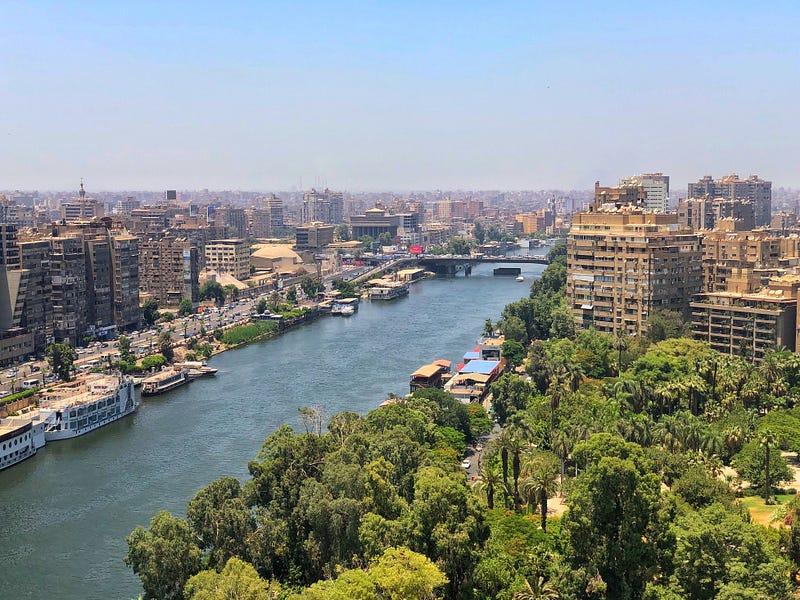
Right out of college, I left my parents’ home in Cairo, Egypt, and moved to Europe, marking the start of my independent life as an adult. I lived in Austria for a year, in Germany for six, and then finally moved to London where I’ve been living for the past six years.
As someone who left their home country at the adult age of 22, I am what you would traditionally call a “first-generation immigrant” — born, raised, and fully belonging to my Egyptian culture of origin, rather than the Western culture in which I currently live.
Technically speaking, it’s true. I was born and raised in Egypt, to Egyptian parents. I was raised in the same culture and environment as my parents were, and their parents before them. My only native language is Arabic, and I speak English with an accent that I’ll probably never be able to shake off. There are pockets of western culture that I’ll never fully understand.
The term “first-generation immigrant” should accurately describe me. I’m 100% Egyptian, and nothing else.
But then there are obvious ways in which I don’t quite fit in that box.
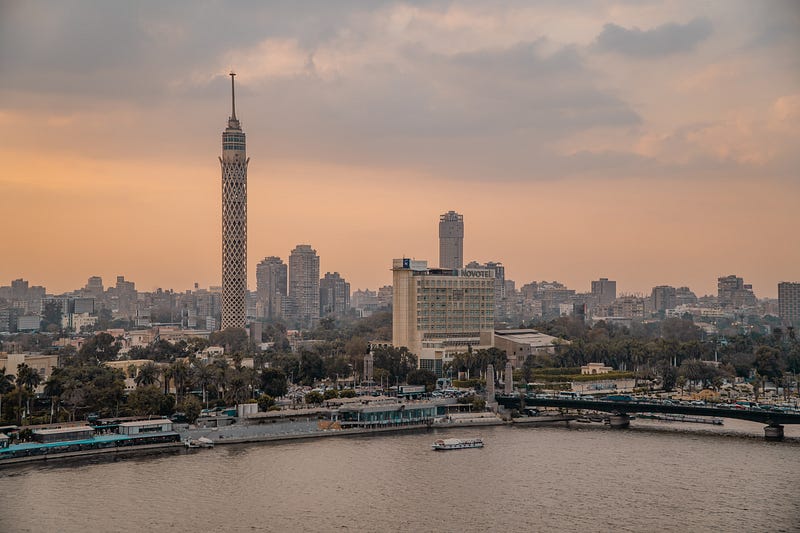
I am, of course, Egyptian, and very proud to be. I don’t mean to deny that identity — I embrace it in its entirety.
What I mean to say is that I don’t seem to have many values, interests, or experiences that are typically considered Egyptian. At least not in today’s zeitgeist. And that has always made me feel like a bit of a fraud.
Of course, there’s hardly such a thing as a “typical Egyptian”, anyway. Egyptian society is so varied, with so many different sub-cultures, norms, and value systems. I just don’t know if I ever neatly belonged within any of them, even when I lived there.
As I get older, I realize just how much of my childhood was spent in my own privileged bubble. Most of my experiences in Egypt took place in school or in college, where my education carried some significant western influences. Going out meant going to the same mall with my friend group. Taking the car from point A to point B meant I had little experience with the city’s streets or sidewalk life. I didn’t play a sport, subscribe to a gym, or go to camp. I watched mostly American television. To this day, I don’t follow a lot of Egyptian programming or know much about Egyptian pop culture. I never traveled much outside of Cairo either; I’ve met many foreigners who have seen more of Egypt than I have.
I grapple a lot with my identity, with this unclear type and degree of “Egyptianness”. All the more so because it’s the only culture I have, and the one that aligns the most with my social, political, and religious beliefs.
I know I’m not British, and I’m definitely not German. But if I’m not entirely Egyptian either, then what am I?
By definition, I’m not allowed to call myself a “third-culture kid” — that term is reserved for people who spent a significant part of their childhood, their so-called “formative years”, in their target culture. I don’t even qualify as a 1.25-generation immigrant, because I immigrated after the age of 17.
The issue with these definitions is that they assume that childhood years are the only formative years in one’s life. This has not been my experience. My twenties were at least as formative as my childhood or my teenage years. My character and my beliefs were shaped at least as much by my twenties as they were by my early upbringing.
The reality is that I am Egyptian — entirely Egyptian, my own kind of Egyptian. I’m a lot of other things, too. I’m Muslim, socialist, a Londoner, lover of astrophysics, 90’s hip hop, and Latin telenovelas. I’m all of this stuff, and being one doesn’t preclude me from being the other.
I’m also a third-culture kid. I do carry undeniable elements of a third culture — a unique mixture of my origins and my current reality. For better or worse, I’ve been shaped by western culture in a way that’s irreversible. By the things I like about it, and also by the things I don’t. By capitalism, by privilege, by Hollywood, by Black music from New York as a brown kid from Cairo.
For lack of a better alternative, I have to claim the titles “third-culture kid” and “1.25-generation immigrant”, even if the current definitions don’t completely fit me.
I don’t have to be similar to most Egyptians to be a typical Egyptian. We’re all different, and we’re all typical because we share a history — a long and complex history that led to the unique point in time in which we all exist today.
What makes identity challenging is that it’s something we think of as extremely personal to us when at the same time it’s actually about the collective. It’s about belonging to a larger group, being part of something bigger than yourself.
When we don’t feel similar to other members of the group, we feel alienated and insecure, we feel like imposters, pretending to be part of something we’re not really part of. But the truth is, as an individual, you’ll never be entirely similar to other members of your group. In fact, you can be entirely different and still belong, because to me, identity isn’t about individual similarities, and it’s not even so much about shared culture: it’s about shared history.


