
Grand Designs, Grounded Realities: Unraveling the Complex Tale of China’s Megaproject Ambitions
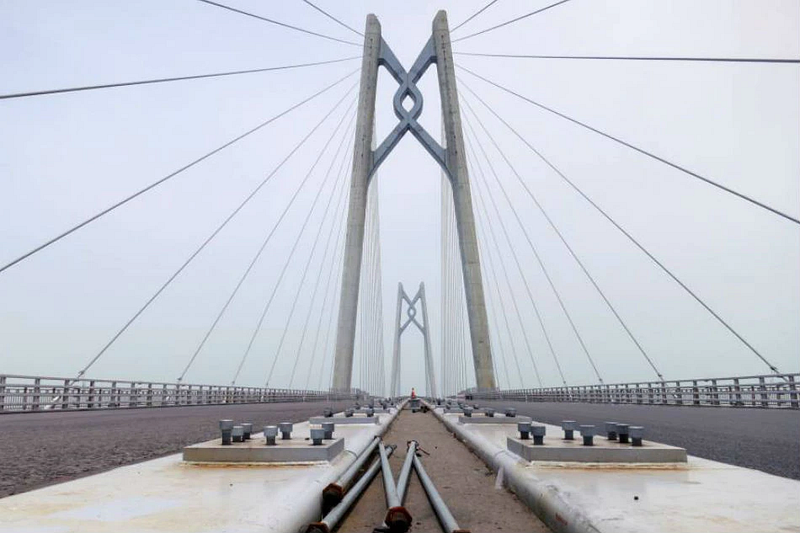
China’s ambitious megaprojects, while impressive in scope and vision, have been met with a range of challenges and failures, revealing deeper issues in the nation’s approach to development.
One of the most high-profile failures was the Transit Elevated Bus (TEB), designed to glide over traffic. The project faced numerous problems, such as low clearance for some vehicles, poor design, and allegations of it being a Ponzi scheme, leading to its eventual abandonment. The TEB was first proposed in 2010 and relaunched in 2016, but was scrapped in 2017 after a trial run in Qinhuangdao, Hebei province. Similarly, the glass-bottom suspension bridge in Hunan province, which was the world’s highest and longest when it opened in 2016, was closed for “urgent maintenance work” shortly after opening, reflecting the country’s rapid, yet often haphazard development approach. The bridge, located in Zhangjiajie National Forest Park, spans 430 meters and is suspended 300 meters above the ground. Both projects attracted global attention, but also raised questions about the safety and feasibility of China’s ambitious engineering endeavors.
China’s infrastructure drive is also marked by the colossal Sichuan-Tibet railway project, a challenging endeavor due to the tough terrain and environmental concerns. It’s a part of China’s vast railway expansion, reflecting Beijing’s strategy to boost the economy through infrastructure spending. The project, expected to be completed by 2026, involves constructing tunnels and bridges at high altitudes, crossing more than 40 major fault lines and eight mountains over 4,000 meters high. The project will cost about 360 billion yuan ($54.8 billion) and will reduce the travel time from Chengdu, the provincial capital of Sichuan, to Lhasa, the provincial capital of Tibet, from 48 to 13 hours. The railway will also enhance the connectivity and development of the region, as well as the security and stability of China’s border areas.
Another megaproject, the South-North Water Transfer Project, aims to redirect water from the Yangtze River to the drier northern regions. This project, while addressing water scarcity issues, has raised concerns about environmental impact and the displacement of local residents. The project is the largest of its kind ever undertaken in China, involving drawing water from southern rivers and supplying it to the north through three canal systems: eastern, central and western. The project is expected to be completed by 2050 and will eventually channel 44.8 billion cubic meters of fresh water each year. However, the project has also faced challenges such as high costs, technical difficulties, ecological damage, and social unrest. More than 300,000 people have been relocated to make way for the project, and many have complained about inadequate compensation and poor living conditions.
The case of the Golden Finance 117 skyscraper in Tianjin is emblematic of China’s property sector issues. The project, stalled since 2015, symbolizes the real estate bubble and the phenomenon of ‘ghost cities’ in China, where speculative investment leads to underused urban developments. The tower was supposed to be the fifth-tallest building in the world, with 128 storeys and a height of 597 meters, but construction was halted due to the financial troubles of the developer, Goldin Properties. The skyscraper, also known as China 117 Tower, remains unfinished and unoccupied, and has been certified by Guinness World Records as the World’s Tallest Unoccupied Building.
Other examples include the Xiangyun International Project in Shijiazhuang and the Yujiapu Financial District, both suffering from slow progress and abandonment, indicative of issues like corruption, poor planning, and the financial crisis. The Xiangyun International Project, a huge real estate project that covers an area of over 1,800 acres, was seized by authorities in 2014 due to the financial troubles of the developer, leaving tens of thousands of buyers in limbo. The Yujiapu Financial District, a central business district modeled after New York’s Manhattan, was expected to open in 2014, but has faced a construction slowdown and a debt crisis, earning the nickname of a “ghost city”. The Evergrande Oasis project is another instance where construction halted, reflecting the financial strain on developers and the broader economic challenges facing the country. The project, located in the State AAAA ecosphere in Chengdu, was launched to the market in 2010, but has been plagued by delays and disputes, affecting the interests of thousands of owners.
These cases highlight several underlying problems in China’s approach to development. The focus on rapid growth often comes at the cost of quality and sustainability. Many projects are driven by political motives and state-led investment, leading to imbalances and environmental damage. Moreover, issues like corruption and lack of transparency further undermine the effectiveness of these initiatives. To address these challenges, China has put forward the new development concepts of innovative, coordinated, green, open and shared development, which aim to shift the growth model to a more balanced and sustainable one. China has also adopted a holistic approach to implement the 2030 Agenda for Sustainable Development, by integrating it into its national development plans, enhancing cross-sector coordination, and encouraging whole-of-society participation. China’s new development philosophy reflects its aspiration to achieve high-quality growth while contributing to global development and cooperation.
China’s ambitious infrastructure projects, while showcasing its ability to undertake large-scale development, also reveal the need for a more balanced and sustainable approach. This includes prioritizing quality over quantity, ensuring environmental and social considerations, and fostering market-driven innovation. As China continues to evolve, these lessons from past failures could guide more effective and sustainable development strategies in the future.


