
Google’s Gemini Put to the Test — How AI-Generated Content Impacts SEO
Spoiler: It’s not what I expected.
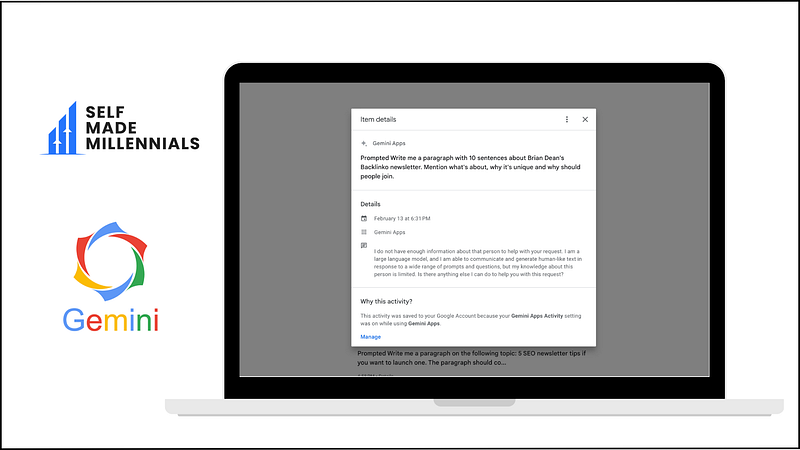
If you’ve been following me for a while, you might know that I experiment extensively with optimized content on my website.
As an SEO expert, I want to know how to create high-ranking content, what optimization strategies work best, and which content structure I should use.
Besides, I look for ways to optimize the content creation process on my website since it takes a lot of my time. I’m the only one managing my website design, technical issues, keyword research, SEO writing, and optimization. That’s too much on one’s plate. Therefore, I started experimenting with AI-generated content.
Even though I have always been cautious about using AI for SEO, I achieved some great results with my website.
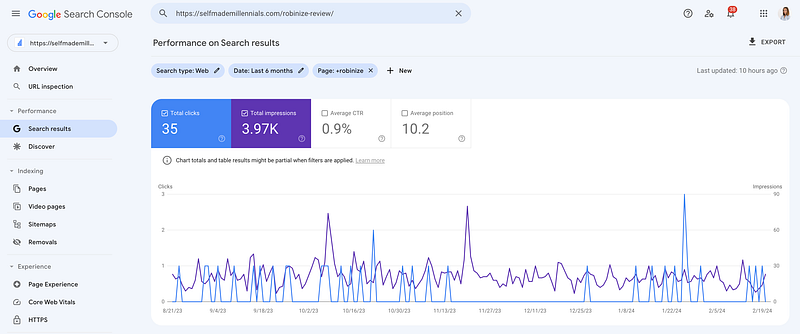
For example, my Robinize review, generated with the help of Bard, Google’s language model, ranks in the 8th position on Google, according to Ahrefs.
I published this article on June 8th, 2023, and it still performs well without any content updates.
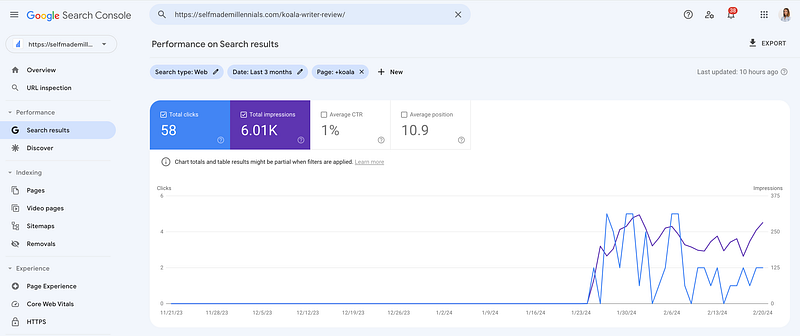
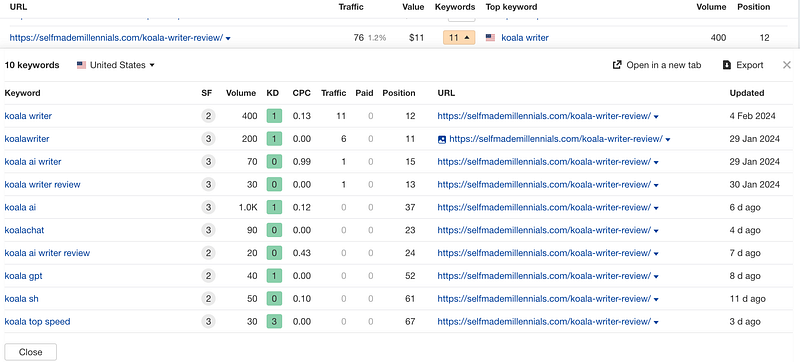
My KoalaWriter review was generated using Koala AI and climbed to the Google front page a few weeks after publishing the blog post.
Here’s the proof.
It’s worth mentioning that I don’t publish content entirely generated by AI tools.
As an SEO expert, I ensure every blog post complies with Google content quality requirements before publication and share my proven-to-work SEO writing process in my SEO ebook.
If you don’t follow Google’s guidelines, it can downgrade your website in organic search results.
There’s one more thing I don’t like about AI-generated content: it’s shallow.
You won’t get a high-quality content piece with unique insights. Instead, AI tools will reuse existing content on the web to generate a similar piece. It will be original, but it won’t be unique.
As a user, why would you read someone’s article if the author didn’t even dare to write it?
That’s why editing and improving AI-generated content is crucial for SEO.
However, not every AI-generated post performs well, even on a healthy website.
My latest experiment with Google’s Gemini
I used Gemini to create a blog post about SEO newsletters.
I researched keywords, prepared a list of keywords to target, and created an outline aligned with users’ search intent.
The idea was to use Gemini to generate content about five different SEO newsletters while I would write about my “Website Growth Master” newsletter on my own.
I thought this strategy would work like all the previous times since no research data or anything specific is required for this article.
However, it didn’t work this time.
Here’s what happened.
I finished the article in a few hours, designed it in WordPress, created catchy metadata, and hit the “Publish” button.
The article was almost immediately crawled and indexed, which is usually a good sign.
All that remained was waiting for impressions and clicks to grow.
I didn’t expect any issues at this point since my website has been live for three years, its domain authority is 31/100 (medium), and the keyword was easy to target.
However, Google removed my web page from its Index instead of ranking it.
Instead of the green “Indexed” status, my page’s status was “Crawled — currently not indexed.”
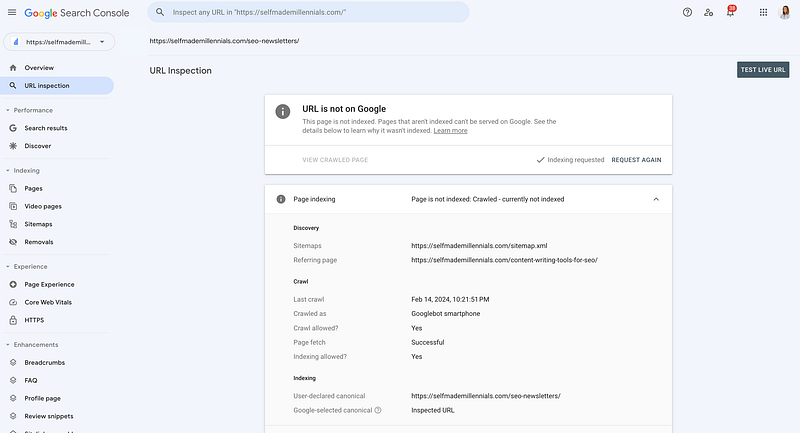
Here’s what Google says about this status.
“Crawled — currently not indexed: The page was crawled by Google but not indexed. It may or may not be indexed in the future; no need to resubmit this URL for crawling.”
Google doesn’t provide any explicit answer to what causes this issue. However, I’ve already experienced it several times when working on my client websites. In a nutshell, Google can remove any page from its Index if it experiences technical or content-related issues.
In my case, my website doesn’t have any critical issues that would block Google crawlers. That’s why I firmly believe the problem was with the content.
Since I monitor the indexing status of every page on my website, I can quickly make adjustments and resubmit the URL for indexing.
That’s why I always recommend my clients and other content creators to monitor freshly published content. There’s a chance that Google will exclude it from indexing, but you won’t even find it out.
What you can do
If your content isn’t in the Google index, you can resubmit it for indexing in Google Search Console.
You are good to go if your URL is in the Index in a day or two.
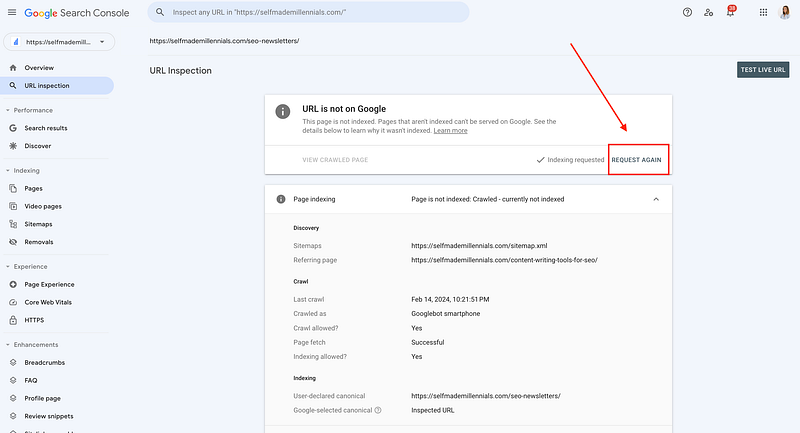
What do you do if a resubmission doesn’t work?
In this case, I use the following strategy:
- Rewrite 30–50% of the content (Google considers a page unique if it has over 50% unique content).
- Change meta title and description
- Add new paragraphs
Once you are done improving your content, you can resubmit it for indexing.
In conclusion
It does not matter whether you like AI or not. It will stay with us no matter what.
The best thing we can do is learn how to leverage it effectively to improve our lives.
Even though I dislike AI-generated content, I admit the Internet will soon be flooded with AI-generated content.
Content creators care less about users and more about their engagement stats. It is a fact.
That’s why it’s challenging to find helpful information nowadays. It’s not the ultimate goal anymore.
I firmly believe that focusing on your niche and adding value to your content will help you grow your website in organic search results, even if you use AI-generated content. Why am I so confident? I’ve been effectively doing it for the past years.
AI can be your true friend if you know how to use it.
📈 Want to grow and monetize your website?
Grab my free case study on “How I Turned My Website into a Profitable Side Hustle in 3 Years.”
Want more marketing tips and tricks? Subscribe to the Better Marketing newsletter The Marketing Memo here.