
Goodbye Mr. Tiggy-Winkle
We’ll miss you but we would miss our cars more
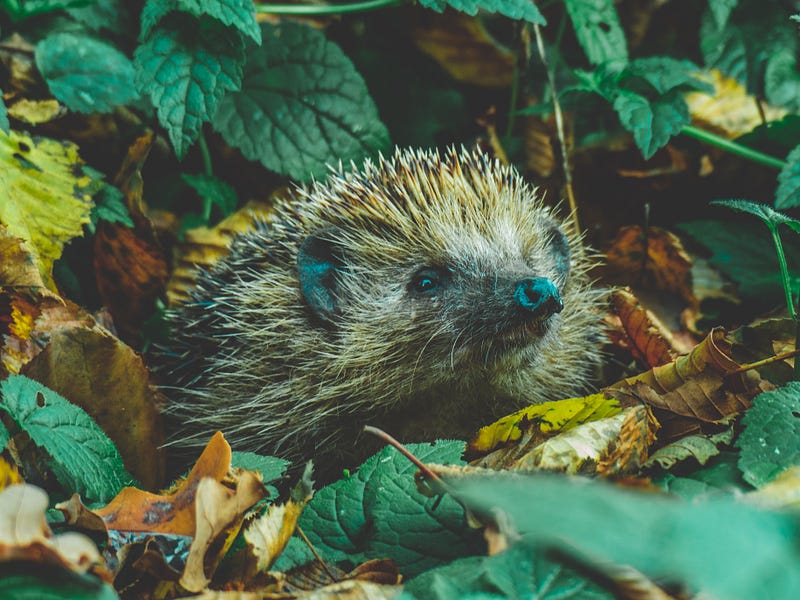
Some years ago, I was living in the delightful city of Bordeaux. Late one night when walking home from the cinema, I spotted a hedgehog walking right down the middle of a pedestrian crossing on a busy road. Now I don’t want to knock French driving here, but I’m reasonably certain that had a car been passing, the hedgehog I was looking at would have been flattened.
Picking him up as gently as I could, not easy with such a prickly creature, I carried him to a nearby park humming the theme music to Born Free as I did so. I wanted him to fully understand that this was a rescue attempt and not a kidnapping. In the park he uncurled himself and waddled off as though this were a regular occurrence in urban hedgehog life.
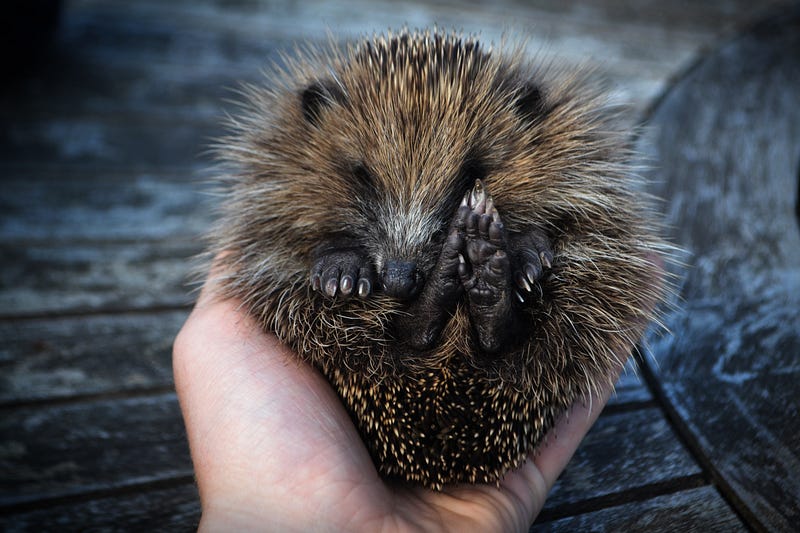
European hedgehogs are the only spiny mammal living in Europe. They are endemic to this part of the world and are emblematic members of the wildlife community. In fact, they are regularly voted the cutest and most popular mammals in the United Kingdom. This is in part because of their adorable appearance, but is also due to the fact that a hedgehog by the name of Mr. Tiggy-Winkle featured in illustrations in books by the renowned Beatrix Potter.
Generations of English children grew up reading these books and Mr. Tiggy-Winkle left an indelible memory.
In 2016 there was even a fifty pence coin minted featuring Mr. Tiggy-Winkle.
Despite their popularity with the general public, the European hedgehog is in terrible decline. In 1950 it is estimated that there were more than 36 million of these animals in Britain. That number had dropped to just 1,5 million by 1995. The numbers are thought to have halved again since the year 2000.
In ideal circumstances, the hedgehog can live to a ripe old age of 10 years. Unfortunately, today the average age expectancy is just three years. Hedgehog populations are being decimated on a number of fronts. Pesticides have not only killed many of the insects, slugs and other invertebrates that they feed on, but many of the animals are poisoned themselves through eating creatures who have consumed toxic chemicals.

Habitat loss is further exacerbating the situation. More and more of the countryside is being carved up by roads and fences or converted to large scale agriculture. All of these obstacles that make it increasingly difficult for hedgehogs to locate a mate.
In 2007, when it was becoming glaringly apparent that these creatures might soon become extinct, they were deemed a priority species in the United Kingdom.
Regrettably, declaring an animal to be a priority may make a good soundbite on television, but without practical steps being implemented on the ground very little changes.
Much of the protection of hedgehogs has been left up to hard pressed charities and volunteer groups. 1.8 million hedgehogs are run over on European roads each year. A figure that has gone up 3 to 4 times over the last 40 years.
Seeing a dead hedgehog lying on the side of the road has always been a slightly harrowing experience for me. It is a sight that has grown far less common as the years have gone by. Now I, and all Europeans, must live with the even more harrowing knowledge that very soon the iconic hedgehog may not be with us anymore.
“We could reduce the number of cars on the road, build less highways and revert to small-scale farms, but we won’t. Instead, we will carry on carrying on while creatures we have glibly declared to be a priority vanish from the face of the earth.
One day, when we show our children those beautiful Beatrice Potter illustrations, they will point to Mr Tiggy-Winkle and ask us what that animal is.
We will have the dubious responsibility of telling them that it was once the cutest creature in all the land but that it doesn’t exist anymore. Let us pray that they don’t ask us why not.


