
Watch Out for Good Meditation Experiences: They Can Block Your Spiritual Progress
The secret is to let them go, again and again
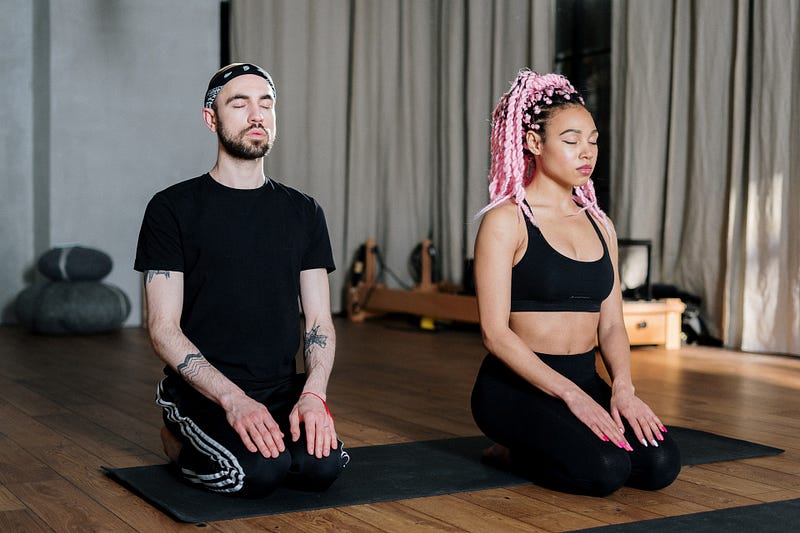
It’s easy to mistake an experience in meditation, like bliss, clarity, or the absence of thoughts, as a sign of spiritual awakening.
One of the first times I meditated, I had my eyes open but cast downward at a 45-degree angle as instructed. After a while, the subtle lines in the carpet seemed to undulate.
“Wow,” I thought and patted myself on the back. But now I know the experience meant nothing—my eyes were probably just too tense and momentarily lost focus.
Meditation experiences can be positive signs of progress on the path. But they can become an obstacle if you attach to them.
I learned this lesson early on from my Buddhist teachers. It’s served me well through my decades of meditation practice.
Let’s look at three common spiritual experiences, what they mean, and how to work with them so they don’t become obstacles on your path.
3 Common Meditation Experiences
When you practice meditation on a regular basis, all kinds of experiences can arise, both seemingly positive and seemingly negative ones.
The word for a meditation experience in Tibetan is “nyam.” Nyams include bliss, clarity, and absence of thoughts—common experiences reported by meditators.
These experiences can indeed be signs of progress in mindfulness meditation as well as in advanced forms of meditation like resting in the nature of mind.
- Bliss can indicate desire has temporarily evaporated
- Clarity can indicate aggression has temporarily stopped
- Absence of thoughts can indicate ignorance has lapsed
Desire (also called attachment), aggression, and ignorance of reality as it is keep us circling in suffering.
The purpose of spiritual practice in one sense, as the Buddha outlined in “The Four Noble Truths,” is to put an end to suffering. Thus, it’s a good sign when these disturbing mental states temporarily come to a halt.
The experience of bliss, clarity, or no thought is not itself problematic. But attachment to the experience turns it into a quagmire that can keep you stuck in the same spot.
Meditation experiences are transitory by nature. Clinging to them is like trying to hold a rainbow in your hands.
As you can imagine, attachment to meditation experiences is a big temptation for us humans.
Just like my “oh wow” moment, a positive meditation experience can inflate your ego. It can make you complacent or overconfident if you think you’re further along than you really are. It can make you believe you’re spiritually awakened when you’re still thousands of miles away.
Attachment to meditation experiences is a big temptation for humans.
Experiences are not realization; they’re not a spiritual awakening. They’re only transitory signs along the spiritual path.
The qualities of bliss, clarity, and no thought become more present in your mind the more you train in meditation. But don’t expect them to happen, especially if you’re a beginner.
The best approach is to let meditation experiences come and let them go.
Don’t try to recreate what you deem to be a positive spiritual experience. You can’t make a meditation experience happen at your command. You’ll only feel frustrated if you try, which will keep you in the realm of the conceptual mind.
In fact, don’t even label experiences as good or bad. Just recognize their transitory nature, experience them, and let them pass.
“Theory is like patchwork; it wears out and falls off. Meditation experience is like mist; it fades and vanishes. But realization is unchanging like space.” — from the Dzogchen Tantras
How To Gauge Your Progress on the Spiritual Path
It’s a mistake to use meditation experiences as a gauge of your progress on the spiritual path. This point is beautifully illustrated by the following story.
“A disciple of the sixteenth Karmapa came to an interview after a spectacular nyam and said, ‘My body feels like it’s made out of rainbows. I don’t feel obstructed in any direction. I am almost sure I am enlightened. I can’t find any flaw anywhere.’ The Karma replied, ‘It is very easy to settle whether you’re enlightened or not. Go up to the top of that building over there and jump. If you are not dead after you hit the ground, you must be a buddha. If you die, of course, it is a shame, but we will do some meritorious rituals for your benefit.”—from Fearless Simplicity, the Dzogchen Way of Living Freely in a Complex World
Please don’t attempt that test! The proposal was meant to shake the meditator out of his delusion, not to be actually executed.
There’s a far safer way to get a sense of your progress on the spiritual path. Ask these kinds of questions:
- How easily are you triggered when provoked?
- Are you quick to anger, get jealous, or feel prideful?
- Do you have a long list of possessions that you can’t live without and always have your eye on the next shiny object?
It doesn’t matter how many positive meditation experiences you have if you’re still a reactive ball of tightly wound emotions attached to the fineries of this life.
“Tertön Sogyal, the Tibetan mystic, said that he was not really impressed by someone who could turn the floor into the ceiling or the fire into water. A real miracle, he said, was if someone could liberate just one negative emotion.”—from The Tibetan Book of Living and Dying
Closing Thoughts
I’ve had my fair share of meditation experience over the years, but aside from that first time, I’ve never taken them seriously.
If you meditate on a regular basis, you’re likely to have spiritual experiences like bliss, clarity, and the absence of thought too.
When you do, remember meditation experiences are transitory by nature. They can be positive signs of progress. But if you attach to them, they can keep you stuck in the same spot for eons—far, far away from actual spiritual realization.
Whatever you experience in meditation, let it come and let it go. That’s an important piece of wisdom I learned from my Buddhist teachers.
For more inspiration, sign up for my bi-monthly Wild Arisings newsletter and receive access to free self-discovery resources.