
Good Debt vs. Bad Debt
What you’ve been told is probably wrong
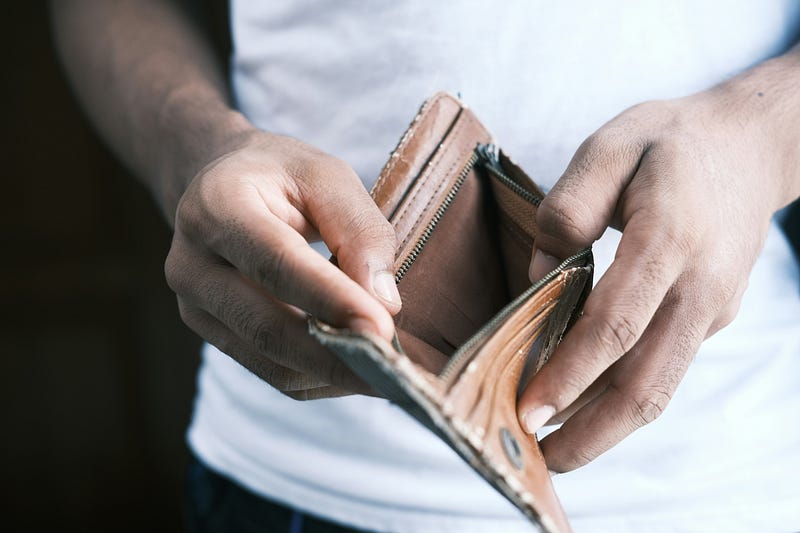
The average debt for a 40-year old American — $135841
I always advocate there are two types of debts.
i) Good debt
ii) bad debt
Here is my definition of good and bad debts: if the debt puts money in your pocket, that is a good debt, and if the debt takes out money from your pocket, that’s—bad debt.
Let’s take a practical example to solidify the concept. Let’s say you buy a property of $200,000; after all the expenses, the property still gives you a cash flow of $200 (just an example); that’s a great example of a good debt.
In the long run, this good debt is helping you become wealthy.
Let me explain.
I buy properties, then fix them a little and put them on rent. Fortunately, rent is pretty decent in my area, and a suitable property is always in demand.
Credit card debt is a bad debt.
It will take the money from your pocket all the time.
I can understand emergencies can drain your pocket. For example, if your pet is sick and you do not have enough cash in your account, you don’t have any option except to use the credit card at a minimum of 19.99% interest in general.
Many will argue that a credit card can be a good debt. I agree, if and only if you pay the credit card in full within the grace period.
Let’s look at the stats.
A recent survey shows that 61% of Americans have an average of $6000 credit card debt, and the worst part is that 23% say they are going deeper each month in credit card debt.
Here is another example of bad debt.
You buy a car for $30000 on a 5% interest (numbers are rough), and the car decreases in value each year, plus the maintenance cost.
A car is not an asset but a liability; you can easily go from point A to point B by using a $10000 (decent car) and investing the rest of the installments.
Example
If you invest, let’s say, $300 per month into S&P 500 for 7 years on a 7% compound annual interest, you would have a minimum of $32000 in your account. Now, after 7 years, the car would not give you $ 32,000.
Takeaways
In a nutshell, good debt has the potential to increase your wealth, and bad debt takes money from your pocket in the form of high-interest and/or depreciating assets.
A great real estate deal is a good debt.
You are making money in three ways.
- increasing property evaluation, appreciating asset
- positive cash flow
- paying your mortgage
Stay away from bad debts! That’s not a real flex.
Book recommendation: Side Hustle: From Idea to Income in 27 Days by Chris Guillebeau
Thank you for reading. I wish you a happy and healthy life.
As a new reader, please check my holistic health, productivity, and well-being stories reflecting my reviews, observations, and 30+ days of experiments (29 completed so far) to build a sustainable healthy lifestyle.
I also write about the general philosophy of life. For your convenience, here are the links.
Mental Health/Brain Damage, Hiking, Cofee (New Research), Technology, Healthy Lifestyle, Life Lessons, Productivity, Learning, Money
Disclaimer: My posts do not include professional or health advice. I only document my reviews, observations, experiences, experiments, and perspectives to provide information to create awareness. This post may contain affiliate links.


