avatarM.T. Pariti

Summary

The website content is a reflective piece on the Chinese New Year celebrations, focusing on the tradition of Lion Dancing, with a personal narrative from the author who has participated in the dance.

Abstract

The article titled "Gong Hay Fat Choy" delves into the cultural significance of the Chinese Lion Dance during the Lunar New Year. It paints a vivid picture of the festivities, with the lion as a central figure in the celebrations, symbolizing good fortune and protection. The author shares a personal connection to the tradition, having performed the lion dance in New York City. Through poetic verses, the author captures the essence of the event, the anticipation of the lion's movements, and the hope for prosperity and peace in the coming year. The piece also acknowledges the impact of the pandemic, expressing a wish for the return of the lion dance tradition in future celebrations. Additionally, the author invites engagement from readers, offering insights into the dance's cultural importance and providing links to their other works and submission opportunities for aspiring poets.

Opinions

  • The author holds the Lion Dance in high regard, viewing it as a vital part of Chinese New Year celebrations.
  • There is an appreciation for the cultural continuity provided by the dance, as indicated by the mention of "Old Hong-Kong Uncles and Aunties" keeping the Cantonese language and traditions alive.
  • The author expresses a sense of community and shared experience, particularly in the context of the lion dance, which is seen as a collective effort to ward off evil spirits and bring good luck.
  • The piece conveys a sense of nostalgia and longing for the full experience of the lion dance, which has been affected by the pandemic.
  • The author values reader interaction and the sharing of cultural experiences, encouraging comments and discussions about the lion dance tradition.
  • There is a clear expression of gratitude towards Joanne Olivieri and augmented man for their inspiration and the platform to publish the poem.
  • The author shows enthusiasm for the future, hoping for the resumption of lion dance performances next year.

Poetry

Gong Hay Fat Choy

The lion lurks in lunar light — surviving another Chinese new year
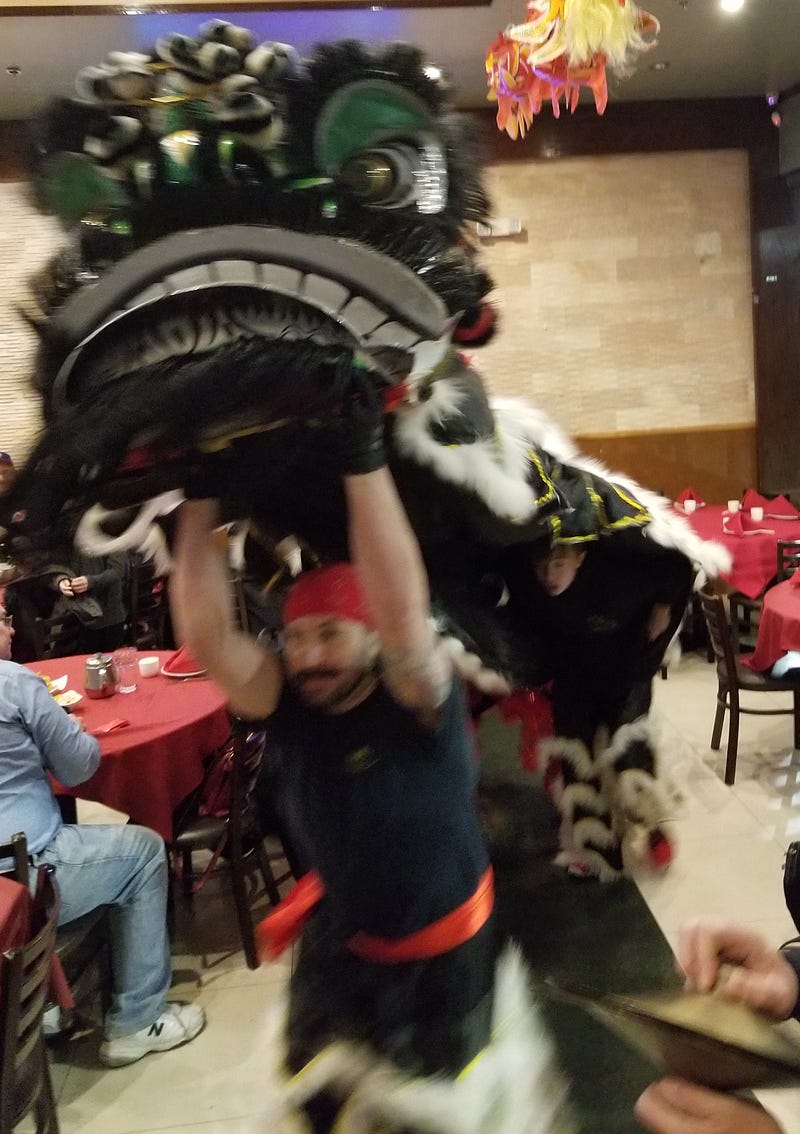
That’s me Lion Dancing at a restaurant in NYC (in the head, not the tail) — Photo of author

Old Hong-Kong Uncles and Aunties keep Cantonese ringing in the streets the children and demons roam

The King is hungry and hunting red paper fairies distract and appease be careful of your hand

If he bows, you might have a chance to get through the year in peace I hope the others are watching

Thank you for reading, and Happy Lunar New Year.

Love engagement, so if you’re unfamiliar with Chinese Lion Dance and want to know more, would like to share your own experience with these celebrations, or want to engage about the piece, please don’t hesitate to comment.

A special thank you to Joanne Olivieri, whose poem New Years Day in Kowloon Hong Kong inspired me to consider my experience as a lion dancer and to share a short poem about it.

Thank you augmented man for the space to publish at The Power of Poetry.

If you’re interested in submitting your own work there just follow the link below:

I wish we could be Lion Dancing this year, but unfortunately all our shows had to be cancelled again. Maybe next year. In the meantime…

If you’re interested in reading any more of my work, I have categorized my writing here into lists:

The categories are:

You may find one poem on more than one list (i.e. a poem invoking imagery from the COSMOS & NATURE might be describing MIND & MENTAL ILLNESS or be presented in WHIMSY & RHYME, etc).

Poetry
The Power Of Poetry
Lunar New Year
Lion Dance
Demons
Recommended from ReadMedium