
Gombrich and Buddha
The Historical Perspective
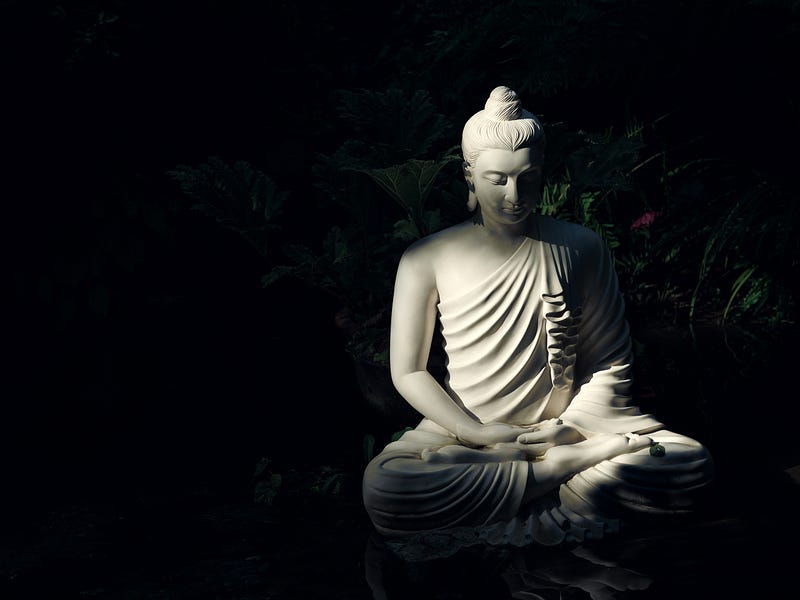
The gravest problem proposes R. Gombrich with rebirth is re-death
Richard Gombrich breezed into my reading universe like a wind of fresh air.
By not being a Buddhist (though expressing the deepest reverence for the Buddha — in fact, calling him one of the most brilliant and original thinkers of all time) — but an historian very well versed in Pali (and Sanskrit for that matter), he asked questions of the Pali Canon that would strike the Buddhist as perhaps not all that polite, impertinent perhaps, a not quite loyal to the Buddha as it were; still, some of his questions were ones I myself had asked now and then.
He asks these questions and then answers them, brilliantly.
Also, as an historian he opens up a much wider vista surrounding the Buddha: the social-political climate, the religious milieu — to me it feels like having a well-educated and observant agent on the ground 2,500 years ago, reporting in regularly.
As a result, reading Gombrich has given me a much realer sense of the Buddha, and of the northern India that he traversed during his forty-year ministry.
He’s also given me the unmitigated delight of the wholly unexpected and new thought — this with the great word re-death. I have a feeling that he made it up, but how fitting:
The gravest problem with rebirth, he says, is re-death. Yes, this is me paraphrasing a little; and I should add (as an illustration of how the muse works at times) that the initial Wolfku began, “The greatest problem…” which, all on its own mind you, changed to “The gravest problem…” since, after all, we’re talking death here — get it?
I just finished his study of Theravāda, its history “Theravāda Buddhism: A social history from ancient Benares to modern Colombo,” and came away even further grounded in the development of this wonder we call Buddhism.
A bit dry in places, perhaps, but what lengthy history isn’t? The bottom line, though, that you cannot help arriving at: This Happened! This historical Buddha did exist, he saw the truth that had evaded so many through time, (and still evades so many) then shared his findings with as many people as he could before he, at eighty, said “Over to you” and took off.
Another thing that strikes me, and which has struck me on and off for a while now, is how many scholars and researchers have studied the early days of Buddhism (some in amazing, immaculate detail). One could be forgiven to think that this was not a fertile field for academic endeavor but one would be oh, so wrong. Dozens, perhaps even hundreds of scholars have excavated this field and even though many of them quote each other, among them they have come up with an amazing outline of what actually happened.
As a result, I stand on firmer ground. Not worrying so much about re-death anymore.
© Wolfstuff
P.S. If you like what you’ve read here and would like to contribute to the creative motion, as it were, you can do so via PayPal: here.