
Golden Boys *Can* Be Perpetrators
In the days following the news on Brock Turner’s pathetically short sentencing, social media has been quick to brand him a ‘rapist’. Pictures of him brandishing that title are circulating widely on the internet.
The first were of his ‘upstanding citizen’, Stanford yearbook photo.

Some have featured his mug shot, compared against the picture of Treyvon Martin in his hoodie, highlighting the stark contrast between Turner’s and Martin’s treatment by the criminal justice system, the media, and society at large.
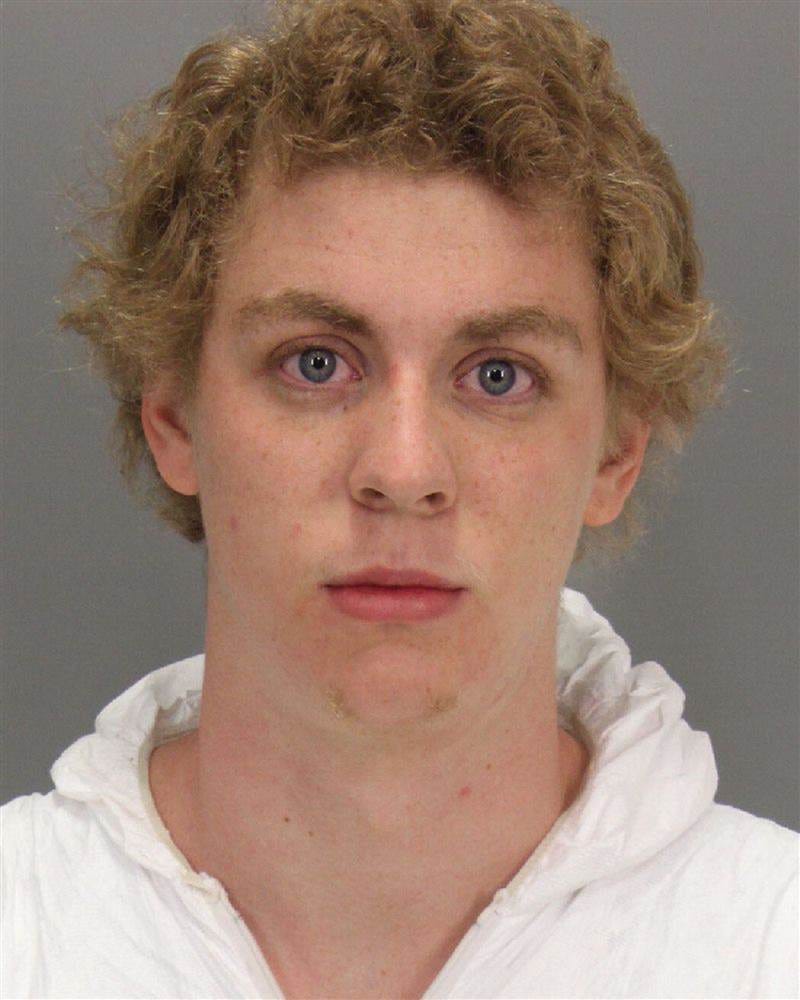
Some have denounced Turner further, saying he is nothing more than a rapist.
“ Brock Turner is a rapist. Not an All-American swimmer, not a golden boy, not a future doctor. In this context, in this trial and every second that existed after that night in January, he is and always will be a rapist. Because he raped someone. Passive tense is not appropriate in this case or any case like it. Nothing was done to him. He is the doer.” — Ashley Daigneault, The Things We Tell Our Boys
I understand where these sentiments come from and how they arise. Part of me agrees with them. They are meant to underscore that Brock Turner is guilty of sexual assault, that his actions are appalling and that the impact of them is devastating. Activists, advocates, and the public want to paint him as the monster they feel like his actions make him out to be, and while I completely feel this rage and the injustice that drives depicting him as a monster, I want to raise one key point.
‘Nice guys’ are rapists too.
As a victim’s advocate, one of the main things I hear over and over again from survivors is that feel like they won’t believed because of the image that their perpetrator has.
“No one will believe me, because of who he is.” “He is the president of the [insert respectable club or organization].” “He’s on a full scholarship at Penn.” “He used to volunteer to help homeless people.” “He goes to my church.”
You get the drift.
Many perpetrators are just like Brock Turner. They are a ‘pillars of society’, successful young men, dare I call them ‘leaders’ within their communities.
They are the type of people most of us would respond to an allegation of assault by saying, “That guy?”
Yeah. That guy.
They aren’t the guy with the mask on hiding behind the bushes. They are that first picture of Brock Turner. The Stanford yearbook photo. The one with the straight teeth and the twinkle in his eyes. The one with all the hope of their families from ‘good homes’ at ‘fine institutions’.
It is easy to believe that someone who looks like a disheveled derelict is a perpetrator, but it’s much harder, and (our challenge as supporters of survivors of violence) to see that *nice guy*, the all-American swimmer with the perfect smile as a perpetrator.
This is how rape culture works, and why it’s so invasive. It’s hidden. It looks ‘normal’.
Survivors are more likely to be assaulted by someone they know. Not the guy who looks like a crook, but more likely, by someone who looks like Brock Turner.
We must believe survivors regardless of who their perpetrator is or what they look like. Perhaps Brock Turner has done some good things with his life. It’s likely he has because most people are a mixed bag. (That’s hard to accept, I know.) And while I can understand the pain that his father must have, trying to wrap his mind around what his son did, and save him from years in prison, what he fails to understand is that his son’s otherwise remarkable set of accomplishments does not erase the unspeakable act that ensued for 20 minutes.