
The Gold Element (AU) Atomic Number 79
Every chemical element is made up of atoms with the same atomic number.
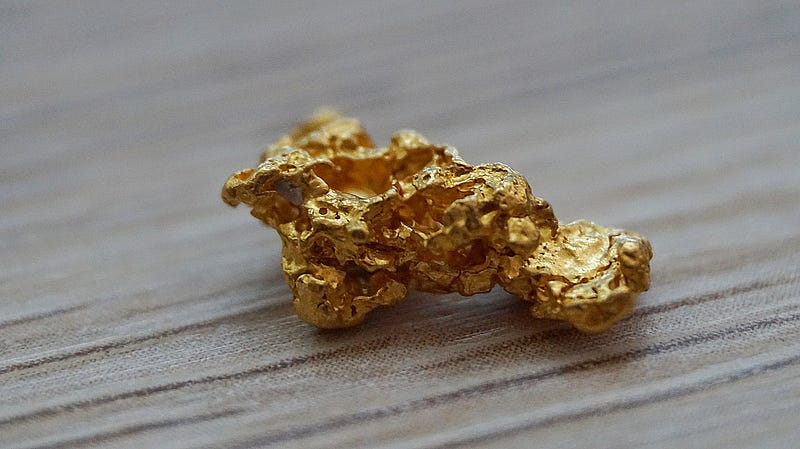
Every atom has an atomic number, which is the number of protons in its nucleus, its centre.
The lightest element, hydrogen, has atomic number 1, gold has atomic number 79, lead has 82 protons in its nucleus, therefore atomic number 82, and so on.
Every chemical element is made up of atoms with the same atomic number.
Gold is a chemical element that we recognise by its yellow colour. It has a high value because of its rarity, resistance to corrosion, electrical conductivity, and, among many other things, its beauty.
The first solid evidence of humans interacting with gold goes back roughly 3,000 years before Christ. It was very important for the ancient Egyptians as a status of wealth.
We have all heard of a gold rush when people would go to a certain place and mine for gold or pan for flakes of gold in rivers or streams.
We have to go back in time — billions of years — to understand the true origin of gold.
Stars produce heavier atoms in their cores through a process called nuclear fusion. It starts by fusing hydrogen to helium, and over time, stars will manufacture other heavier elements. Larger stars can continue this process right up to iron, but that will be the end of the road for heavier element production in stars.
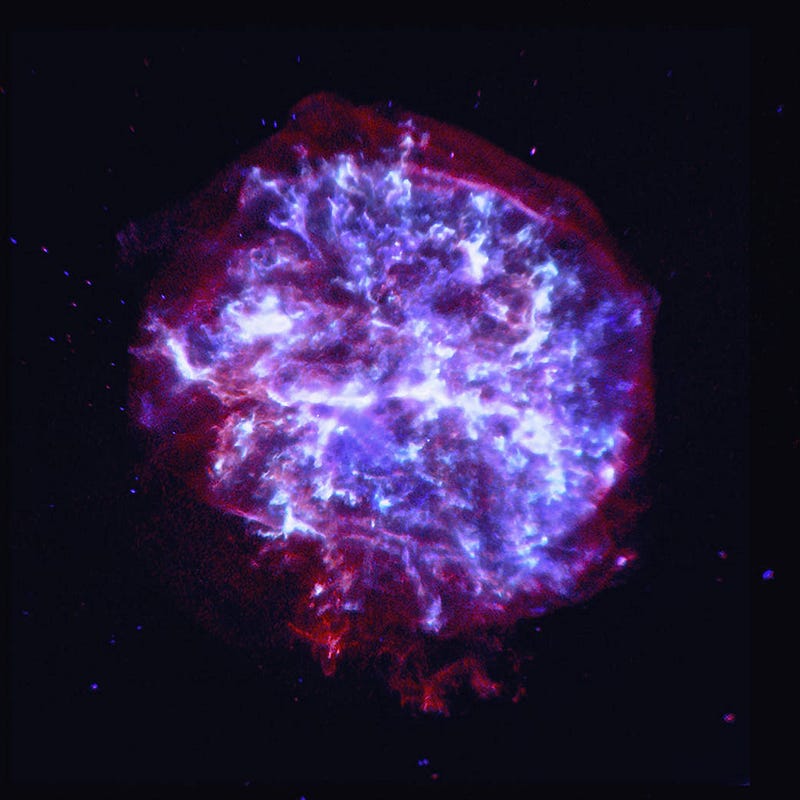
Elements heavier than iron were formed in supernovae and neutron star explosions. When large stars die, their end will not pass peacefully; they end with massive explosions called supernovae that create the right conditions for the manufacture of heavier elements, including gold.
At the time of a supernova explosion, massive amounts of elements are blasted far out into space; eventually, they will become part of other stars, planets, moons, or other celestial objects that are spread throughout the universe.
All the gold that has ever been mined by man is estimated to be 187,000 metric tons. Imagine a cube holding that amount of gold; its sides would be roughly 21 metres across. Yes, that volume of gold is minuscule when you look at the size of our planet.
The proportion of gold in the Earth’s crust is estimated to be just 4 parts per billion.
The early Earth did not have a solid surface like what we see today; over 4 billion years ago, it was just a molten ball. During that time, heavy metals, including gold, sank towards its core, but the early asteroid bombardment stirred the deeper layers of our planet and forced some gold into the mantle and crust.
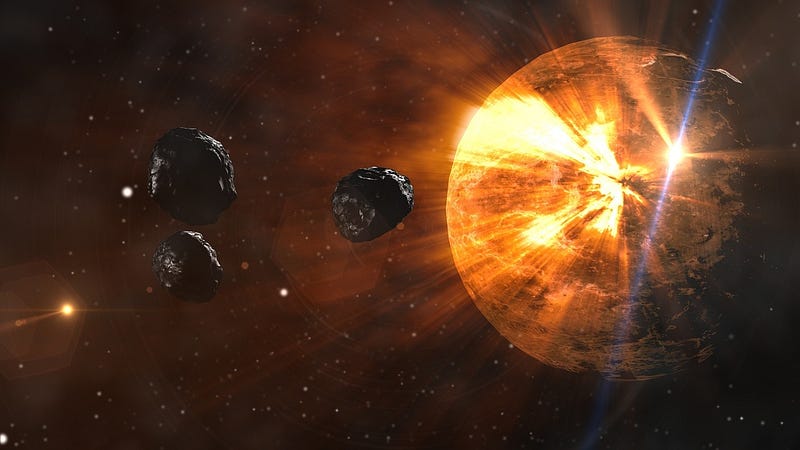
Without that heavy asteroid bombardment, little or no gold would have been found. It is unknown how much gold lies deep within our planet, but it is thought to be much more than what lies in the Earth’s crust.
Now that you have a better idea of how ancient a history gold has, it might make your gold jewellery that little bit more special, but having said that all the elements on Earth have a very long history, especially hydrogen and helium, they are not much younger than the universe itself, which is thought to be 13.8 billion years old.
The end
To be honest, I am not an astronomer, cosmologist, or biologist, but my interest in the universe and life goes back many years. The information in my articles is, to the best of my knowledge, accurate.
You may find some of my easy-to-understand stories about the universe and life interesting and educational. Enjoy