avatarRemy Dean

Free AI web copilot to create summaries, insights and extended knowledge, download it at here

1113

Abstract

d an affinity for this lump of rock. It is one of the very distinctive landmarks of the North Wales landscape. A self-contained world. The contrasting topography of gentle grazing with sheer cliffs and complex geology. Its rich history dates back to the Bronze Age, contrasting with the modern additions of a cable tram, chair lift, and its facility for local fitness training.</p><p id="2666">Then there’s the surrounding waters with their massive tidal episodes, along with the blistering wind and rain from the Irish sea, battering this westerly outpost of the UK mainland, with its vistas across to Conwy and Anglesey presenting he possibility of a spectacular sunset.</p><p id="fa12">The genesis of the rugged rock strata is clearly defined. The submerged carboniferous limestone structure formed around 300 million years ago and later altered through the Ice Age with the grinding of glaciers, the lowering and raising of sea levels. Today, the Orme is an anomaly that fascinates geologists. Its structural form, layers, undercuts, and eroded profiles challenges the climbers and the goats who cling perilou

Options

sly to the faces of <i>Y Gogarth</i>.</p><p id="9d37">I decided to document its physical qualities with the view to producing images that explored geological form and details of texture. The images presented here are composite digital prints, based on the physical rock formations, amalgamated with elements existing around the Great Orme. The sands of the west shore, waves lapping or crashing into the coves (depending on the season), red skies and scudding clouds, blending the solidity of rock with flowing fluid forms.</p><p id="a4ef">Working in monochrome helped to simplify the images, to emphasise the textural qualities, enhance their somewhat unreal expressive power, and remove the photographic associations colour would bring.</p><h2 id="c4ba">David Thomas</h2><figure id="5b66"><img src="https://cdn-images-1.readmedium.com/v2/resize:fit:800/0*NB5kL0Y2zL5WE2nl.jpeg"><figcaption>: Six : Shot : Gallery</figcaption></figure><figure id="3113"><img src="https://cdn-images-1.readmedium.com/v2/resize:fit:800/0*LhQegCp4Hw-VmjMd.jpeg"><figcaption>read our publication</figcaption></figure></article></body>

Gogarth

David Thomas
David Thomas on ‘Gogarth’

Living near the Great Orme, walking and cycling over and around it on countless occasions has developed an affinity for this lump of rock. It is one of the very distinctive landmarks of the North Wales landscape. A self-contained world. The contrasting topography of gentle grazing with sheer cliffs and complex geology. Its rich history dates back to the Bronze Age, contrasting with the modern additions of a cable tram, chair lift, and its facility for local fitness training.

Then there’s the surrounding waters with their massive tidal episodes, along with the blistering wind and rain from the Irish sea, battering this westerly outpost of the UK mainland, with its vistas across to Conwy and Anglesey presenting he possibility of a spectacular sunset.

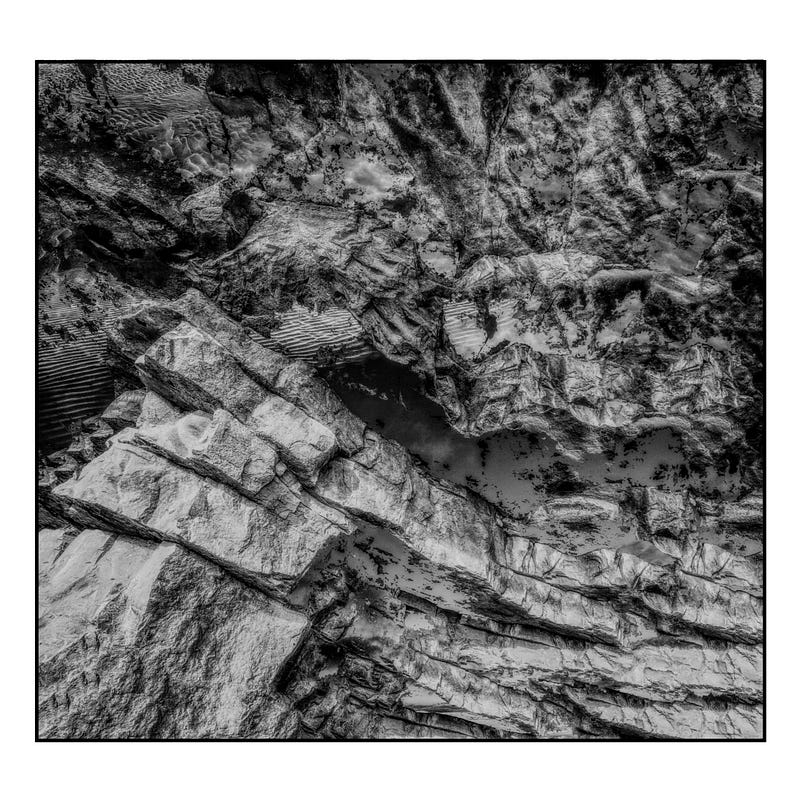
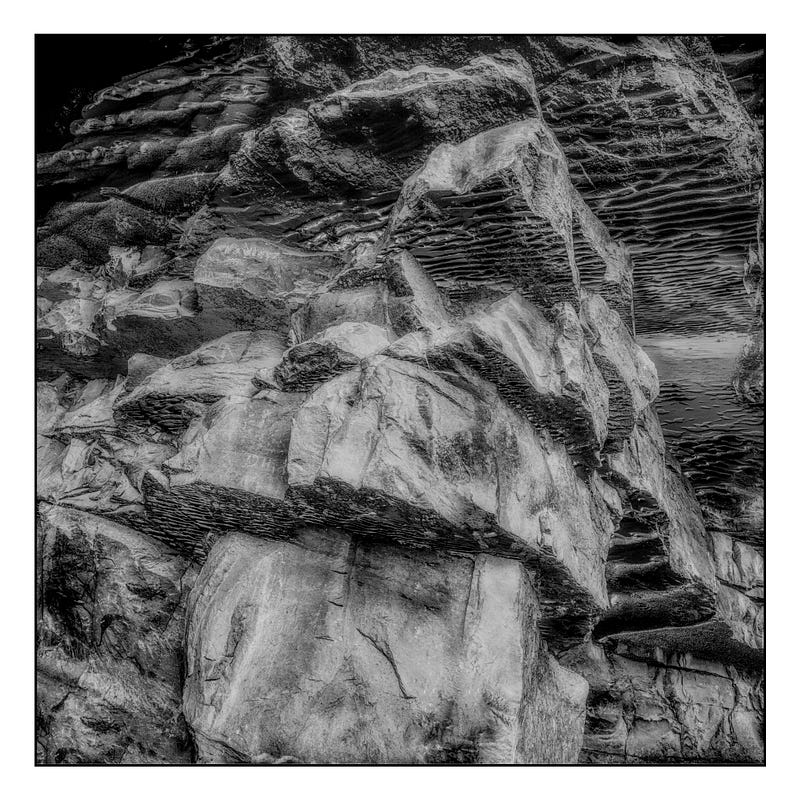
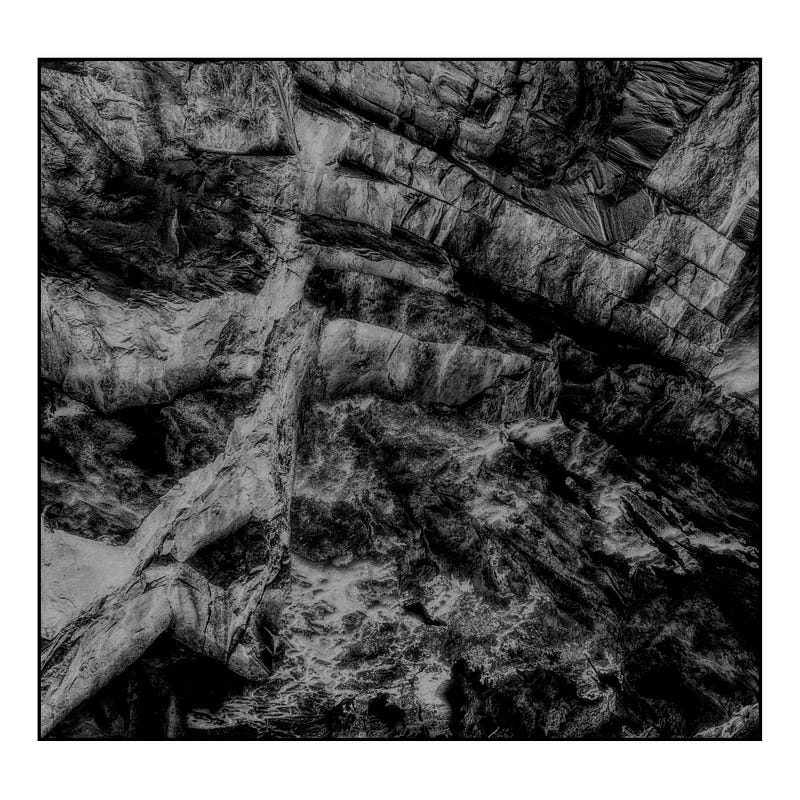
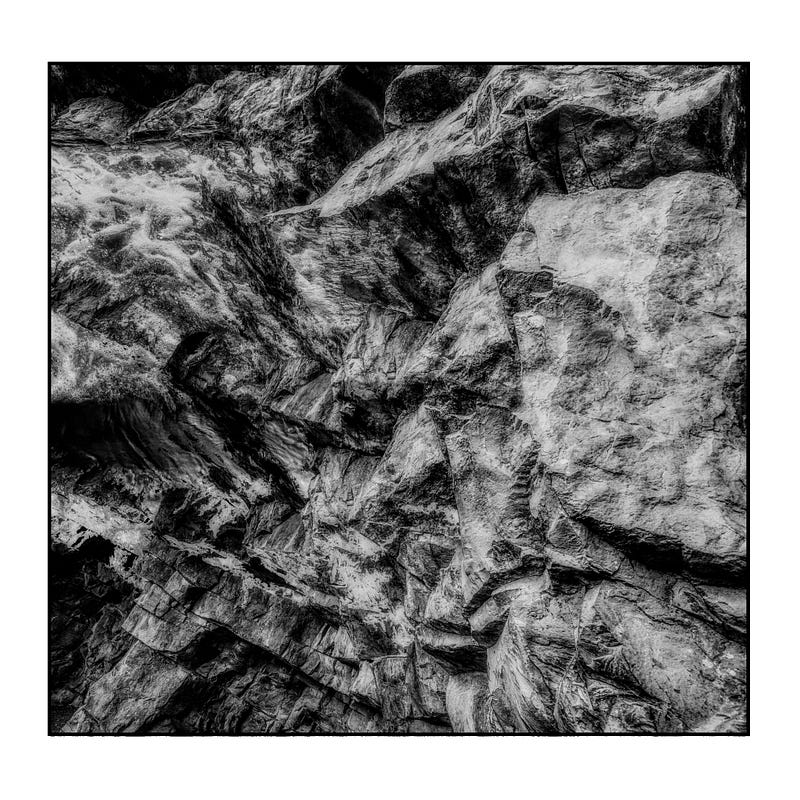
The genesis of the rugged rock strata is clearly defined. The submerged carboniferous limestone structure formed around 300 million years ago and later altered through the Ice Age with the grinding of glaciers, the lowering and raising of sea levels. Today, the Orme is an anomaly that fascinates geologists. Its structural form, layers, undercuts, and eroded profiles challenges the climbers and the goats who cling perilously to the faces of Y Gogarth.

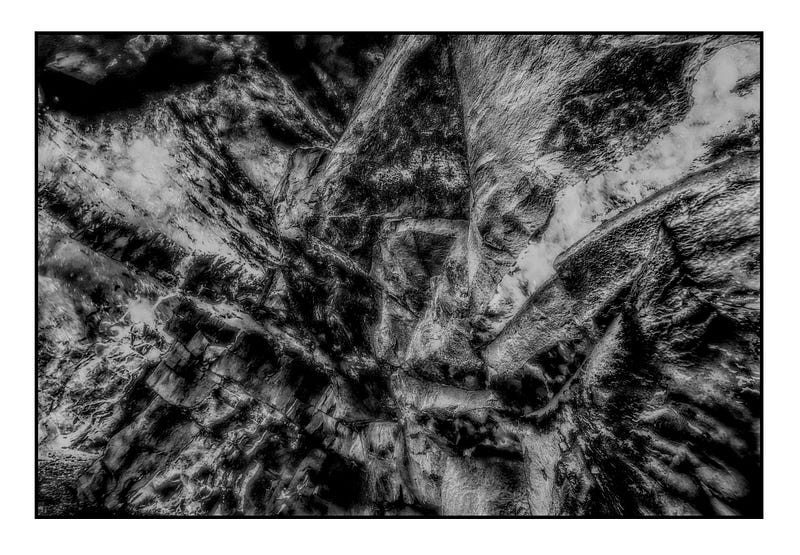
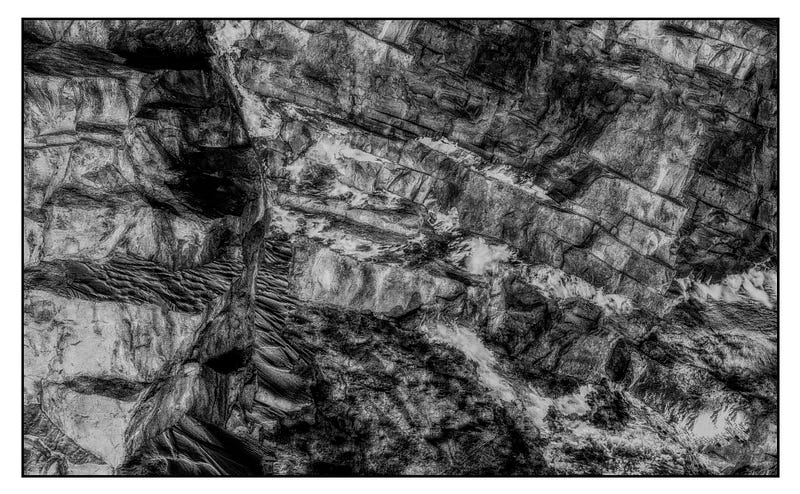
I decided to document its physical qualities with the view to producing images that explored geological form and details of texture. The images presented here are composite digital prints, based on the physical rock formations, amalgamated with elements existing around the Great Orme. The sands of the west shore, waves lapping or crashing into the coves (depending on the season), red skies and scudding clouds, blending the solidity of rock with flowing fluid forms.

Working in monochrome helped to simplify the images, to emphasise the textural qualities, enhance their somewhat unreal expressive power, and remove the photographic associations colour would bring.

David Thomas

: Six : Shot : Gallery
read our publication
Art
Landscape
Gallery
Wales
Print
Recommended from ReadMedium