
Godless Honour and the Tragedy of Art
Can art redeem an absurd life?
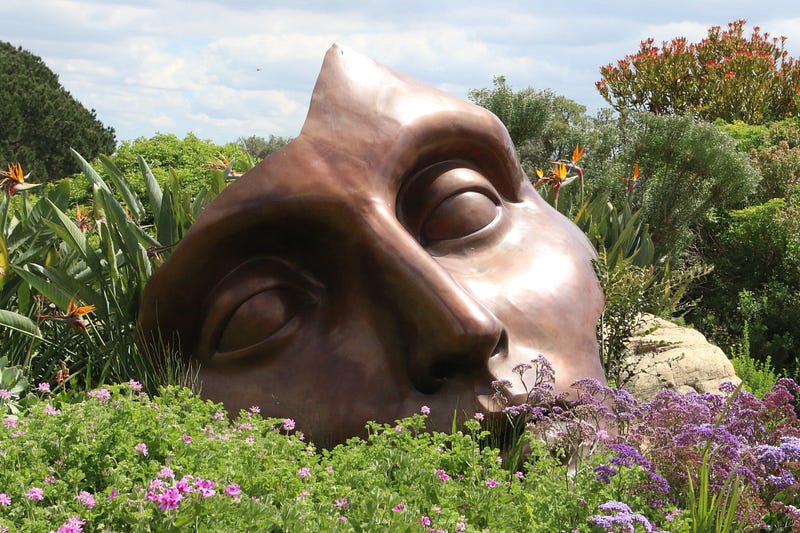
Some decades ago, the philosopher of art, Arthur Danto, declared that art had ended with the rise of postmodern pluralism in which anything goes. As Andy Warhol and Marcel Duchamp showed with their readymade art objects, there’s no longer a difference between art and ordinary objects. If anything can be art, nothing’s really art; art is everything and nothing.
The historical reason for this recent pluralism is that there’s no longer any single overarching myth or metanarrative that directs artists and unifies the interpretation of art. Art is still being made, of course, but no art style or movement can dominate liberal culture anymore to evolve the history of Western art.
Our era is post-art and post-facts; we’re cynical and skeptical of all authorities, we dismiss all myths as propaganda, and we live in great abundance compared to those toiling in war-torn, impoverished countries. Thus, we have all the goods we can afford, so we seem to choose our reality like spoiled children.
Art’s Digitization and Trivialization
I would add to Danto’s account of the death of art a point about the digitization of content.
Content that’s been digitized has thereby been trivialized. If you install some content onto a computer, put the picture, song, novel, or movie on the internet and copy it a million times, you no longer have anything of inherent value. The rarer and more unique something is, the higher its potential value.
You might think oxygen or water molecules make for obvious counterexamples since they’re plentiful and we need them to live. But precisely because they’re so plentiful, we take them for granted and don’t consciously value them.
Only as freshwater becomes scarcer — due to global warming — are we forced perhaps to think enough about water to actively value it, as opposed to just biologically requiring water.
Art’s death throes, as it were, extend to the period of art’s digitization in that computers and the internet provide us with a superabundance of content, with what David Shenk called even in 1997 “information glut.”
Certainly, for economic reasons, the inflation of art’s quantity makes for a plummeting of art’s value in popular culture. This is no mere abstract calculation. Pop cultural art is disposable, as are the artists who produce it since we’re free to pirate their work or to pay them a pittance on Fiverr or Etsy.
True, there are rich pop stars whose works top the charts, but their success is due to a fad, since their fans are fickle. Thus, the fads are quick to change with no warning, the stars’ popularity swiftly wanes and these one-time celebrities, too, are excreted from the dehumanizing system.
The vast majority of artists have been absorbed into the “gig economy,” as technology has spoiled and infantilized us. We expect to be immediately gratified and to pay no cost for the feeding of our gargantuan appetites. The costs are externalized or ignored so as not to interfere with the training of consumers to behave like babies.
To be sure, some new “art” still sells for hundreds of millions of dollars in the stratosphere occupied by the power elites who wouldn’t be caught dead sullying themselves with the refusal of pop culture.
However, the lofty economic value of that art for the wealthiest one-percenters doesn’t translate into real value, since that minority population is disproportionately sociopathic, having been corrupted by its outsized wealth and dominance, and is therefore incapable of the full range of human emotions, including the emotions needed to cherish anything.
Instead of understanding or consciously valuing their art, the top one percent purchases on a whim the carefree scribbles or noises or whatever the elite con artists are calling revolutionary art these days. The patrons buy that art as a status symbol to impress each other in a decadent game of conspicuous consumption. The plutocrats are like the old European aristocrats who used to commission art for political or narcissistic rather than aesthetic purposes, to magnify their self-image and to carve out a respectable legacy (to distract from their hollowness and debauchery).
Infantilization, Jadedness, and the Deluge of Content
Facing all of this, the average citizen living in a relatively free, technologically-advanced society is naturally jaded about art. We consume it all the time, breathing in our trivial creations like air. We’re drowning in digital content on social media, streaming it on our large and small screens from both commercial and indie content creators. Today there are more artists hard at work than there have ever been before, so ironically their efforts have never been less consequential.
Postmodern cynicism reflects the lower-scale dynamic in which an individual grows old and, having participated too much in some endeavour, has exhausted his or her interest in it. The more action movies or romantic comedies you see, for example, the more they bore you and the less likely you’ll be impressed by the latest movies in that genre. It’s the same with all the arts.
Granted, there are some enthusiasts whose appetite is insatiable. Some movie critics, for instance, even after seeing thousands upon thousands of movies, maintain that their love of movies has never wavered. They still watch films and write up their reviews, not because that’s their job but because they find they’re always able to find new aspects of the medium to explore.
This is hard to credit, because we should expect that when we know something inside and out, we can no longer appreciate it with naïve euphoria. This was the Romantic’s point about the danger that scientific progress would “unweave the rainbow.” By knowing what rainbows really are, we disenchant them and may even lose all meaning in life.
Suppose, for example, you study creative writing and you write many novels. You know all the tricks of the literary trade. How, then, could you enjoy the experience of reading any novel, especially one you’ve written, now that you can so easily turn on your critical faculties and pull apart the novel, undermining its integrity with your technician’s perspective?
The point can be put in terms of the philosopher Daniel Dennett’s theory of the three levels we can occupy in interpreting the behaviour of systems. According to Dennett and to many cognitive scientists, we evolved to assume different psychological “stances” towards real patterns, to explain and understand them.
We can assume something has a mind, in which case we posit intentions, reason, and freewill. We can also ignore such terms and take on a design stance, in which case we’re interested in how the thing works, so we posit mechanisms and simulated purposes. Alternatively, we can take up a physical stance and treat the system as a physical object that behaves according to arrangements between fundamental forces, materials, and initial conditions.
In terms of art, then, we want to assume something like the first, intentional stance, to experience art as meaningful, because we want to be emotionally moved or challenged by the artwork. The problem is that when we’ve experienced too much art, such as when the internet and the gig economy have swamped us with billions of digital copies of disposable freebie artworks, we’re all-too prone to take up the second, design stance. Instead of letting the art wash over us, we perceive too easily how the art was made, how it works, and what political and economic motives the art serves.
We see through art the way Neo sees through the matrix in that movie. Instead of being enlightened, however, we’re more often spoiled and childish in dismissing previous waves of streamed content, because our attention spans have been so narrowed and we’re addicted to the rush of incoming data.
This recalls a theme of the movie Ratatouille in which a food critic has become cynical and arrogant after having sampled so many foods and mastered his knowledge of cuisine, such that he becomes fearsome, monstrous even, and very difficult for chefs to please. But the critic is saved from the pseudo-life of being forced, as it were, to taste all food through Dennett’s design filter, treating food merely as a quantitative result of following the steps of a recipe with more or less efficiency. In the movie a talented rat cooks him a meal that surprises him and makes him nostalgic, bypassing his knowledge of food and enabling him to enjoy the ratatouille.
However, anticipating the arrival of our ratatouille or of our hidden gem in the deluge of trivial mass-cultural content may be like the longing for the second coming of Christ. The faith that we can be rescued from joyless cynicism seems more and more empty as our societies’ technoscientific power advances, just as the centuries that have passed since the falsified early-Christian prophecies make the Christian’s talk of the Parousia’s continuing delay a palpable absurdity.
Schopenhauer, Spinoza, and the Tragedy of Art
Unlike reason, power, and pleasure, mind you, art may have a clear role to play in our quest for godless honour.
Schopenhauer adapted a pessimistic Eastern perspective in hailing art as a tragic savior. What art does, he said, focuses our attention on surface features so that we forget our petty preoccupations, cease our incessant willingness, and withdraw from nature’s established patterns of exploitation. We become free-floating observers, lost in the beauty of some creation.
Art does something else that’s noble, which is to leap over the piddling quantifications and bloodless assessments of the facts and present us with the unvarnished metaphysical truth of our situation. In particular, said Schopenhauer, art critiques the world for its failures to live up to our ideals, ultimately condemning nature’s inhumanity.
As he says in volume 2 of The World as Will and Representation, “every work of art really endeavors to show us life and things as they are in reality; but these cannot be grasped directly by everyone through the mist of objective and subjective contingencies. Art takes away the mist.”
Unlike science and philosophy, art can do this, as he says in volume 1, because art
plucks the object of its contemplation from the stream of the world’s course, and holds it isolated before it. This particular thing, which in that stream was an infinitesimal part, becomes for art a representative of the whole, an equivalent of the infinitely many in space and time. It therefore pauses at this particular thing; it stops the wheel of time; for it the relations vanish; its object is only the essential, the Idea.
We can think of this as the Eastern mission of art, which is to free us from our attachment to a monstrous, alien, and indifferent world, by de-indoctrinating us, liberating us from our ego and our small-minded volitions, and revealing the abyss between what’s real and what’s ideal.
What’s not so clear in Schopenhauer, though, and what can be drawn from Spinoza and Nietzsche is a universalization of what we might call the aesthetic stance (building on Dennett). Schopenhauer speaks of art as a special kind of representation. But we can cease our willingness and stop and stare at nature, too, in recognition of the divine creativity of cosmic evolution.
The intentional, design, and physical stances, as Dennett discusses them are practical in that they’re meant to increase our understanding and enable us to predict behaviour. By contrast, the aesthetic stance would be marked by what Immanuel Kant called “disinterestedness.”
The easiest way to grasp the difference is to imagine a scenario in which a person is highly interested in something because much is at stake for her. Suppose someone won a million dollars in the lottery. As she holds the winning ticket, she may reflect on all the ways she can use the money. In that case, she’d be assuming something like the design stance, since she’d be using the ticket as a tool for acquiring a large sum of money, which in turn would be used to make various purchases and to change her life’s circumstances.
But suppose instead that while staring at the ticket she has almost an out-of-body experience. Instead of thinking about the ticket from an egocentric perspective, she finds herself mesmerized by how the ink of the numbers is printed on the paper and how the paper happens to be highly reflective and how there’s a crease in the corner, and so on.
Suppose she goes as far as to experience the ticket as though it were framed in an art gallery, as an isolated object that can be appreciated in its own right, independent of its historical, teleological, or any other ideological relations to the rest of the world. If she focuses on the sheer existence of the ticket, setting aside her more theoretical background knowledge, she’s adopting the aesthetic stance. Moreover, she’s shown how that stance amounts to an existential or mystical mode of experience.
Contrary to Spinoza, then, who interprets pantheism in rationalistic, deterministic terms, implying that the “blessed,” enlightened state is one of knowing or intuiting where each part stands in relation to the whole, the ideal state of mind may bracket all such causal knowledge and be one of gaping in wonder at the fact that everything that occurs is a pointless, doomed creation.
Spinoza thought everything is eternal in virtue of its relation to absolute “substance” or to the wholeness that encompasses all particular occurrences (all “modes” and “attributes” of the infinite creative force), but contrary to Spinoza, there’s no human understanding of such wholeness. “Substance” is a vacuous placeholder word, as is “God” or “Nature”; they’re each dispensable, especially since we can substitute a more fitting, less scholastic relation between us and the underlying existential situation.
Instead of pretending we grasp the essence of what everything in the universe amounts to in all its dimensions, in the untold eons to come after all the stars have been snuffed out, and inside the mind-shattering black holes — instead of entertaining any such archaic anthropocentrism under the cover of the rationalist’s principle of sufficient reason, we should take care to have built up enough humility and sensitivity to be able to suffer through the most fitting emotional reaction to the universe’s godlessness. That reaction is some combination of awe, wonder, hilarity, angst, dread, horror, and disgust.
Spinoza could think of enlightenment as a “blessed” state because as daring as his pantheistic philosophy was, he still labored under monotheistic metaphors. Art can expand our minds as we follow the artist’s revelatory, often unconventional vision. But that’s only to speak of proper art, of artistic representations. What I mean to emphasize here is that we can take up the aesthetic stance and view all of nature not as an intelligent design, but as a mindlessly-evolving, destructively-creative construct.
Human art is an intelligent commentary on the world, but we, the human artists, are created in turn by natural “processes.” When we can appreciate the artistic merit even of natural disasters, we’ve likely been enlightened, detached from our parochial concerns and lost in dumbfounded appreciation that nothing really matters because, at best, everything’s only beautiful.
The Apeiron Blog — Big Questions, Made Simple.
We know that Philosophy can seem complicated at times. To make things simple, we compile together the best articles, news, reading lists — and other free recourses to guide you on your journey. To continue with us, follow us on Medium and sign up to our free mailing list.