
God Is Bigger Than Elvis: She Left Fame — And Her Ring — To Be A Nun
Dolores Hart gave Elvis his first onscreen kiss: She enjoyed every worldly dream but gave it all up to marry God instead
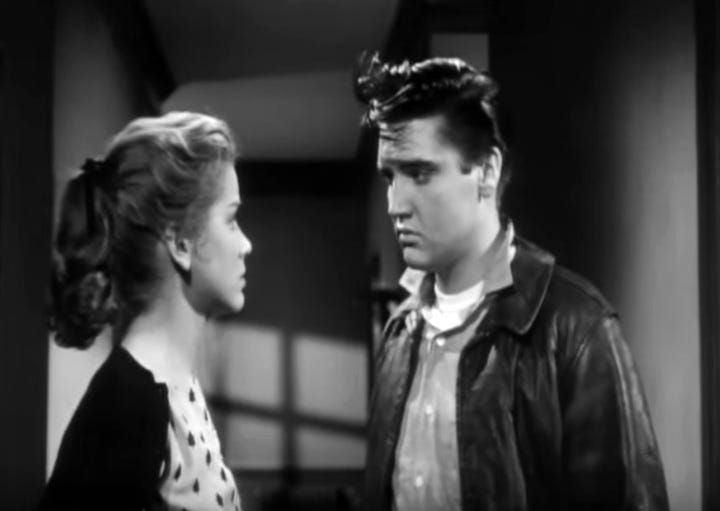
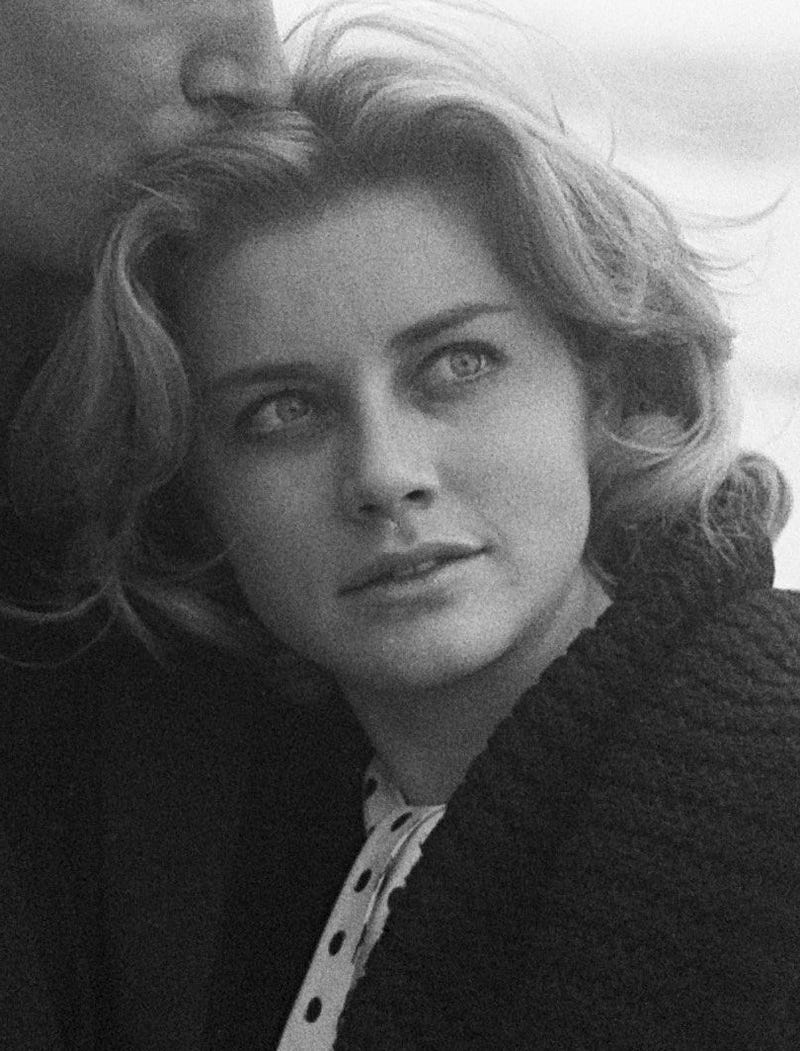
Will a star be a saint? Dolores Hart was “the new Grace Kelly,” Elvis Presley’s “love” in his two best films, giving him his first passionate onscreen kiss.
Kelly and Hart had a similar “look,” beauty, style, and grace. Each left Hollywood for a leading role in a greater kingdom. Kelly became the princess of Monaco. Hart married God, becoming Mother Dolores Hart, a Benedictine nun. In film and the Church, the 82-year-old is a star:
- Walter Winchell called her “one of the most believable actresses” he’d “ever seen.”
- Variety said she “glows with a spirited sensitivity.”
- The first pope she met, St. John XXIII, said she was St. Clare (not merely the actress portraying her in a film).
- Inside the Vatican named her one 10 most important Catholics.
Hart’s 1957 film “introduction” at age 18 in Loving You essentially retold Presley’s life story, while their 1958 film, King Creole, is considered the greatest of Presley’s 31 films.
“I never felt I was ‘walking away from Hollywood,’” Mother Hart explains. “I felt I was walking into something more significant, and by that, I took Hollywood with me.”
One of her grandmothers thought she should be aborted
“…you were cast out on the open field, for you were abhorred, on the day that you were born,’” (Ezekial 16:5–6).
Mother Hart’s parents, Bert and Harriet Hicks, fell in love at ages 16 and 17. Both were strikingly beautiful with big dreams (and tattoos). Her dad was “a Clark Gable type,” winning small parts in films. He introduced a colleague to his sister — and that’s how famed singer Mario Lanza became Mother Hart’s uncle.
Her parents were also alcoholics, erratic and abusive, and married and divorced multiple times. Her parents died 28 months apart at ages 44 and 46—the coroner listed both deaths as suicides. Dolores kept fleeing the disorder for the ultimate order of God and God’s Plan.
“I sensed very early that a battle was going on for me,” she wrote in her autobiography.
She was born on October 20, 1938, named after an aunt who became a nun that same year. But all was not beautiful. One of her grandmothers urged the teenage lovers to seek abortion rather than bring another baby into the world.
“I remember the fights, the yelling, but I don’t think I really connected them with the bruises I would often see on my mother,” she recalls. “I remember, too, long periods of silence and waiting for the next explosion.”
It was a “frantic,” lost, and uncertain life, running away, moving back and forth, “It seemed as if we were always running to get somewhere as if we could keep ahead of threatening undercurrents.” Their “Divorce, remarriage and redivorce left me angry — not unwanted, but lonely.”
The food was the real draw: How Dolores became a Catholic
Her grandparents got her into a Chicago Catholic school (choosing it because it was a more leisurely walk). She found it “engaging.”
“As young as I was, I was taken by a special presence in the sanctuary, and I grew to understand that this presence came from the place where the candle was lighted and was holy,” she wrote. “It made me feel secure.”
She became Catholic just before turning 10 because of the food:
- Catholic students started their day with morning Mass and then “broke the fast” begun the night before by receiving hot chocolate and a sweet roll.
- Non-Catholic students (at the time) didn’t get the sweet roll, so young Dolores asked if she could “have bread with the other children.”
- A nun assumed she meant “the Eucharist,” and soon, her family agreed she could be baptized.
“I knew God was on my side,” she explains. “In becoming Catholic, I thought of myself as part of a colorful new cast of characters in an exciting new story.” During Mass, “I watched when the children received Communion. I began to put together the fact that the presence I experienced when I was alone in the church — the reassurance, the well-being — was somehow associated with the wafer the children ate. Soon I would be able to participate in a new way — not only going into the church but actually receiving the wafer kept in that box, the tabernacle. It was hard to explain as a child — there I was finding this wonderful thing, and there I was eating it.
“Listen and attend with the ear of your heart.” — Saint Benedict
Prayers answered: Did every earthly dream come true by age 23?
By age 23, Dolores Hart seemed to achieve every earthly dream:
- Fame. She had been featured on Broadway (earning a Tony nomination) and in 10 films, including classics like Wild Is the Wind, Where the Boys Are, The Plunderers, Francis of Assisi, The Inspector, and Come Fly with Me.
- Fortune. Her last contract (just before leaving it all behind in June 1963) called for a salary of $7,000 per week (more than the average American family made $6,000 over an entire year).
- Love. She was loved by many (yes, Elvis asked her out). By 1963 she was engaged to architect (and daily Mass-goer) Don Robinson, who knew he wanted to marry her on the first date. They were engaged, a wedding date was set, and he even bought their marital home before she called it all off. Love remained (we see them reuniting in a 2012 Academy Award-nominated documentary). He never married but continued to visit her at her convent twice a year from the 1960s until he died in 2011. “I never got over Delores,” he explained.
- Successful. In 1986, working with fellow actress Patricia Neal, Mother Dolores founded The Gary-The Olivia Theater. “It wasn’t until we started a theater on the Abbey land that I really could see how I could help young people find their vocation in Christ through the medium of the theater,” she explains.
Visits to the Abbey of Regina Laudis (initially for rest) kept calling her. “I was in love with God,” she explains.
“If you can find hope, you might find faith,” she added. “I knew I was myself — I could find in God my own inner certitude.”
Though Gary Cooper was much older, she became his godmother
And yet, the need to be an artist and act was also part of her vocation. Her father was an actor, and her grandpa on her mother’s side was a projectionist at the Drake movie house in Chicago “and used to bring me with him to the projection booth on weekends.”
She saw all the films constantly and “was spellbound. I eventually got to know the stories so well that I could act them out myself, copying the expressions of the actresses. I began to work out the reasons for pausing or holding a certain look, which allowed for a feeling to be portrayed. I can’t believe I was thinking about those things in the second grade.”
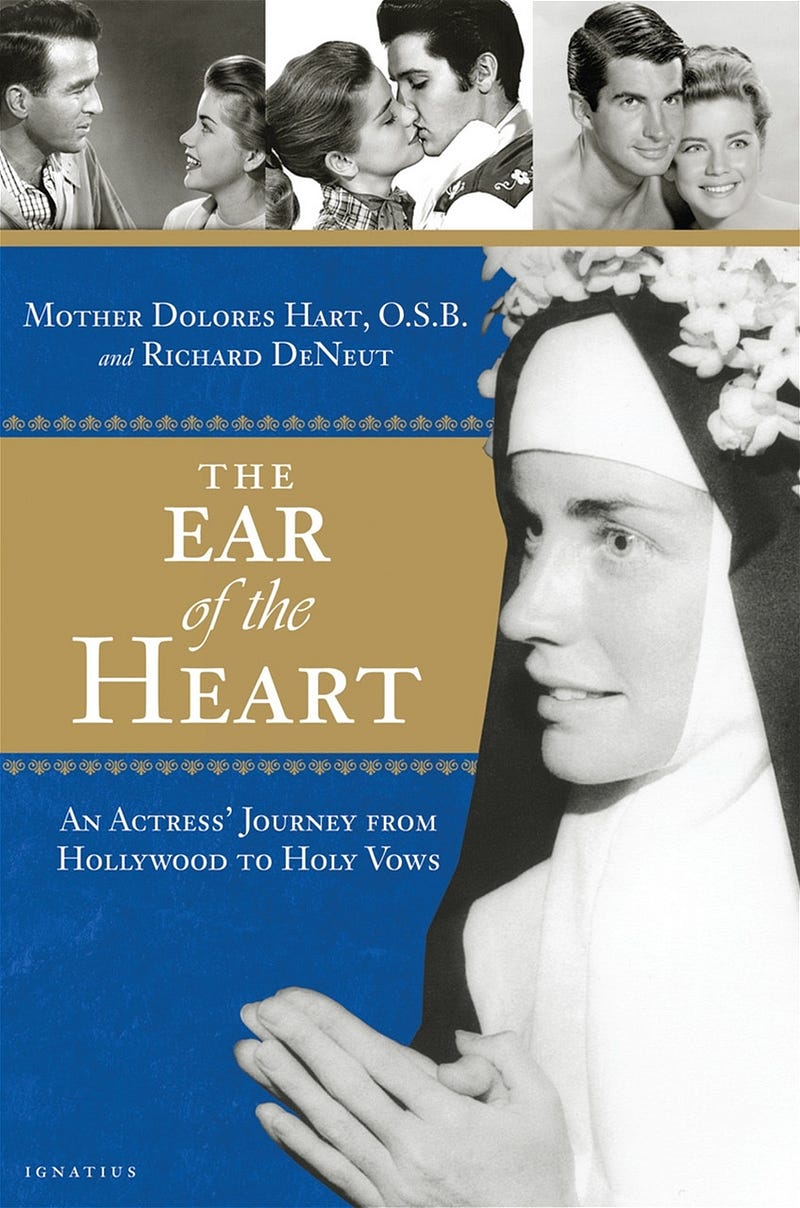
When she became close friends with the daughter of Hollywood legend Gary Cooper, the High Noon star (like Elvis) called her “Miss Delores.” When he converted to Catholicism late in life, he asked Delores to be his godmother.
Elvis: Don’t call me the king — there is only one king
She always asked about Elvis Presely. Mother Dolores remembers Elvis as “an innocent,” with more talent and a more remarkable ability to listen than anyone. But he was part of a system that didn’t listen well to its performers.
She remembers being with Elvis when he “suddenly took the Gideon Bible out of a drawer and opened it at random, letting a finger fall onto a verse. He read it and turned to me and said, ‘Now, Miss Dolores, what do you think of that?’ We talked about the verse and what it meant to us personally. He did this several times more, opening the Bible and casually selecting a passage.”
She recalled, “Elvis was no stranger to the Bible. He quoted from it quite often. Of course, he came from a deeply religious background; he was raised attending camp meetings and revivals.”
She recalls a fan calling him “the king,” and he stopped her and softly but firmly said, “Don’t call me the king. There is only one king, the Lord Jesus Christ.”
Another time, a young girl thrust her arm into the backseat window, “hoping to touch him. Her sleeve caught on the door handle, and she was pulled along with the car. Elvis shouted for the driver to stop. The car came to a halt before she suffered any injury, but Elvis got out anyway and made sure she was all right before we went on.”
Exactly 35 years later, she got a letter from the girl (now grown in Canada), reminding her of that “horrendous but wonderful’ moment.” The woman wrote that she thought of Elvis each time she looked at that arm.
“Our problems, worries, frustrations are nothing but pride,” Mother Dolores writes. “Every one of us has too much pride to put our trust in God. No matter who we are, no matter how big a star, we must trust humbly in Him, and by doing so, we will reach that ultimate reality which is in Him.”


.JPG#/media/File:King_Creole_1958_(Elvis_Presley_and_Dolores_Hart).JPG)
