
“God Exists Because He is Great” — A History of The Ontological Argument
Can God be Found Through Reason Alone?
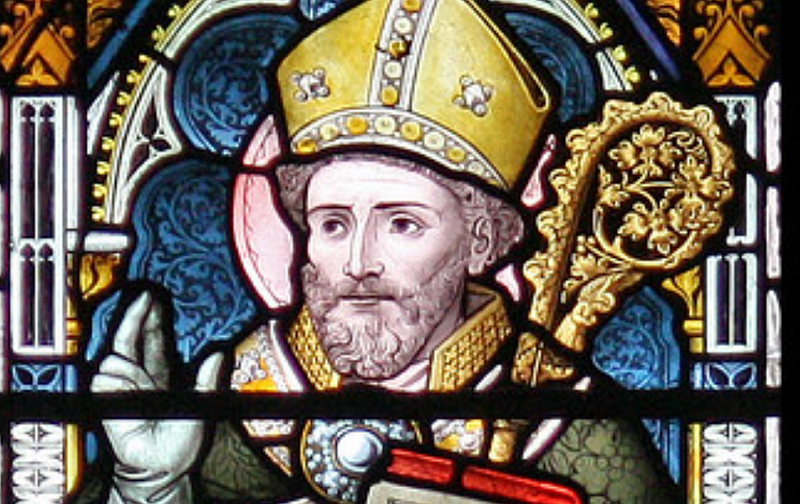
For since the creation of the world God’s invisible qualities — his eternal power and divine nature — have been clearly seen, being understood from what has been made, so that people are without excuse.- Romans 1:20
What is an Ontological Argument?
Ontological arguments aim to demonstrate God’s existence through A priori knowledge. In other words, its truth can be known without experience or observation. Its premises are analytic and can be derived from reason alone. Using reason and a priori knowledge to understand man’s relationship with God is what is called natural theology.
Many constructed arguments can be called ontological, however, the ontological argument most often refers to St Anselm’s original format:
1.God (the being than which none greater is possible) exists in the understanding.
2. God might have existed in reality (God as a possible being).
3. If something exists only in the understanding and might have existed in reality, then it might have been greater than it is.
4. Suppose God exists only in the understanding.
5. Therefore, God might have been greater than he is (2,4, and 3). But this is just another way of saying:
6. God is a being than which a greater is possible. But this only means:
7. The being than which none greater is possible is a being than which a greater is possible, which is absurd.
8. Therefore 4. is false.
9. Therefore God exists in reality as well as in the understanding.
Key point: For the greatest possible being to be a being than which a greater is possible is an absurdity
If you are not experienced with philosophical writing then the above quote likely gave you a headache. Here is a less accurate but easier-to-understand summary:
- God is a maximally great being
- God is a possible being (could exist in reality)
- God exists in understanding
- A God that exists, in reality, is greater than one that exists only in understanding
5. Therefore, God exists in reality as well as understanding
While most people cannot quite put their finger on what's wrong here to the ears of the average person something just doesn’t quite seem right. Are the conclusions of God’s existence really so intuitive that they can be demonstrated from the comfort of our armchair? While it may seem like a trick or a play on words these simple premises have stirred discourse and debate among philosophers for centuries and even to this day.
A Priori- knowledge that proceeds from theoretical deduction rather than from observation. the only prior knowledge necessary is the meaning of the terms ie. “every mother has a child.”
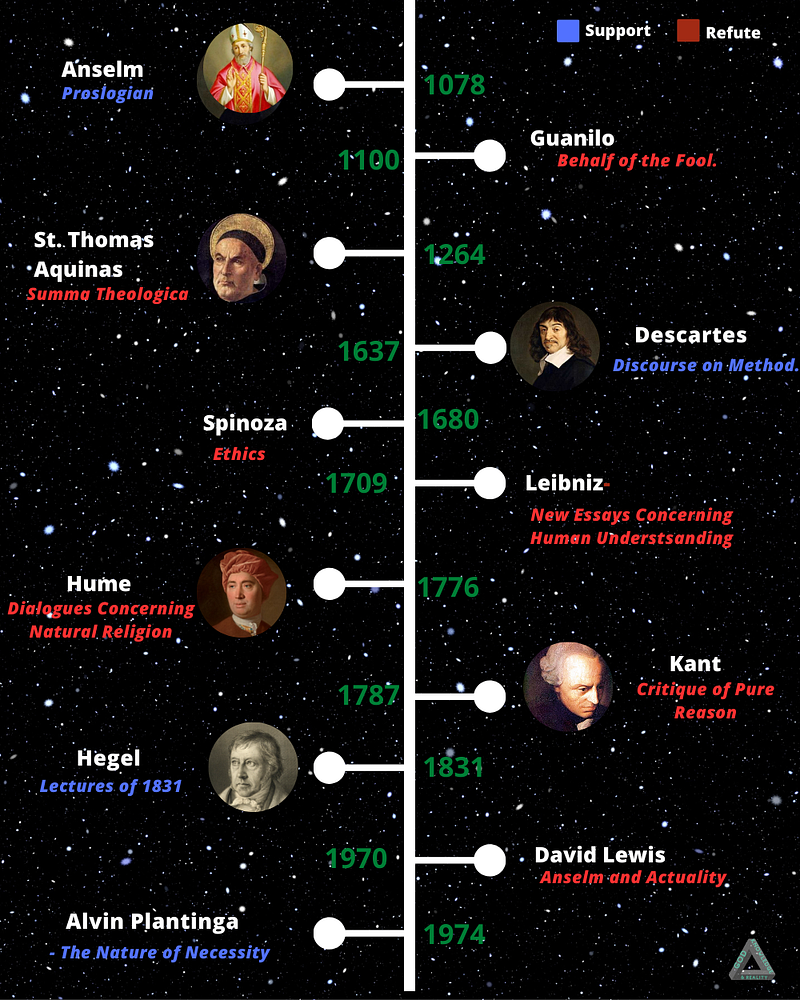
St. Anselm — 1078 AD
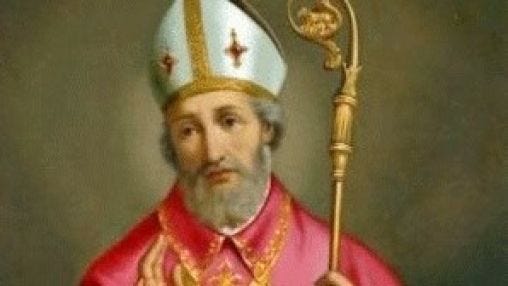
St Anselm or Anselm of Canterbury (1033–1109AD) first proposed the ontological argument in his book Proslogium. Anselm was an Italian Benedictine monk as well as a widely recognized scholar and Christian philosopher. He would go on to hold office as Archbishop of Canterbury and was canonized into sainthood soon after his death.
Gaunilo of Marmoutiers
Parity of reasoning- showing that two arguments have similar enough structure and content so that either both should be sound or both should be unsound
Anselm’s argument was followed almost immediately by strong resistance. In Behalf of the Fool Gaunilo of Marmoutier, by parity of reasoning, attempts to refute Anselm’s argument by replacing a maximally great being with a maximally great island:
1. The greatest possible island exists in my understanding.
2. The greatest possible island could exist in reality (it is a possible thing).
3. If something exists only in the understanding and might have existed in reality, then it might have been greater than it is.
4. Suppose it exists only in the understanding.
5. Therefore then the greatest possible island is not the greatest possible which is absurd.
6. Therefore this island exists in reality as well as in my understanding.
Gaunilo (also a Benedictine monk) reasoned that if Anselm’s argument is any good then we should be able to use the same structure to prove the existence of other maximally great things. Because the argument fails to show the existence of the greatest possible island the argument is, therefore, unsound.
Objection: If this argument were sound it could also demonstrate the existence of a maximally great island. We can not give sound proof of a maximally great island, therefore, Anslem’s proof for the existence of a maximally great being is not sound.
Response: a maximally great island does not achieve parity of reason with Anselm’s argument. Anslem’s principle requires that the thing must exist in understanding but must also be a possible thing. A maximally great island is not possible because no finite thing can have infinite perfections. Further, the attributes which make an island “great” are based on subjective preference.
St Thomas Aquinas — 1264 AD
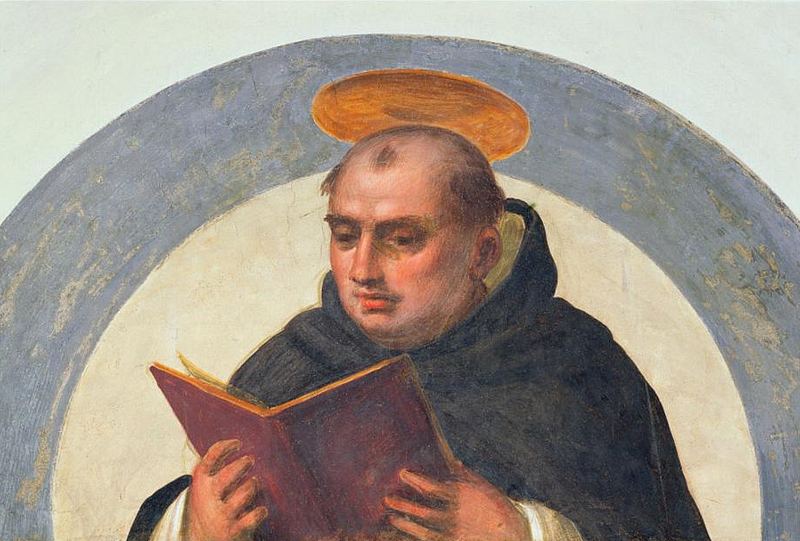

St. Thomas Aquinas, quite likely the most well-known Christian theologian, critiques or refutes versions of Anselm’s argument on five separate occasions, most famously in his Summa Theologica. Aquinas objects to the ontological argument because he says it assumes that we are able to understand the essence of God, which we cannot. Therefore the argument itself is only meaningful to someone who understands completely the essence of God. (ie. only God himself.)
Revival: Rene Descartes — 1637 AD
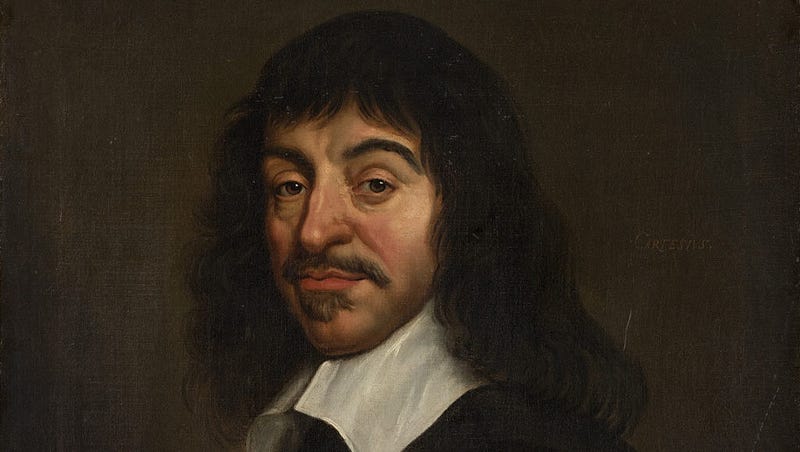

After centuries of silence, Rene Descartes (the “I think, therefore, I am” guy) led a revival of the ontological debate. First in Discourse on Method and later elaborated in Meditations on First Philosophy.
Anselm’s argument is thought to proceed from the definitional meaning of the word God — a maximally great being. Descartes however claims to avoid arbitrary definition and instead invokes innate knowledge, the content of which is “given.”
Descartes at times seems to suggest that his statement of ontology was so intuitive that it was not proof so much as a self-evident truth graspable by any mind sufficiently clear of philosophical bias. Much like Anselm, the Cartesian version of the ontological argument was attacked swiftly.
His argument can be generalized thusly
1.God is a being of supreme perfection (has all perfections)
2. Existence is a perfection
3. Therefore, God exists
On its face, the argument seems silly to most, just because you can conceive of something does not mean it exists as such, right? Descartes likened his reasoning to geometry: triangles exist, and triangles have 3 sides if they did not have three sides they would not be triangles. God is a supremely perfect being, if he was lacking the perfection of existence he would not be God.
The argument is confusing and is quickly dismissed by many. Some have accused Descartes of a false conflation between objective existence and existence in abstraction (numbers, concepts, triangles, etc.) others of circular reasoning. However, many have conceded that on closer inspection Descartes touches on fundamental issues of philosophy which demand a more thoughtful response.
Julian Baggini in the Philosopher’s Toolkit gives a very concise picture of the oddity that is the Cartesian philosophy, referring to Meditations she says:
“On the one hand, it is generally acknowledged to be a classic. But on the other, it is often presented to first-year students for argumentative target practice.” -
Descartes's revival also began the shift away from arguing for a supremely great being and arguing for a necessary being and the logical conclusion of self-existence.
we shall be unable to think of its existence as possible without also recognizing that it can exist by its own power … what can exist by its own power always exists. So we shall come to understand that necessary existence is contained in the idea of a supremely perfect being
David Hume — 1776
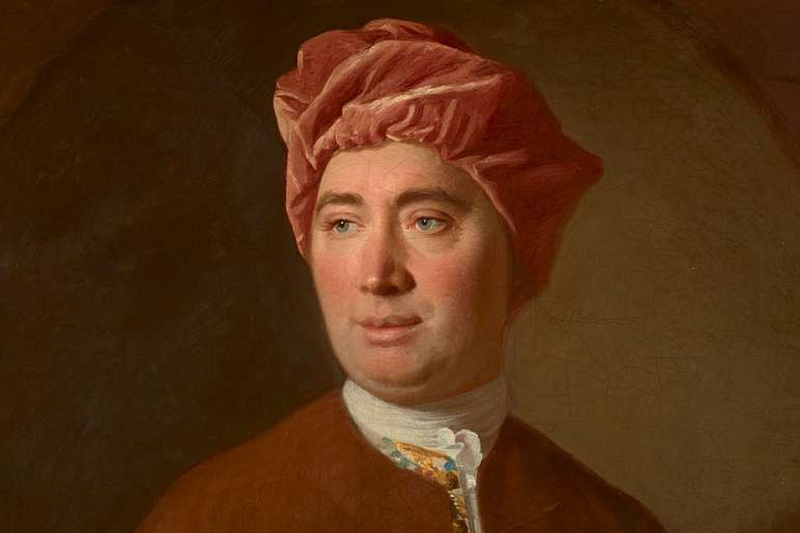
In contrast to Descartes, David Hume did not believe that reason could be its own source of knowledge. Hume was an empiricist. Meaning he believed that the root of truth was an observation or sensory evidence.
Part IX of David Hume’s Dialogues Concerning Natural Religion is a broad-scoped attack on a priori arguments. Hume proposed that there were only two types of meaningful statements: “Matters of Fact” ie. things that can be sensed and “Relation of Ideas” representing abstractions and mathematical statements, for example, “triangles have three sides.” This categorization of statements is called “Hume’s Fork.” Any type of statement that does not fit one of these two categories, in Hume’s opinion, is entirely meaningless “sophistry and illusion.” All a priori statements are, therefore, arbitrary.
The ontological argument fails because it is not knowledge that can be gained from the senses. Hume believes that we cannot speak to something's existence in the observable universe just by conceptualizing and applying logic to the idea.
“However much our concept of an object may contain, we must go outside of it to determine whether or not it exists.”
Hume rejects innate or a priori knowledge. Existence is thus a synthetic statement that is either true or false. Truth requires experience to verify, which in the case of God, is impossible.
Immanuel Kant — 1787
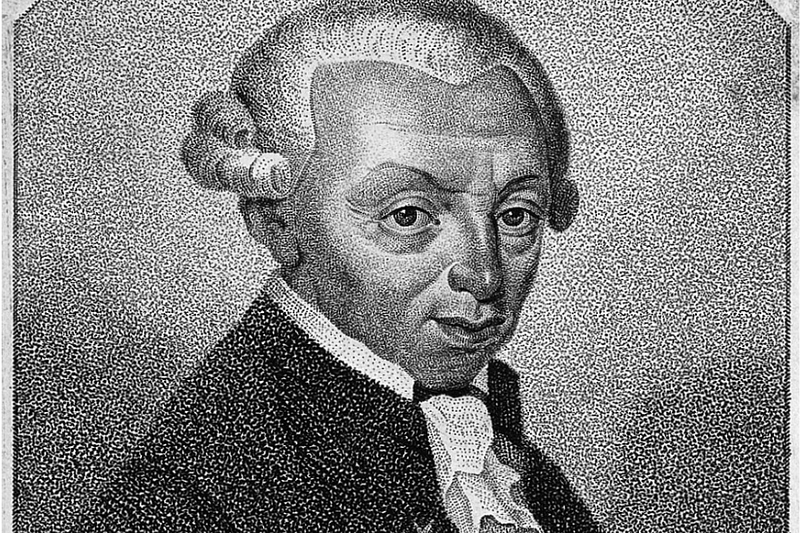

1787’s Critique of Pure Reason Contains Immanuel Kant's infamous attack on not just the ontological argument but all traditional theistic arguments.
First Kant acknowledges that a triangle without three sides is contradictory. However, it is not contradictory to deny that a triangle and its three sides exist altogether. Similarly, you can deny that God, as well as his perfection, does not exist at all, avoiding any contradiction.
Kant was specifically responding to the Cartesian version however he asserts that all ontological arguments are based on confusion. This is because, for Kant, existence is not a predicate.
Existence relies on evidence and is therefore not a predicate. For example, we can conceptualize a unicorn and assign it predicates, such as furry, four-legged, one-horned, etc. However, these predicates are unaffected by whether the unicorn exists or not. Existence is not a predicate because it does not add anything to a concept.
In other words, Kant does not consider existence a property that can be owned. Rather, existence is a concept corresponding to something in the world. When we assert that a thing exists we are asserting that the thing is exemplified in the observable universe, it is empirical.
However, this is tricky, because, unlike a unicorn, a God who exists is quite different than one who does not (ie. lacks the perfection of existence.) God's infinite perfections, including self-existence, would affect and change the meaning of everything that proceeds him ie. the entirety of the observable universe.
Kant also objected to God being a possible being saying that the greatest possible being is like the greatest positive integer: an “impossible object.” One might reply by pointing out that the fact that there are degrees of greatness does not entitle us to conclude that God is an impossible object. Angles too have degrees, but no angle can be greater than four right angles.
With Hume and Kant's objections thought to be devastating at the time, there was another long period of relative silence surrounding the ontological debate.
Alvin Plantinga-1974
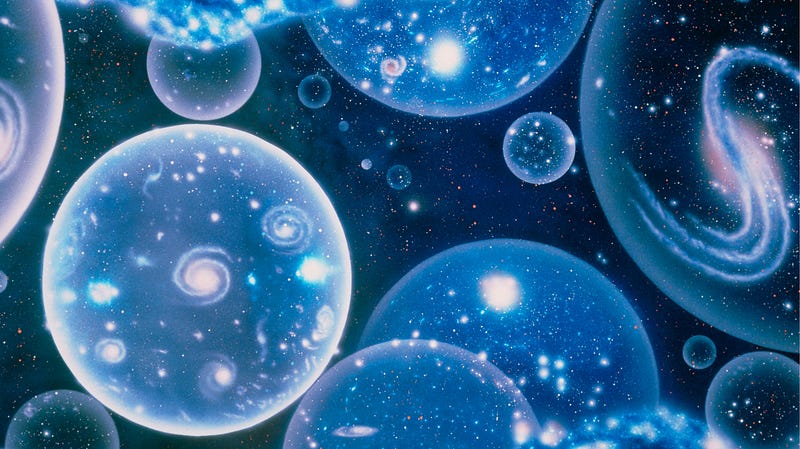

in The Nature of Necessity. Alvin Plantinga attempts to revive the argument for the modern age by presenting his modal or “victorious” ontological argument.
Plantinga’s argument is based on the axioms of S5 Modal logic, a system of normal symbolic logic developed in the 1930s.
In essence, this logical structure asserts that any being that is necessarily possible then must necessarily exist.
There is a possible world in which there is an entity which possesses maximal greatness.
(Hence) There is an entity which possesses maximal greatness.
or
(1) It is at least possible for God to exist. (2) If God’s existence is possible, then necessarily, God does exist. (3) Therefore, necessarily, God exists.
God is possible, therefore there is a “possible world” in which God exists, However, a God that exists in one possible world but not all possible worlds is not maximally great. Under the axiom of S5 logic, defining God as maximally great means that God exists in all possible worlds, including this one (ie. reality)
Like earlier ontological arguments the victorious model is subject to parody.
For example:
There could have been a necessarily existing Atlantis. Therefore, Atlantis exists.
However, just as with Guanilo’s perfect island, these parodies do not hold up within the logical system established. Atlantis is a contingent thing, meaning something had to cause or create it, it is finite and is therefore not a necessary thing. It does not seem intuitive for any contingent thing to necessarily exist.
Plantinga himself admits that his argument is not formal proof of God’s existence, yet he still considers the argument victorious because it demonstrates that belief in God is rational.
Plantinga writes in The Nature of Necessity:
“Our verdict on these reformulated versions of St. Anselm’s argument must be as follows. They cannot, perhaps, be said to prove or establish their conclusion. But since it is rational to accept their central premise, they do show that it is rational to accept that conclusion”
The history and debate surrounding the ontological argument essentially boils down to this: While these arguments and thought experiments may not prove the existence of God, they address and force philosophers to confront very poignant questions about the nature of being and human knowledge. Most importantly, these arguments force us to consider whether a perfect being is a valid premise. In other words, if the existence of God is a reasonable hypothesis to explore.
Thanks for Reading!


Follow -> ⭐ Facebook ⭐ Twitter ⭐ Vocal.Media