
Go Into the Gap of Everything Taken From You
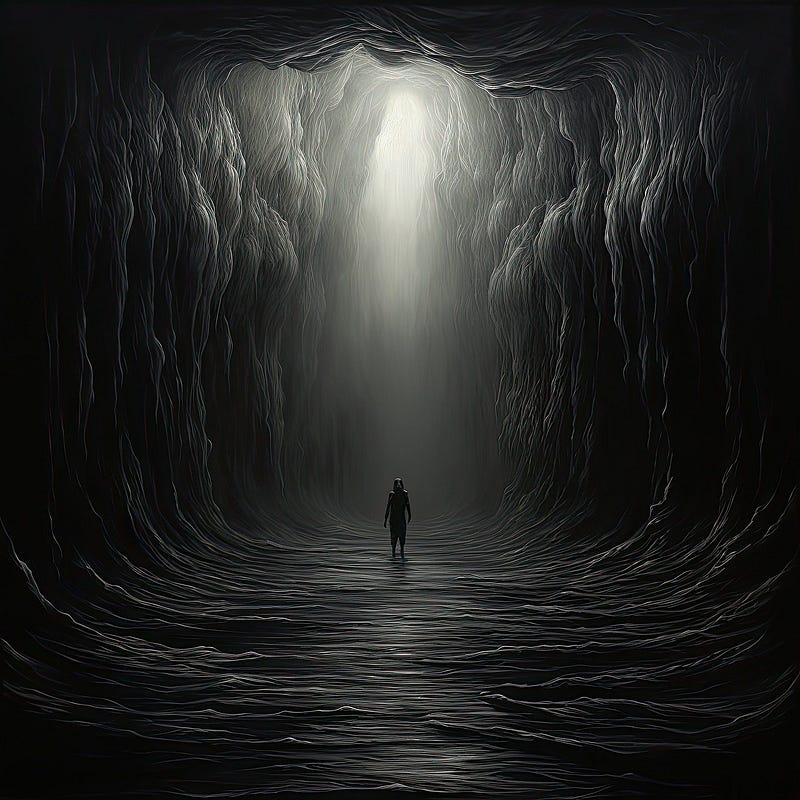
What has life taken from you? What has your lot in life, your home and work environments, your schooling, your government, your society taken from you?
What do you feel like you have lost? What have you been searching for?
Do you feel like all these things have left a huge gap, a void, an enormous gaping hole in your heart and soul?
Into the Gap
I invite you to go into the gap. Call back all that you’re missing. Dare to do it through the pain, because of your pain. Yell into the void, even if all you can hear is the echo of your own voice, until you are hoarse. Then sit in the silence and wait. Wait. Wait.
Watch. and Wait.
We’ve been taught to fear the gap, the void, the so-called nothingness. What they taught us was wrong. In fact, you could say that they took away the power of the gap.
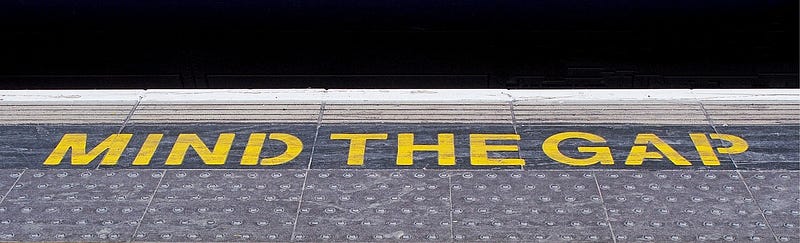
This is the first thing I called back. I called back the power of the gap. And I did it by stepping into it, and seeing, feeling, sensing, that in that so-called nothingness was everything.
The etymology of gap suggests that it comes from the Proto-Indo-European root *ghieh- which means “yawn, gape, be wide open.” Oxford Languages suggests that it comes from Old Norse “chasm” which is notably related to “chaos”.
“In all chaos there is a cosmos, in all disorder a secret order.” ― Carl Gustav Jung
The Creation Gap
Norse mythology suggests that the world was created from Ginnungagap, the primordial, magical void, by Odin and his two brothers Vili and Ve.
That was the age when nothing was; There was no sand, nor sea, nor cool waves, No earth nor sky nor grass there, Only Ginnungagap. ~The Poetic Edda. Völuspá, stanza 3
The Old Testament speaks of God creating the heavens and the earth, stating that “the earth was formless and empty, darkness was over the surface of the deep…” The idea that this void was “nothingness” or nihilo, wasn’t cemented into Christian theology until the third century of the common era.
Modern quantum physicists see the void not as empty, but full of potential. The hermeticists of ancient Egypt saw the same thing.
The Babylonian creation myth, the Enuma Elish, speaks of Apsu, meaning “conscious sea” or “sea of wisdom,” (sometimes seen as a male freshwater god) getting together with Tiamat, the maker goddess who “personifies the [saltwater] sea” and embodies primordial chaos. Here we have a consciousness and its embodiment as the essence of creation, indeed of cocreation.
The gap, then, is this conscious sea that holds all wisdom. Calling it Apsu, or God, or the Akashic Field doesn’t take any of its power away, except where you assign meaning to the names.
The Botanical Gap
I found an interesting etymological link to the idea that the gap is not empty at all but a powerful place (or non-place) that precedes creation of any kind.
The word is dehiscence, also from the root *ghieh and literally means “from the gap”, or “from the yawn”. In botany it is used to describe the discharge of seeds or pollen from the splitting or bursting open of a pod or wound.
New life comes from the gap!
When you go into the gap, and call forth what you’ve lost, you can heal the wound, and come forth “from the gap” with all kinds of healing and creative energies!
The Original Wound (Gap)
I was raised Catholic and the idea of original sin* was driven home like a nail in the flesh. As I’ve freed myself from much of the dogmatic chains I had been bound to, I began to rethink what “original sin” might really mean.
*Original sin (the concept of inherited spiritual disease or defect in human nature and the ‘condemnation’ that goes with that fault) wasn’t official doctrine until the 16th century.
Technically “sin” means “to go the wrong way,” and Christian thought would agree that sin separates us from God. Separateness indicates that there is a space between, or a gap. To repent means “to turn back” or to be reunited with divinity, to close the gap.
To me, this means that God is in the gap. My own divinity is in the gap. We think there is a gap between us, but maybe not quite so distant. Healing isn’t “on the other side.” After all, to get to the other side, we have to go “through.”
When we meet the divine inside the gap, the other side is changed.
It reminds me of the saying about grass being greener on the other side. Perhaps that is only because we haven’t done the healing in the space between here and there, so we inadvertently carry our wounds with us to the new place.
The Healing is in the Wound
“Healing begins where the wound was made.” ~Alice Walker
There is a saying that the path to healing is through the wound. The great Sufi poet Rumi said “The wound is the place where the light enters you.”
We are taught at every turn to avoid pain at all costs, and this has caused us to fear life, for life is pain. It’s so much more than that, joy, elation, compassion, etc., but when we become numb to pain, we become numb to everything else.
It is the pain and suffering of our own, however, that helps us to have compassion for others. It’s true, misery loves company, but we don’t have to stay in misery. We can meet there and travel together, through…and out to the other side.
In Closing
I don’t know if I have done a good idea explaining my idea of “the original wound.” But I do believe we have been separated from something greater than our small selves.
We are so much more powerful than we have been lead to believe, when it comes to healing and transformation!
I welcome your thoughts.
♥ Runa
Runa Heilung is a Reiki Master Teacher and Practitioner, student of energy healing, spirituality, and human potential. Her primary tools are imagery and the imagination, which have been lost in the gap but need to be called back.