
Glossary: Yellow Pages for Confusing Words
When starting a new project and knowing very little about the industry, we find the abundance of acronyms and business-related terms fascinating and wonder how we are ever supposed to make sense of it all. All we want is a spot to look up terms and know the meanings of those jargon. Well, Glossary can help us in that! Let’s find out how?
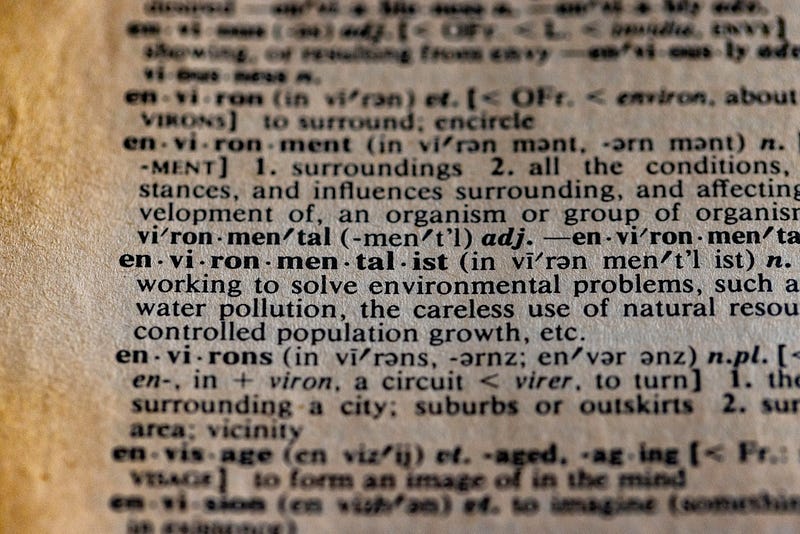
Hello, dear readers! Today I’m going to talk about one of the most useful Techniques for Business Analysts: the Glossary.
A glossary is a list of terms and definitions that are relevant to a specific domain, project, or organization. A glossary helps to ensure that everyone involved in a project speaks the same language and avoids confusion or misunderstanding.
A glossary can be created and maintained by business analyst at any stage of a project, but it is especially important at the beginning, when the scope and requirements are being defined.
A glossary can help to clarify the meaning of key concepts, acronyms, jargon, or technical terms that may be unfamiliar to some stakeholders. A glossary can also help to establish common standards and conventions for naming, formatting, and documenting things.
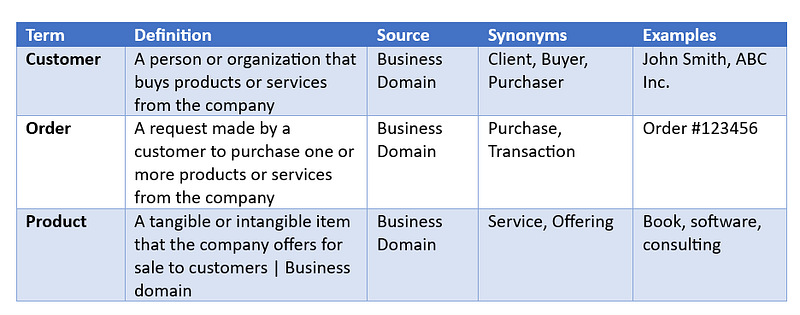
A glossary can be as simple or as complex as needed, depending on the size and complexity of the project. A glossary can be a single document, a spreadsheet, a database, or a wiki. A glossary can include not only definitions, but also synonyms, antonyms, acronyms, abbreviations, examples, diagrams, references, or links to other sources of information.
A simple example of Glossary is below:
How to Create a Glossary?
There are different methods and tools that can be used to create a glossary. Here are some general steps that can be followed:
- Identify the scope and purpose of the glossary. Determine what terms need to be included in the glossary based on the domain, project, or solution. Define the criteria for selecting and prioritizing the terms.
- Elicit the terms and definitions from various sources. Use different elicitation techniques such as interviews, workshops, surveys, observation, document analysis, etc. to gather information from different stakeholders such as subject matter experts, users, customers, developers, etc.
- Analyze and organize the terms and definitions. Use different analysis techniques such as categorization, classification, grouping, sorting, etc. to structure and arrange the terms in a logical and meaningful way. Use different formats such as tables, lists, diagrams, etc. to present the terms in a clear and concise way.
- Document and validate the glossary. Use different documentation techniques such as writing, editing, formatting, etc. to create a complete and consistent glossary. Use different validation techniques such as review, feedback, testing, etc. to ensure that the glossary is accurate and acceptable.
- Manage and update the glossary. Use different management techniques such as version control, change control, configuration management, etc. to keep track of the changes and updates to the glossary.
Strengths of Glossary
Some of the strengths of using a glossary as a business analysis technique are:
- It improves communication and collaboration among the stakeholders by providing a clear and consistent definition of key terms and concepts.
- It reduces confusion and misunderstanding by avoiding ambiguity and inconsistency in the use of terms across different artifacts and sources.
- It enhances the quality and completeness of the requirements by ensuring that all relevant terms are identified and defined.
- A glossary can facilitate learning and knowledge transfer by providing a reference source for new or unfamiliar terms.
- A glossary can support traceability and change management by providing a baseline for tracking and updating changes in terminology.
Limitations of Glossary
A glossary also has some limitations and challenges that need to be considered. Some of the weaknesses of this technique are:
- It can be time-consuming and tedious to create and maintain a comprehensive and accurate glossary, especially for large or complex projects.
- A glossary can be difficult to keep up-to-date and synchronized with other project documents or sources of information.
- It can be prone to errors or inconsistencies if the glossary is not reviewed or validated regularly.
- A glossary can be ignored or overlooked by some stakeholders who may prefer to use their own terms or definitions.
- A glossary can be misused or abused by some stakeholders who may try to impose their own interpretation or agenda on the terms or definitions.
How to Overcome the Limitations of Glossary?
To overcome these challenges, a business analyst should follow some best practices when creating and using a glossary. Some of these best practices are:
- Start early and update frequently. A glossary should be created at the beginning of the project and updated throughout the project lifecycle as new terms and concepts are identified or changed.
- Collaborate and Consult. A glossary should be developed in collaboration with the key stakeholders, such as subject matter experts, users, developers, testers, etc., who can provide input, feedback, or validation on the terms and definitions.
- Prioritize and Categorize. A glossary should focus on the most important and relevant terms and concepts for the project scope and objectives. A glossary can also be organized into categories or sub-glossaries based on different criteria, such as source, type, level, etc.
- Use simple and consistent language. A glossary should use plain language that is easy to understand by all stakeholders. A glossary should also use consistent terminology, format, style, and conventions throughout the project.
- Link and Cross-Reference. A glossary should be linked to other documents or sources that use or define the terms and concepts. A glossary should also cross-reference related terms or concepts within the glossary itself.
Real-Life Examples
To illustrate how a glossary can be used in practice, here are some real-life examples of glossaries:
- The Business Analysis Body of Knowledge (BABOK) Guide is a comprehensive guide for business analysts that includes a glossary of over 500 terms related to business analysis.
- The Project Management Institute (PMI) provides a Glossary of Project Management Terms that defines over 200 terms related to project management.
- The World Health Organization (WHO) maintains a Glossary of Global Health Terms that covers over 1000 terms related to global health issues.
- The International Organization for Standardization (ISO) publishes a Glossary of Terms Used in ISO 9000 Family Standards that explains over 300 terms related to quality management systems.
- The European Union (EU) offers an Interactive Terminology for Europe (IATE) database that contains over 8 million terms in 24 languages related to various EU policies and activities.
A glossary is a powerful technique that can help a business analyst improve communication, understanding, quality, and traceability of requirements. However, a glossary also requires careful planning, execution, and maintenance to ensure its effectiveness and value.
I hope you enjoyed this blog post about the glossary technique. If you have any questions, comments, or feedback, please feel free to share them in comment. And don’t forget to subscribe to my blog and follow me for more tips and tricks on business analysis.
Also, don’t forget to clap (you can clap 50 times) or buy me a coffee!
Until next time keep watching this space for more Business Analysis Techniques!


