
WEEKLY BUSINESS ROUNDUP
Global Business Week: Visualizing Interest Rates by Country in 2021
The state of Financial markets & Economies, Weekly Charts, Business Trends & Statistics
Although a flurry of inflation jitters clobbered tech stocks early in the week, three major U.S. stock averages rallied in the last two sessions to offset declines from earlier in the week. Commodities grabbed the headlines after a ransomware attack shut the Colonial Pipeline that transports fuel products to the East coast of the United States. For the week, the Nasdaq fell 2.3%, the S&P dropped 1.4%, and the Dow slipped 1.1%.
A much hotter-than-expected consumer price inflation (CPI) print roiled markets and saw a wave of strength carry the Greenback higher last week. However, a softer-than-expected retail sales print sapped strength into the weekend. The coming Federal Open Market Committee (FOMC) minutes may give markets further insight into the inner thoughts of the US central bank. For now, the benchmark dollar index (DXY), is close to where it started the week — around 93.00
Elon Musk once again rattled the crypto markets with his u-turn on Bitcoin. The price of the premier digital plummeted more than 17% to around $47k, before rebounding to over $50k. But it lost steam pretty quickly, trading just over $47k at the time of writing. Musk tweeted that he is concerned with the environmental footprint of the energy-intensive Bitcoin mining. Although he reiterated that Tesla wouldn’t be selling any BTC, nevertheless, the damage was done. In the wake of this, less energy-intensive coins like Cardano have been flourishing.
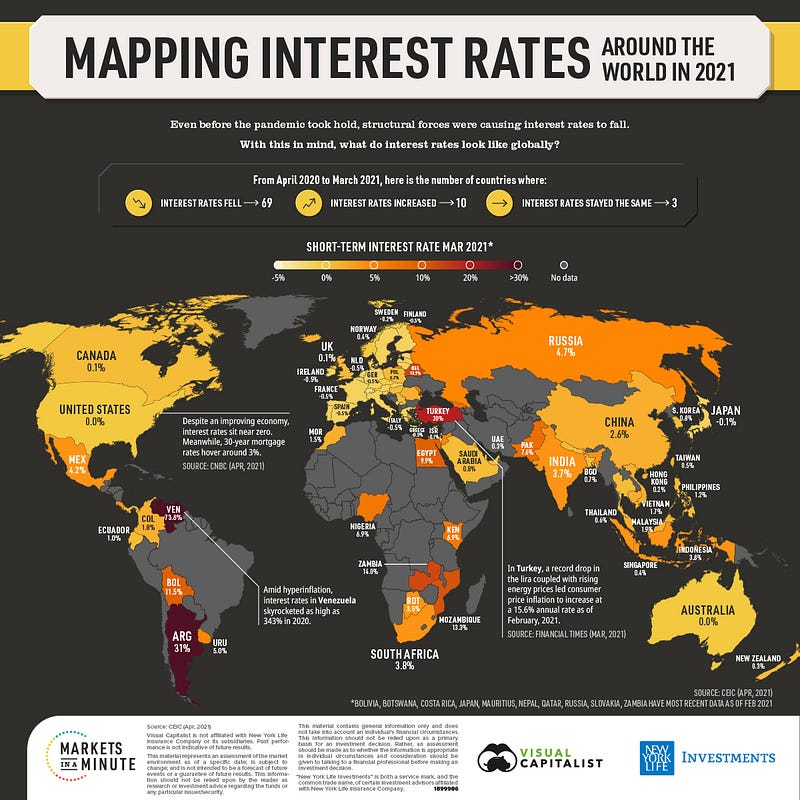
Today’s featured infographic from New York Life Investments shows interest rates by country in 2021. Going as far back as the 14th century, pandemics have been found to have a negative effect on interest rates. History shows that this effect is even greater than that of financial crises. Across a study of 19 pandemics since the mid-1300s, real interest rates fell an average of 1.5 percentage points lower in the following two decades than they would have otherwise. And yet, even before COVID-19, structural forces, such as rising debt, were causing interest rates to fall.
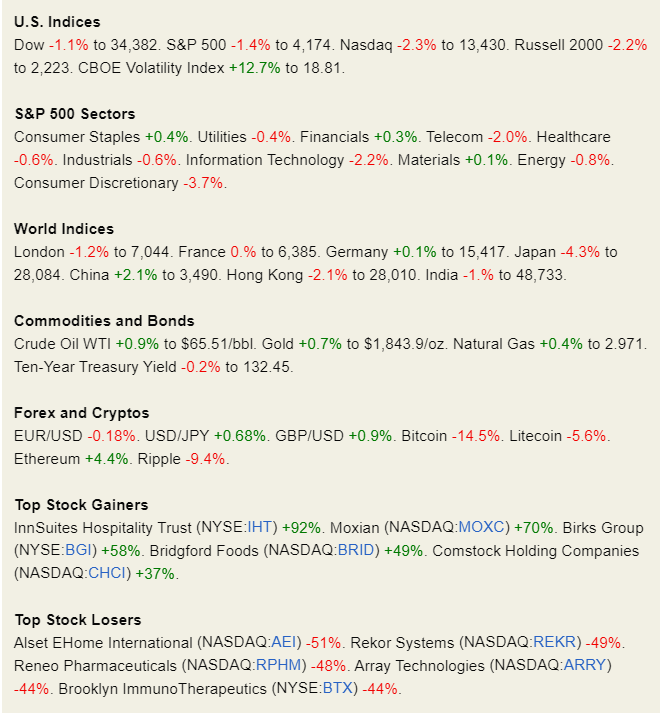
And finally, before moving on to some other statistics, here are the weekly numbers from various markets and different assets (Figure 1).
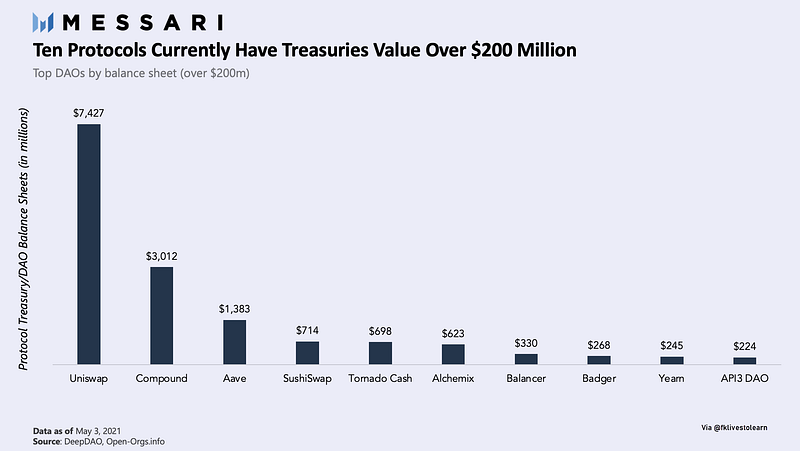
10 DeFi Protocols with treasuries over $200M
The bull market has caused DAO (Decentralized Autonomous Organization) treasuries to balloon over the past year, with the top ten treasuries now possessing balance sheets worth hundreds of millions, or in some cases, billions of dollars (Figure 2). This trend of ballooning treasury values among DAOs is not just limited to the top protocols. In fact, dozens of DAOs possess treasuries worth hefty sums of money. In total, the top 38 Protocols’ combined treasuries total over $15 billion — enough to purchase an accurately valued Ripple (XRP).
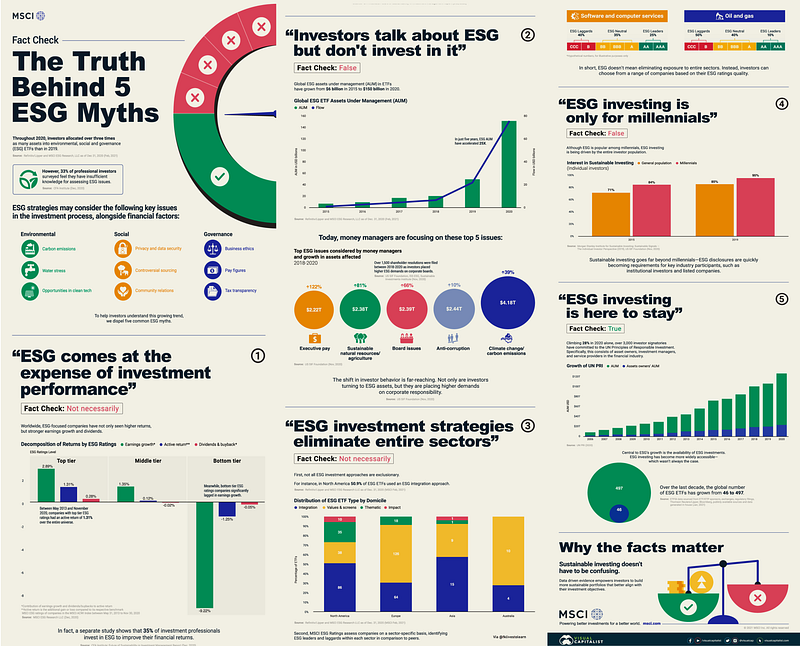
Truth Behind 5 ESG Myths
In 2021, investors continue to embrace environmental, social, and governance (ESG) investments at record levels. In the first quarter of 2021, global ESG fund inflows outpaced the last four consecutive quarters, reaching $2 trillion. But while ESG gains rapid momentum, the CFA Institute shows that 33% of professional investors surveyed feel they have insufficient knowledge for considering ESG issues. To help investors understand this growing trend, this infographic (Figure 3) from MSCI helps provide a fact check on five common ESG myths.
Global Electric Car Stock Passes 10 Million
Despite 2020 being a sluggish year for the global automobile industry, electric car sales continued to grow. According to the latest edition of the International Energy Agency’s Global EV Outlook (Figure 4), electric passenger car sales climbed despite the total automobile industry contracting by 16%. While Europe overtook China to become the world’s largest EV market for the first time last year, China still had the largest number of electric cars on its roads last year with a total stock of 4.5 million.

How Stock Markets Respond to Social Unrest
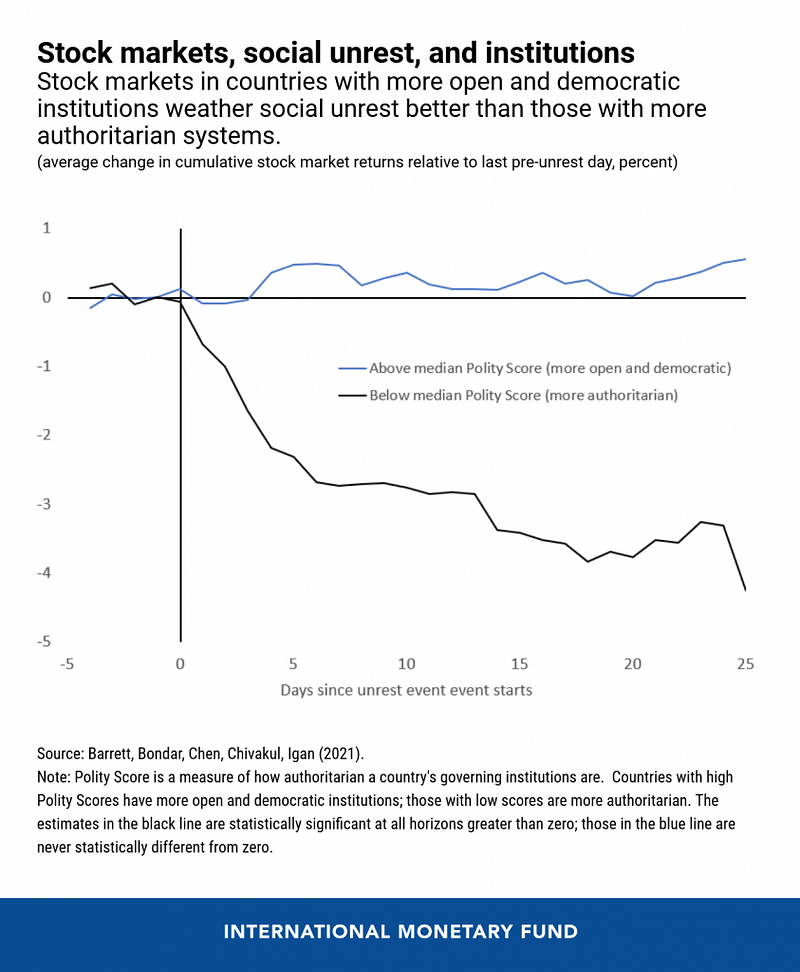
This chart from the IMF staff working paper uses a new dataset of 156 social unrest events during 2011–20 to shed some light on this question. It shows that in countries with more open and democratic institutions, social unrest events have a negligible impact on stock market returns (blue line). But in countries with more authoritarian regimes, the effect is large and negative — on average, stock market returns fall by 2% within 3 days, and by about 4% in the following month (black line). These findings are consistent with real-world examples (Figure 5). For instance, stock markets in France, a country with strong and open institutions, were largely unmoved in the days after the Yellow Vest protests began in late 2018.
Female Entrepreneurs around the Globe
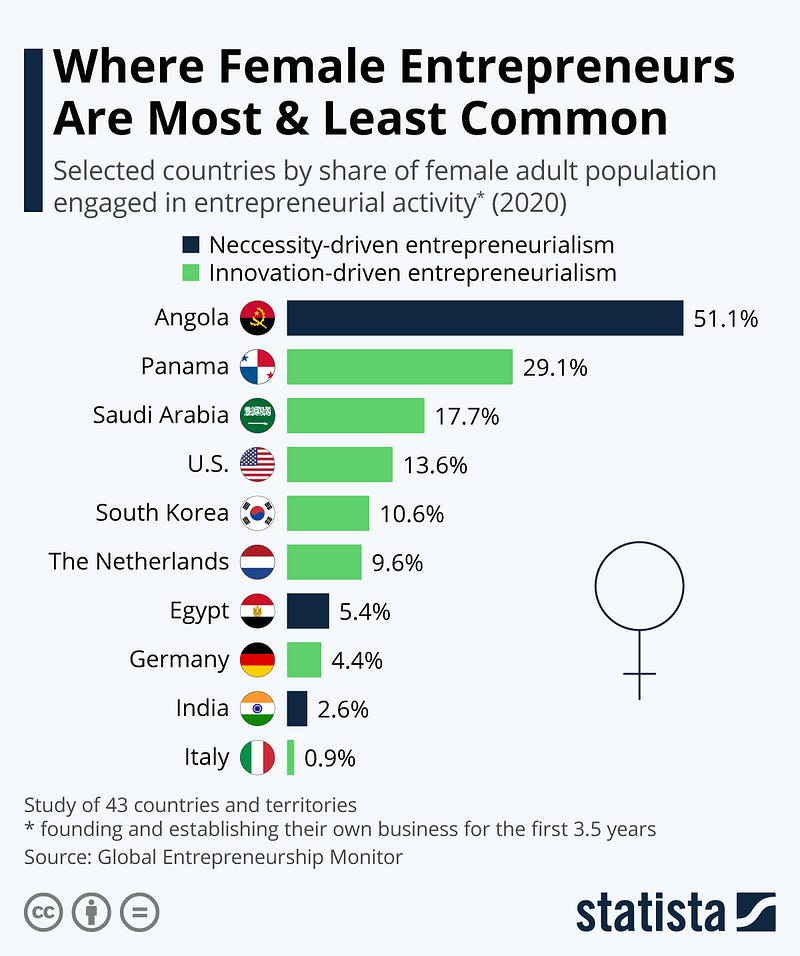
According to a study carried out in 43 countries and territories by the Global Entrepreneurship Research Association, female entrepreneurs are especially common in developing nations like Angola as well as in developed countries on the Arabian Peninsular, like Saudi Arabia, Oman or Kuwait, and in the Americas, like in Panama, Chile and the U.S. Many developed nations in Europe have very low rates of female entrepreneurs, according to the study. In most developed countries, the rate of male entrepreneurs was 50 to 100% higher than that of female entrepreneurs (Figure 6). Among high-income countries, Germany and Spain had progressed furthest in closing that gap, with less than 1 percentage point separating male and female entrepreneurs.
Market Humor: Vaccine IP Waiver

Previous Edition of GBW
