avatarRubaiyat Rahman

Free AI web copilot to create summaries, insights and extended knowledge, download it at here

4508

Abstract

ng three chapters of the first part delineate four salient phases of historical development of international environmental law; scrutinizes sources of international environmental law; and outlines the features, application and legal consequences of the substantive and procedural principles of environmental law.</p><figure id="dfba"><img src="https://cdn-images-1.readmedium.com/v2/resize:fit:800/0*TtpTZRbret8Tcsaq"><figcaption>Photo by <a href="https://unsplash.com/@custodiancontent?utm_source=medium&amp;utm_medium=referral">Kalle Kortelainen</a> on <a href="https://unsplash.com?utm_source=medium&amp;utm_medium=referral">Unsplash</a></figcaption></figure><p id="1cff">Chapter 6 focuses on present legal regime of bio-safety aims to regulate usage of biotechnology; requisites of protection as to transfer of modified organism; equitable sharing of genetic resources. However, author identifies that the bio-safety related legal regime is patchy and inadequate- revealing deficit of mechanism to ensure national level measures.</p><figure id="61fb"><img src="https://cdn-images-1.readmedium.com/v2/resize:fit:800/0*KOuzwNf4wF1V6rWi"><figcaption>Photo by <a href="https://unsplash.com/@anhvygor?utm_source=medium&amp;utm_medium=referral">Anh Vy</a> on <a href="https://unsplash.com?utm_source=medium&amp;utm_medium=referral">Unsplash</a></figcaption></figure><p id="2aaf">Chapter 8 sifts through strategies to address climate induced impact, the UNFCCC 1992, the Koyoto Protocol, climate fund issue and the Paris Agreement. However, the Bangladesh context of climate change issue is evaluated in chapter 23. In chapter 8, author churns out that despite brewing concerns as to decrepit consequence of climate change impact, the politics of climate change still swirls within the perception of equity and justice.</p><blockquote id="3adc"><p>Author argues that effective climate change fund regarding compensation payment to climate scourged countries is yet remained as distant foghorn. The only legally binding international climate treaty, the Paris Deal, is also ruffled with multifaceted shortcomings, e.g., compliance timetable and country specific targets for emissions.</p></blockquote><figure id="4d3c"><img src="https://cdn-images-1.readmedium.com/v2/resize:fit:800/0*OWHxtUeuYmUAydJj"><figcaption>Photo by <a href="https://unsplash.com/@noaa?utm_source=medium&amp;utm_medium=referral">NOAA</a> on <a href="https://unsplash.com?utm_source=medium&amp;utm_medium=referral">Unsplash</a></figcaption></figure><p id="c59f">In chapter 11, author reiterates that for an effective legal regime regarding marine pollution requisites a balanced platform to grapple marine pollution problem associated with sovereign rights, national jurisdiction and common concern of humankind. As fitting sequel, in Chapter 26, author endeavors to recap the marine pollution issue in Bangladesh context. Bangladesh has ratified most of the important conventions on marine pollution. But there is no comprehensive law regulating in Bangladesh that defines and incorporate provisions on marine pollution.</p><blockquote id="5825"><p>Author suggests that Bangladesh needs to enact a comprehensive law on marine pollution because there is no uniformity among the national laws and it is under obligation to implement the convention on marine pollution.</p></blockquote><figure id="0769"><img src="https://cdn-images-1.readmedium.com/v2/resize:fit:800/0*qcu7EqRC8tUp-kyV"><figcaption>Photo by <a href="https://unsplash.com/@fredography?utm_source=medium&amp;utm_medium=referral">Frédéric Paulussen</a> on <a href="https://unsplash.com?utm_source=medium&amp;utm_medium=referral">Unsplash</a></figcaption></figure><p id="ce93">Chapter 13 scrutinizes legal regime on nuclear safety, liability and management of radioactive waste. However, author deems that limitation in nuclear liability regime and deficit of neutral dispute settlement mechanism veers the nuclear legal regime into an ineffective one. This reveals the necessity of further development of the existing legal framework.</p><p id="288a">Nexus between the realms of human rights and environmental rights is reiterated in Chapter 15. Author contends for significance of human rights approach to environmental protection. To bolster his argument, author propounds the contribution of judicial activism for solid footing of the right to environment. However, appraisal of present human rights legal regime would reveal that it does not incorporate ‘right to safe envi

Options

ronment’ in the quiver of international human rights instrument.</p><blockquote id="0530"><p>Author suggests that the stalemate can be ceased either by incorporating ‘right to safe environment’ in the existing human rights framework or by creating distinct convention as to environmental rights.</p></blockquote><figure id="a248"><img src="https://cdn-images-1.readmedium.com/v2/resize:fit:800/0*xRnW0I7kWxG2dEQe"><figcaption>Photo by <a href="https://unsplash.com/@belart84?utm_source=medium&amp;utm_medium=referral">Artem Beliaikin</a> on <a href="https://unsplash.com?utm_source=medium&amp;utm_medium=referral">Unsplash</a></figcaption></figure><p id="b486">Chapter 24 sifts through water pollution prevention issues in Bangladesh. The chapter depicts that current national environmental laws on water pollution lack clarity to prevent water pollution. Enforcement mechanism is also largely absent and ineffective. Legal and regulatory reform and strengthening institutions through adequate resources and expertise is imperative to get rid of the abseiling scenario of water pollution in Bangladesh.</p><figure id="846f"><img src="https://cdn-images-1.readmedium.com/v2/resize:fit:800/0*XOrUkR1Oo6xgNe1_"><figcaption>Photo by <a href="https://unsplash.com/@xavierlespinas?utm_source=medium&amp;utm_medium=referral">Lespinas Xavier</a> on <a href="https://unsplash.com?utm_source=medium&amp;utm_medium=referral">Unsplash</a></figcaption></figure><p id="9cec">In chapter 28 under the heading of ‘Environmental Regulation of Ship Breaking Yards in Bangladesh’, author criticizes that the relevant laws on regulation of ship dismantling in Bangladesh are veer into ineffective due to lack of political willingness, inabilities of the relevant government agencies and non-cooperation of ship owners.</p><p id="bd61">Chapter 30 provides extensive insights on environmental public interest litigation (PIL) in Bangladesh. In South Asia region, the concept public interest litigation is deemed as instrument of access to justice for the marginalized and common people. Development of environmental laws in Bangladesh owes a lot to the instrument of PIL which has been developed through judicial activism. Nevertheless, author argues that to provide further impetus to instill the principles of environmental law in relevant laws of Bangladesh, judiciary should take part through judicial activism.</p><figure id="690c"><img src="https://cdn-images-1.readmedium.com/v2/resize:fit:800/0*Zv1OWXor3j8SORcJ"><figcaption>Photo by <a href="https://unsplash.com/@azntaiji?utm_source=medium&amp;utm_medium=referral">Zach Taiji</a> on <a href="https://unsplash.com?utm_source=medium&amp;utm_medium=referral">Unsplash</a></figcaption></figure><p id="e79f">The book concludes with bibliography in tandem with a list of environment related treaties ratified by Bangladesh. It is pertinent to mention that the book under review lacks comprehensive index section. This deficit of index section creates bulwark for researchers to find topic without hardship.</p><p id="c1f1" type="7">A comprehensive index section would undoubtedly gilt-edge the book as treasure trove on issues of environmental law. However, this critical remark should not cloud the fact that the book under review commands and demands reverence.</p><figure id="be67"><img src="https://cdn-images-1.readmedium.com/v2/resize:fit:800/0*HWiQ9cEih2XCT6dt"><figcaption>Photo by <a href="https://unsplash.com/@safwan_mahmud?utm_source=medium&amp;utm_medium=referral">Safwan Mahmud</a> on <a href="https://unsplash.com?utm_source=medium&amp;utm_medium=referral">Unsplash</a></figcaption></figure><p id="9840">The book is well researched and eloquently written by a distinguished international law professor of Bangladesh. Furthermore, the book’s greatest strength lies in the amount of detail it provides in systematic and concise manner. To the students of law and international relations, the book paves stepping stones for in-depth analysis of international environmental law. Hence, from that perspective, the book is a resource for readers of law and international relations discipline to closely follow the evolution of international environmental law with concentration in South Asian countries’ context.</p><p id="6bbe"><b>Disclosure:</b></p><p id="f29a">An abridged version of the review was published in the <a href="https://www.thedailystar.net/law-our-rights/understanding-environmental-law-1409266"><i>Daily Star </i>(Bangladesh).</a></p></article></body>

Global and South Asian Milieu of Environmental Law

Book Review
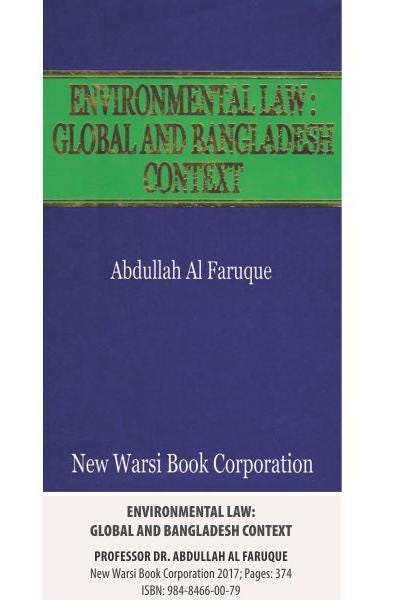
Photo Credit: The Daily Star (Bangladesh) and Author.

Book Title: Environmental Law: Global and Bangladesh Context

Author: Professor Dr. Abdullah Al Faruque

Publication: New Warsi Book Corporation (Bangladesh)

Year: 2017

ISBN: 984–8466–00–79

Environmental law, as one of the dynamic realms of international law, is deemed as the most fascinating area of research and analysis for academicians and international law researchers. Since the 1970's, this branch of international law has been expanding to protect the environment from the maelstrom of decrepit harm. However, to delve into the realm of environmental law, it is requisite to grapple the national and international dimensions of this complex but dynamic subject. Only upon fulfilling this, the legal regime of the environment can be used as a tool to check the threat of environmental menace. In this respect, Professor Dr Abdullah Al Faruque in his book ‘Environmental Law: Global and Bangladesh Context’ contributes something of a novelty in legal scholarship.

Photo by Guy Bowden on Unsplash

The book under review is gilt-edged with a forward-looking approach to the most critical issues in the coliseum of environmental law. The book introduces readers a whiff of fresh analysis to the already brewing debates, developments and controversies concerning environmental law, both from Bangladesh and International Law perspectives.

The book under review is structured into 30 chapters and all these chapters are bucketed under the headings of five specific parts in such way that would enable readers to comprehend how international environmental law is evolving in comparison with how the laws of Bangladesh interacts with the international regime.

Photo by Srinivasan Venkataraman on Unsplash

First part (chapters 1 to 4) sets the tone with a comprehensive introduction stating historical evolution, sources, and principles of environmental law. While the first part of the book is of descriptive nature, the preceding four parts of the book are embellished with insights and analysis.

Second part (chapters 5 to 11) examines legal framework on global environmental problems such as conservation of biodiversity, climate change, marine pollution, hazardous waste management and protection of ozone layer.

Third part of the book (chapters 12 to 15) finely curves out some contemporary issues relating to protection of environment such as linkages of environment with human rights, trade and nuclear energy and corporate environmental accountability.

Throughout the fourth part (chapters 16 to 20) various compliance mechanisms of environmental law at international and national level are brought under perusal. Part five (chapters 21 to 30) concentrates on legal and institutional framework on protection of environment in Bangladesh.

Photo by Mamun Srizon on Unsplash

Chapter one of the book starts off with concise but clear understanding of the nature of environmental pollution; philosophical views of the environmental protection; understanding of ‘common concerns of humankind’ concept and overview of environmental justice. The remaining three chapters of the first part delineate four salient phases of historical development of international environmental law; scrutinizes sources of international environmental law; and outlines the features, application and legal consequences of the substantive and procedural principles of environmental law.

Photo by Kalle Kortelainen on Unsplash

Chapter 6 focuses on present legal regime of bio-safety aims to regulate usage of biotechnology; requisites of protection as to transfer of modified organism; equitable sharing of genetic resources. However, author identifies that the bio-safety related legal regime is patchy and inadequate- revealing deficit of mechanism to ensure national level measures.
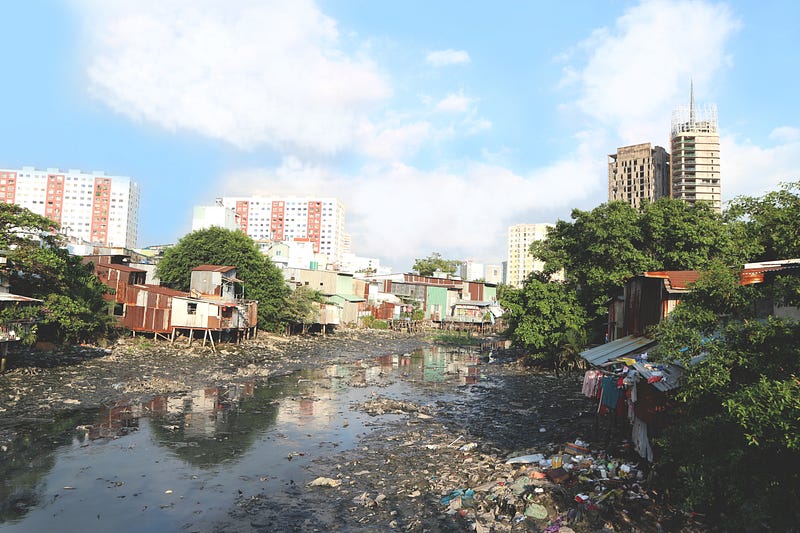
Photo by Anh Vy on Unsplash

Chapter 8 sifts through strategies to address climate induced impact, the UNFCCC 1992, the Koyoto Protocol, climate fund issue and the Paris Agreement. However, the Bangladesh context of climate change issue is evaluated in chapter 23. In chapter 8, author churns out that despite brewing concerns as to decrepit consequence of climate change impact, the politics of climate change still swirls within the perception of equity and justice.

Author argues that effective climate change fund regarding compensation payment to climate scourged countries is yet remained as distant foghorn. The only legally binding international climate treaty, the Paris Deal, is also ruffled with multifaceted shortcomings, e.g., compliance timetable and country specific targets for emissions.

Photo by NOAA on Unsplash

In chapter 11, author reiterates that for an effective legal regime regarding marine pollution requisites a balanced platform to grapple marine pollution problem associated with sovereign rights, national jurisdiction and common concern of humankind. As fitting sequel, in Chapter 26, author endeavors to recap the marine pollution issue in Bangladesh context. Bangladesh has ratified most of the important conventions on marine pollution. But there is no comprehensive law regulating in Bangladesh that defines and incorporate provisions on marine pollution.

Author suggests that Bangladesh needs to enact a comprehensive law on marine pollution because there is no uniformity among the national laws and it is under obligation to implement the convention on marine pollution.
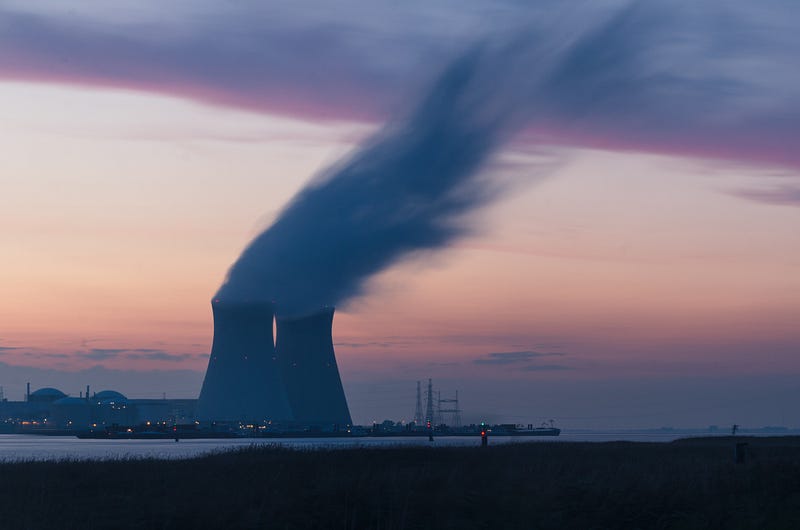
Photo by Frédéric Paulussen on Unsplash

Chapter 13 scrutinizes legal regime on nuclear safety, liability and management of radioactive waste. However, author deems that limitation in nuclear liability regime and deficit of neutral dispute settlement mechanism veers the nuclear legal regime into an ineffective one. This reveals the necessity of further development of the existing legal framework.

Nexus between the realms of human rights and environmental rights is reiterated in Chapter 15. Author contends for significance of human rights approach to environmental protection. To bolster his argument, author propounds the contribution of judicial activism for solid footing of the right to environment. However, appraisal of present human rights legal regime would reveal that it does not incorporate ‘right to safe environment’ in the quiver of international human rights instrument.

Author suggests that the stalemate can be ceased either by incorporating ‘right to safe environment’ in the existing human rights framework or by creating distinct convention as to environmental rights.
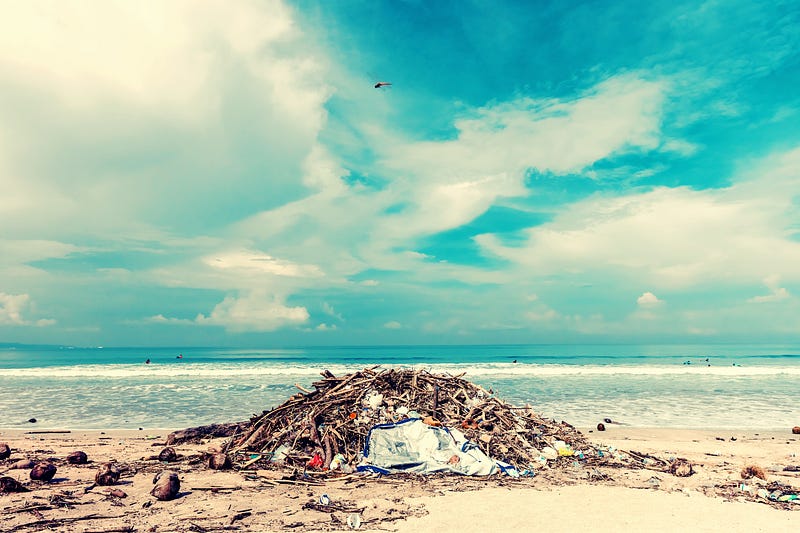
Photo by Artem Beliaikin on Unsplash

Chapter 24 sifts through water pollution prevention issues in Bangladesh. The chapter depicts that current national environmental laws on water pollution lack clarity to prevent water pollution. Enforcement mechanism is also largely absent and ineffective. Legal and regulatory reform and strengthening institutions through adequate resources and expertise is imperative to get rid of the abseiling scenario of water pollution in Bangladesh.
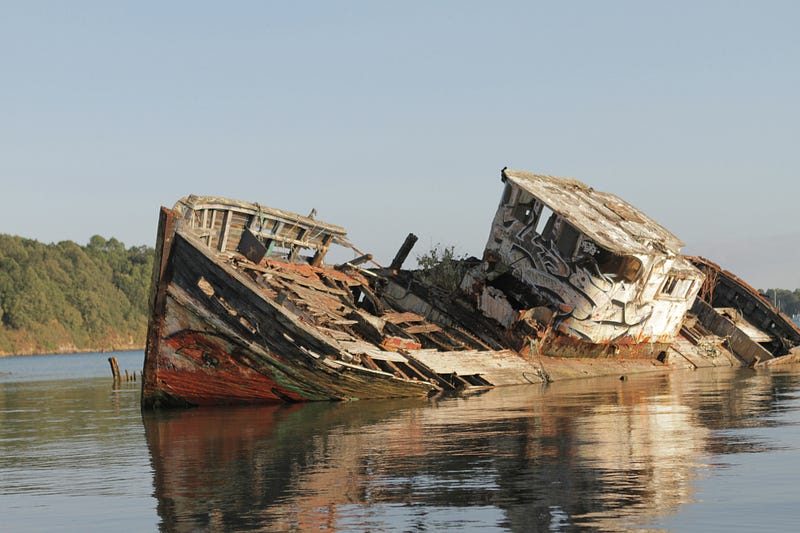
Photo by Lespinas Xavier on Unsplash

In chapter 28 under the heading of ‘Environmental Regulation of Ship Breaking Yards in Bangladesh’, author criticizes that the relevant laws on regulation of ship dismantling in Bangladesh are veer into ineffective due to lack of political willingness, inabilities of the relevant government agencies and non-cooperation of ship owners.

Chapter 30 provides extensive insights on environmental public interest litigation (PIL) in Bangladesh. In South Asia region, the concept public interest litigation is deemed as instrument of access to justice for the marginalized and common people. Development of environmental laws in Bangladesh owes a lot to the instrument of PIL which has been developed through judicial activism. Nevertheless, author argues that to provide further impetus to instill the principles of environmental law in relevant laws of Bangladesh, judiciary should take part through judicial activism.

Photo by Zach Taiji on Unsplash

The book concludes with bibliography in tandem with a list of environment related treaties ratified by Bangladesh. It is pertinent to mention that the book under review lacks comprehensive index section. This deficit of index section creates bulwark for researchers to find topic without hardship.

A comprehensive index section would undoubtedly gilt-edge the book as treasure trove on issues of environmental law. However, this critical remark should not cloud the fact that the book under review commands and demands reverence.

Photo by Safwan Mahmud on Unsplash

The book is well researched and eloquently written by a distinguished international law professor of Bangladesh. Furthermore, the book’s greatest strength lies in the amount of detail it provides in systematic and concise manner. To the students of law and international relations, the book paves stepping stones for in-depth analysis of international environmental law. Hence, from that perspective, the book is a resource for readers of law and international relations discipline to closely follow the evolution of international environmental law with concentration in South Asian countries’ context.

Disclosure:

An abridged version of the review was published in the Daily Star (Bangladesh).

Environment
Climate Change
Politics
Bangladesh
South Asia
Recommended from ReadMedium