
Just to talk about
Giving A Voice To The Homeless
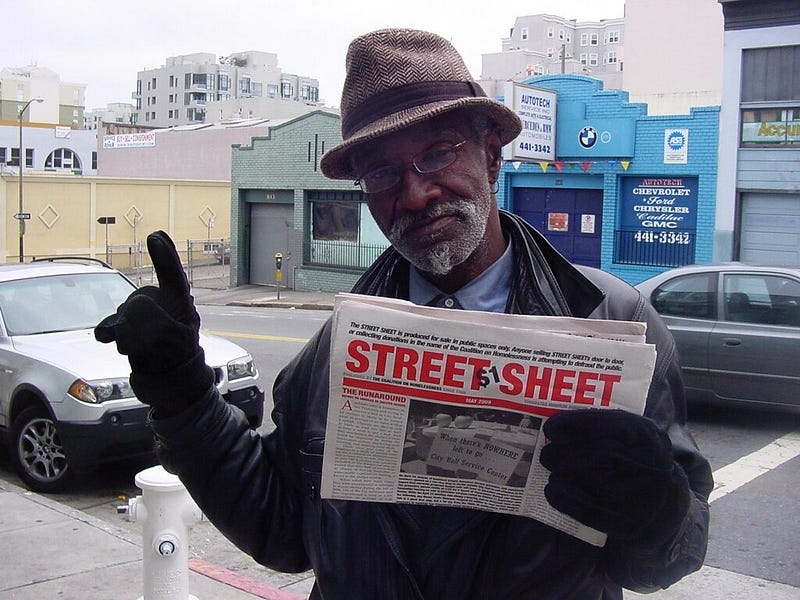
The power of street papers
Invisibility
In the comment section of my poem “An Ordinary Day”, Natalie mentioned David Weldy who works with the homeless. Nat talked about synchronicity and I was amazed, as she also mentioned another word I had in mind when writing the poem: “invisible”.
Homeless people are often invisible in the cities, or sometimes people pretend that they can’t see them. Their struggles and ways of getting by may also seem out of grasp for people who have never experienced homelessness.
What are “street papers”?
Internationally, street papers create earning opportunities for homeless individuals. They create a feasible way for homeless individuals to earn some money by selling newspapers or magazines. Homeless individuals receive a certain number of such papers daily and sell them on the streets.
This process provides a source of income for individuals who may find it difficult to obtain employment due to their homelessness. This extra cash allows these individuals to access necessities that they cannot otherwise afford.
Moreover, street papers serve as a platform for the homeless to express their thoughts and experiences. These papers give them a voice that is otherwise not heard. The content of these papers reflects the opinions, stories, and perspectives of homeless individuals who may otherwise be ignored by society.
By sharing their experiences, the homeless can educate others on the challenges they face, and hopefully inspire empathy and understanding in the community.
Street papers also provide a sense of community. Homeless individuals often feel isolated and alone, and many struggle with mental health problems. Street papers functioning as a community or a family can offer them a sense of purpose and belonging. The papers create social opportunities for the homeless to interact with others and share their stories and experiences.
Finally, street papers offer a source of education. These papers often provide information on shelters, clinics, or support groups. Such information is useful to the homeless and those who want to help them. Street papers can also provide insight into the lives of many homeless individuals, which can then be used to identify their needs and address them better.
Invisible Tours
The Greek street paper “Shedia” (Σχεδία, i.e. raft. The link contains information in English) has already helped many people to make a living and escape homelessness. It aims to offer an opportunity to vulnerable people to earn an income and support themselves while providing readers with a unique perspective on social and economic issues.
Shedia offers a mix of hard-hitting news, feature articles, and personal stories that cover topics ranging from homelessness to social justice. The paper is also involved in community initiatives and aims to support the homeless and marginalized people of Greece.
The people of Shedia also organize city tours, called “Invisible Tours”. The tour guides are homeless or formerly homeless people, who guide the group to the unseen side of the reality of life in the streets.
Here’s a video of what the city tours look like:
I have been on the tour twice, and both times the experience was unique. Each guide also shares parts of its own story, which helps you immerse in the experience even more.
It’s really an incredible and humbling experience.
After the tours, I felt as if I got a new, special, way to look at the city and its people.
Seeing the city from the perspective of those who are invisible is powerful.
In addition, Shedia formed the national homeless football team, and they participate each year in the Homeless World Cup.
Other efforts of Shedia include a restaurant, in which all employees are homeless or formerly homeless people. All of them were trained by a very famous chef, who also created the menu. The restaurant is designed with full accessibility in mind, and it’s also welcoming
Each time a person of Shedia moves into their own house, a small lamp made of wires is added to the restaurant.
Here’s the link with more information about the restaurant, in English. On that page, you can also see the photo of the small lamps.
Moreover, Shedia has a web store with household items and jewelry created from recycled magazines.
The monthly or yearly subscription to the magazine also helps people who are too old or frail to sell the magazine in the streets.
International Network of Street Papers
By visiting the website of the International Network of Street Papers, you can find out if there’s a street paper being sold close to you!
Aside from the Greek street paper, and the street papers in the other countries I have lived in, I also have a habit of buying street papers in other countries I visit, even if they’re in a language I don’t speak.
I find it fascinating to see the diversity in the contents, the pictures, and the stories told in them!
How about you? Have you ever been on such a tour? Do you buy street papers?