
Give Gen Z A Break. In My Experience, Boomers Are The Workplace Pests.
We have big problems when we blame workplace problems on age.

In Australia, we’re facing a workplace revolution.
Our government is introducing the right to disconnect, “which will empower workers to ignore work calls and emails after hours”.
Basically, employers won’t be able to bug their staff once the clock stops, nor will we be penalised if we don’t answer the calls. You can’t fire employees because they didn’t answer a call at 9 pm on a Saturday night when they work Monday to Friday office hours.
Here’s the quintessential response from someone in power, this example being from Basil Zempilas, a former Australian television announcer turned politician. He is a Gen X, born in 1971, only seven years shy of being a baby boomer.
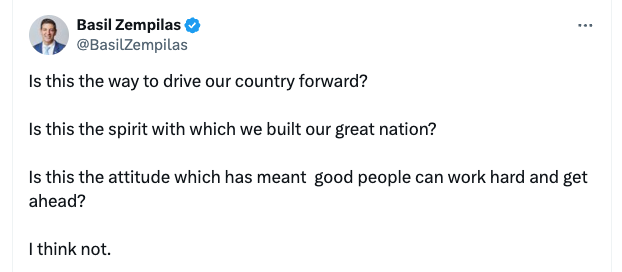
It’s no surprise the younger generation is happy about these changes, and the older generation feels angered by them. There was no way you could refuse a work call on the weekend twenty, thirty, or forty years ago.
That’s what you did back then.
You also smoked during pregnancy and thought hovercars were a staple of the future.
How did that turn out?
I’m personally indifferent about the changes as they don’t directly affect me. I’m a solopreneur without a staff member to my name or a boss to report to.
But if I were to take a side, I wouldn’t be supporting the Gen X, Baby Boomers or older. Certainly not. Because, in my experience, boomers are lazy, toxic micromanagers and have their priorities in the wrong order.
They also can’t practise what they preach. They make life hard because of their generational differences.
During my time working for the older generation, they were the pests. Here’s a snippet of what happened to me.
The a**hole employee
It was fifteen years ago when I worked at a dance studio here in Melbourne. The husband and wife team running the establishment weren’t the best to work for.
(As a separate issue, I don’t think married couples should manage businesses. If an employee is harassed or abused by one, as what happened to me, who do you turn to? The wife or husband sure won’t be on your side.)
They had been in the dancing industry for as long as I had been alive. They were raised through the traditional dance teacher system, which involved awful pay structures and ridiculous working hours.
I was a full-time employee, but I was paid by the hour. If I worked thirty-five out of my thirty-eight hours, I was only paid for those thirty-five hours. Yet, when it came to working overtime, I wasn't compensated above set thirty-eight hours.
The hypocrisy of this situation perpetually bugged me. I did my best to hold my tongue about the inequities of their pay structure.
But one day, the husband asked me to work three extra hours on a Saturday afternoon. Feeling the pinch of the extended hours and mounting bills, I asked if I would get paid extra for those hours.
In response, the husband called me an a**hole.
Yep, I was the a**hole for having asked if I was going to get paid for the hours I was working.
To me, I was asking a logistical question. There was a 50-50 gamble on what the answer was going to be. It was either yes or no.
Apparently, asking this question turned me into this ungrateful and petulant younger employee who didn't understand what it was like to work hard. I asked a loaded question, according to my aging boss.
I didn’t know there was so much context to a yes or no question about pay.
When I justified why I was asking the question, the husband noted how rude it was for someone my age to ask about pay.
‘Someone my age’.
- I was an adult.
- I could drive.
- I could vote.
- I was old enough to be in charge of a set of keys to the dance studio, along with the alarm codes.
I was old enough for all of those things but not old enough to ask about remuneration. I’m still waiting to learn how old I should be before asking about being paid fairly.
I know my boss called me an a**hole because I was acting like a petulant younger employee, someone who only works to get paid. In reality, I was retaliating against a fundamental issue with his management style.
I hadn’t the need to say this to another employer who paid me fairly.
The round-the-clock schedules
On the subject of those ridiculous working hours, working as a dance teacher involved having an availability not to do similar to a doctor on call.
I couldn't believe it when my bosses described the hours that I “needed to be available” (no option). They would need me to teach classes up until 10 o'clock at night, seven days a week.
I have no problem with that availability had this role warranted such hours. Teaching dance wasn't saving lives. It wasn’t like a local dance school experienced choreography emergencies.
But that's how they did it in the old days, and that's how they would continue to do it. Even though customers didn't want to take dance classes at 9 o'clock on a Sunday evening, they insisted on having people available.
When asked about revising the working hours during a regular team meeting, the bosses said there was no way they could be flexible with the hours.
“If we had to work those hours at your age, so do you.”
There was a fundamental problem. The older generation was trying to make the younger staff suffer for what they went through. Instead of implementing policies that apply to today or are relevant to their current customer base, they were exacting an ageist revenge plot.
It wasn’t good business.
And during one of my weekends off from teaching, I went to Sydney with two of my girlfriends for a whirlwind twenty-four-hour trip. During that time, the husband called me to ask about a password for the computer.
Making small talk, or so I thought, he asked me what I was up to on my day off, and I said where I was.
“Why didn't you tell me you were going to Sydney?”
“I didn't think I had to tell you what I was doing on my day off,” I replied.
“Well, you're wrong. You need to tell me where you are at all times.”
Was I talking to my boss, or was I talking to my parent? In the eyes of my bosses, it looked like I was prioritising life over my work. In reality, I was living my life with the level of privacy I expect within a workplace. It was my day off; I could do with it as I pleased.
Do I need to tell my boss every time I need to see the gynecologist on my day off, too?
The problems with appearance
Being a dance teacher was a sweaty job.
I wasn’t only teaching dance but fitness instruction, including Zumba classes, each and every night.
I learned after the first week there was no point in wearing any make-up during these classes because I only sweat it off, looking like a raccoon after about fifteen minutes.
Mascara-stained undereyes are not cute.
But the wife, who had never seen me teach a minute of dancing as she opted to work from home every other day, took exception to my lack of make-up.
During her two-hour weekly visits to the studio, she began to fixate on my appearance.
- The first week, she wondered if I was wearing make-up or not. She touched my skin to inspect with detail.
- The second week, she asked me if I owned make-up in front of all my colleagues.
- The third week, she came in with some of her spare make-up after her beauty “spring clean”. She claimed the colour didn't suit her, insisting I take it off her hands.
- The fourth week, she wondered why I wasn't wearing the make-up she had given me. She felt offended that I wasn’t grateful for her gift.
On the fifth week, I wore a full face of makeup to the meeting, prompting her to pull me aside into a private meeting.
“I want to mention how wonderful you look today. You know I never taught a single dance class without a full face of make-up.”
I remember smiling at her, not sure what I was meant to say. Maybe if she had seen me teaching dance, she would've realised that the make-up I was wearing was impractical. Maybe if she cared less about how I looked, she wouldn’t be saying this, either
“Oh, is that right?” I responded.
“Yes, women didn't go out without make-up on when I began dancing.”
I wasn't sure what year she was referring to, but it certainly wasn't the one we were in. I felt like I had spent the last four weeks attending a 1950s finishing school.
I’m sure I looked like I was dismissing my boss because I was a petulant millennial who didn’t care to listen to my elders. In truth, my “elder” didn’t say anything except drop hints and state facts about the old days.
I wouldn't call it adequate mentorship or performance management. It’s hard to take any boss seriously if they don’t effectively communicate with you.
The personal-life obsession
For a brief time, I was working as a consultant to a manufacturing company. I was re-designing their website and working very closely with their sales manager.
Ian, the sales manager, seemed like a nice guy. With his grey hair and aging features, he was highly knowledgeable about the majority of technology and how the website impacted making sales.
I didn't see his age as a barrier to completing the work. But he always had this really strange schedule.
Even though the head office was located southeast of Melbourne, he always insisted we meet just near the city.
It was an odd location, but I thought he was accommodating because I lived near the city. Yet, when I thanked him for coming closer, appreciating how he made the meeting easier, he pointed out how he had another meeting around the corner.
It was a win-win situation.
This meeting time repeated itself several times. It was always at about twelve o'clock on a Friday, and always at the same cafe just outside of the city.
On one particular Friday, I was driving to our regular meeting when the big boss of the manufacturing company called me. He asked me if I was available for a meeting that very afternoon. I said I was already heading to a meeting with Ian near the city.
“Why are you having a meeting near the city?”
“It was all Ian's idea. He has a standing meeting to attend afterwards.”
A couple of weeks later Ian was fired by the company. When I asked the big boss what happened, he explained the Friday afternoon meetings were actually a tee-time at the golf course.
And when he organised a trip to New Zealand to attend a “marketing conference”, Ian made the mistake of booking golf trips in his work calendar.
I had to laugh at the story, privately, of course. I thought it was the younger generation who manipulated their bosses so they could have their personal freedoms.
I thought it was only the younger generation who lied about where they were all the time.
The skiving off work problem isn't about ageist issues. It's about bad employees versus good ones. Age isn’t always the determining factor.
The repetitive boss
One of my former website design clients was in the sixties when I was working with him.
He wasn't someone who I would call technologically challenged; he operated a smartphone, tablet and several different PCs across the office. He wasn’t a gamer or tech head, but he looked up information online like the best of them.
He understood how paramount the Internet was to making things happen. But then there were his emails.
Several times, he would email me the same questions repeatedly. Questions like, “When does our domain renew?” Or “What website page do we have the contact links listed?” Or “Can you send me the link to the Contact Page so I can send it to a client?”
These were all problems with obvious answers.
- Most of the answers to his questions were already in emails I had sent him.
- All he had to do was hit search on his emails and type a couple of keywords, and he would find the answer.
- If the answer weren't in his emails, it would be on the website. All he needed to do was spend a minute searching the website, and he would have his answer.
It was a classic time-wasting scenario; he spent more time asking me for the answer than figuring it out himself.
I used to think this was a time-poor boss problem. It was easier to ask someone than do it yourself. That was until I watched him do it to someone else during a meeting.
I asked him a question, the savvy businessman remembering he had seen the answer in a previous email. Instead of looking at his emails, like I thought he would do, he called for one of his assistants to come into the meeting room.
The assistant kindly pointed out that she had emailed him about that a week ago, but she would forward him her response again.
I watched as he opened up his phone and noticed he had thirteen-thousand unread emails. He said we would have to go into his office to the computer to look at the emails because he didn't know how to read them on his phone or delete them.
“I’m just too old to figure it out,” he moaned.
It was then I gathered if he didn't know how to delete them off his phone he probably didn't know how to search emails, either.
He would rather annoy his employees and make them do unnecessary work than learn the skills to make his life easier. He would also rather blame his age than undertake the necessities of modern management.
He would rather waste time than find better efficiencies that challenged his knowledge and age.
The assistant quit three months later. He vented about her inability to stay loyal to any workplace. I wondered if this boss ever exercised any self-reflection. Perhaps if he didn’t use her for trivial reasons, she might have stayed.
The problems we all have
This isn’t an attack on boomers or an older generation to mine, despite my experience.
I'm also not saying all boomers, Gen X or older generations, are like this.
Of course, there will always be exceptions to the rule, either way. Some people also have the best boss that ever had was a boomer. Some more tell you they can't ever work again because a boomer tortured them out of the workforce.
The problem is assuming one generation behaves a certain way in the workplace, stereotyping everyone in that generation without a little introspection.
The other problem centres on ranking generations, deciding which is better than the other.
To me, it’s all a waste of time.
Everyone does annoying things at work. You excuse the issues by blaming age or age-related differences. But fundamentally, it’s just a people problem. It’s issues that arise with working with people.
There will always be issues. No one is perfect.
And no generation is perfect to work for. We would be better off spending our time focusing on what we can control rather than moaning about what we can’t.
Perhaps we might get more work done while we’re at it.
If you want to see more real-life, real-time stories of building a business, I share my professional rollercoaster on TikTok: https://www.tiktok.com/@ellenjellymcrae


