
Give Emotions the Freedom They Need To Flow Through You
If there’s too much pressure, it will result in a breakdown.
Emotions are energy in motion and interrupting their flow can cause all kinds of pains.
There are two major ways this happens:
1. Deny emotions when they arise
2. Attaching and not letting emotions go
No matter what you choose, they both produce the same result — resistance. Resistance can cause suffering, so it’s best to manage it as much as possible.
I’ve seen this play out in myself many times and so I want to share with you what I’ve experienced when I resist how I feel, and how to remedy that.
Pressure building
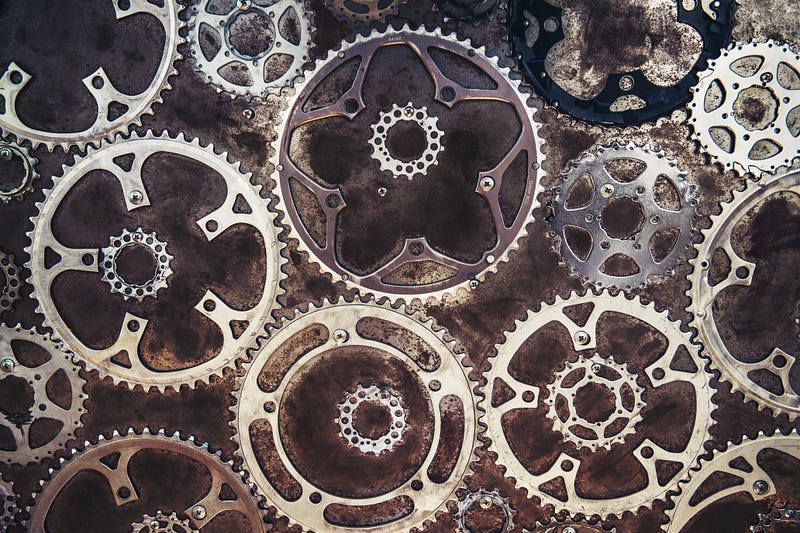
Imagine a giant wall full of gears and each one fits into the next as they all rotate in unison.
Now, let’s say you walked up to the wall and shoved a wedge into one of these gears.
Of course, that gear stops moving, but so do all the others. This means that a point of resistance affects the entire system, not just where it’s placed.
Without the ability to flow as usual, pressure builds, something breaks, and it all comes crashing down. What was a graceful ballet of energy transferred from one gear to the next is now a painful, chaotic mess.
The same thing happens to us when we don’t allow our emotions to flow through us.
Freedom to flow
The energy of emotion needs the freedom to flow through our inner gear system.
We have to accept what arises and release what goes. If we don’t, our interference blocks our ability to flow.
When this happens, our inner world builds pressure until we reach a breaking point and snap. This inner collapse manifests in different ways.
It can show as irritation, fatigue, or illness. In the worst case, it can show as harmful actions towards others or ourselves.
The antidote for this is acceptance. Where resistance blocks the flow, acceptance enables it.
Here is an approach I use that helps me do this.
Take “I” out of the equation
We humans have a knack for creating an identity out of a feeling. For example, “I am angry”, “I am sad”, “I am hungry”, etc. We also always have a story that supports this identity.
But the thing is, we aren’t our feelings.
When a sad or happy emotion ceases to exist within you, you don’t stop existing too. Feelings come and go, and you remain. It’s like the old metaphor that says clouds come and go, yet the sky remains.
In this metaphor, you are the sky experiencing the clouds as they flow by. But the difference between the sky and us is that we can interrupt this flow. One way we do that is by identifying with emotions.
I saw this in myself when I identified with my depression. I held on to a painful feeling for too long and I didn’t allow it to leave. I also didn’t allow any other feelings to enter, like joy or happiness. I had put a wedge in my gears, and made myself an emotional and spiritual wreck for a long time.
So, to stop identifying with emotions is about recognizing they are temporary experiences. All we have to do is step out of their way and let them pass. I do this by reframing how I acknowledge my feelings.
Instead of saying, “I am angry”, I say, “I recognize anger is in me”. This immediately severs the attachment between identity and feeling. It also puts me in a position of introspection.
From this perspective, I can watch the emotion move through my inner gear system without interrupting its natural flow.
In doing so, this doesn’t mean you won’t feel whatever emotion is there. You will, but you won’t get trampled by it. This is because you are observing from the side instead of interfering by getting in its way.
All this comes from removing the “I” from whatever emotion you notice is there. This can take some practice, but you know you have it when you feel your self-awareness getting stronger.
But it’s all about catching when you say to yourself “I am ___” and switching it with “I recognize the feeling of ___ is in me”.
With this perspective, you can observe feelings and care for them when needed, which leads to the next step.
Understanding and compassion
Sometimes to resolve an emotion it’s enough to observe it as it is, but other times you need more. This is where seeking an understanding of the emotion is important.
I like to kick this process off by focusing on the feeling and asking one question, “Why are you here?”
Seriously, I just ask my feeling why it’s there and follow all the breadcrumbs to the root. This process can look something like this:
- “I recognize anger is in me. Why are you here?”
The first bit of insight I get will come from the most recent event that triggered it.
For example, one time a friend highlighted a mistake I made, and I felt angry about it. This is great to understand, but it’s not answering what the root of the anger is, it’s just showing what triggered it. So on to the next question.
- “Why do I take offense at them pointing out my mistake?”
Because it made me feel like I’m not enough.
- “Why do I feel like I’m not enough when I make a mistake?”
I thought way back, and it turns out I experienced shame as a child over making mistakes.
Alright, next question.
- “Why is shame associated with making mistakes for me?”
I dug deeper to find my childhood filled with unreasonable pressure put on me by teachers and myself.
I thought I had to be the smartest or most athletic person in the room, and anything less was a failure. All this shame piled up over the years to create a very sensitive trigger as an adult.
But there it is, the root of the anger. It was an unfair expectation as a child that got out of hand and grew into a monster of self-hate.
When you come to understand the root of your suffering, an energy rises to meet this incredible pain. It’s the energy of compassion.
Compassion is born out of the understanding of suffering. It rises to care for the part of you that hurts and reestablish a balance within.
What’s amazing is this seems to work on its own. Once understanding is there, compassion flows without force.
When that’s done, acceptance and letting go becomes a very real option and not just a wish.
Release what is meant to go
When inner turmoil feels cared for, the next natural step is to let it go. This can be difficult for those who have engrained their identity with their pain. It was very hard for me to do this with my depression. I just couldn’t let it go after living with it for so long.
Of course, I didn’t want to feel down anymore, but letting it go felt like losing a limb or something. This is because I didn’t know who I was without depression.
But once you understand the root of your suffering, there is no going back to the way things were. For me, I had to release my depression and continue my journey without it.
I’ll say it can be tough at first to give up a strong identity that you feel is “you”, but you don’t have to do it all at once. I let go of my depression a bit at a time over the course of a decade or so because it was too enormous to let go of all at once.
Finding ease within
Our most painful emotions need our attention and understanding. They need our love. With it, they will move through us with ease. This leaves our inner gear system operating peacefully with no pressure or turmoil to hold things up.

The Takeaway
Resistance & Pressure
- When you encounter a feeling that you resist, it’s like putting a wedge in your gears, and pressure builds. With too much pressure comes a breakdown.
Flowing by reframing
- Remove your identity from the equation by reframing how you address your feelings. Instead of saying “I am angry”, switch it to, “I recognize anger is in me.” From here, you can watch your feelings flow through you without interrupting their natural flow.
Understanding & Compassion
- If observing a painful feeling moving through you isn’t enough, then take time to understand why the feeling is there. This will develop compassion that you can use to heal yourself.
Release the resistance
- When your inner pains feel cared for, then it’s time to release it. If you can let it go all at once the first time, then that’s great. If not, don’t worry. You can do this in small steps over time to break down those bigger walls of resistance within.
Inner peace
- With nothing blocking your inner energy system, a sense of ease and peace will find you, no matter what emotions you may be feeling.
This is a practice of self-love that is accessible to everyone. All it takes is the willingness to look within, and offer compassion to any points of resistance that you find.
Thanks for reading.


