
GitOps: ArgoCD vs. FluxCD — Unveiling the Victorious Champion
In the fast-evolving landscape of DevOps, GitOps has emerged as a powerful paradigm, enabling teams to manage and automate their infrastructure using version-controlled repositories. Two prominent players in the GitOps arena are ArgoCD and Flux, each with its own strengths and weaknesses. This article aims to explore the advantages and disadvantages of both ArgoCD and Flux, ultimately crowning a champion in the GitOps battle.
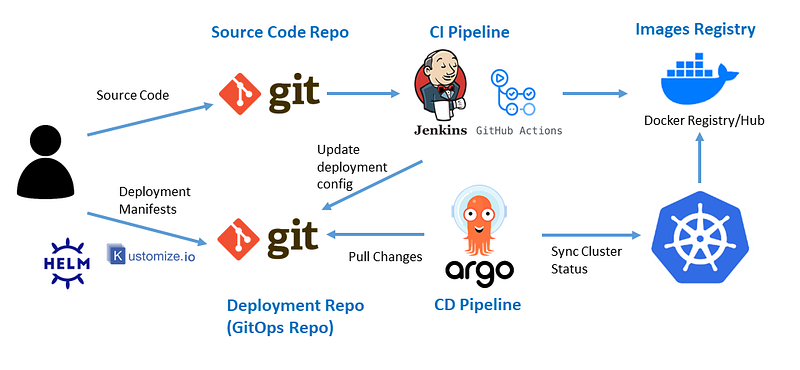
ArgoCD Overview: ArgoCD, an open-source continuous delivery tool, has gained popularity for its robust features and user-friendly interface. One of its key strengths lies in its ability to automate deployment processes, providing a declarative approach to managing Kubernetes applications. ArgoCD excels in the following areas:
Advantages of ArgoCD: 1. User-Friendly UI: ArgoCD boasts an intuitive web-based dashboard, making it accessible for both beginners and experienced users. 2. Rollback Capabilities: With its automatic synchronization and rollback features, ArgoCD ensures a reliable and consistent deployment process. 3. Multi-Tenancy Support: Teams can manage multiple environments with ease, thanks to ArgoCD’s support for multi-tenancy.
Disadvantages of ArgoCD: 1. Resource Intensive: ArgoCD can be resource-intensive, particularly for larger deployments, requiring careful consideration of server sizing. 2. Learning Curve: While the UI is user-friendly, mastering all of ArgoCD’s features may pose a learning curve for some users.
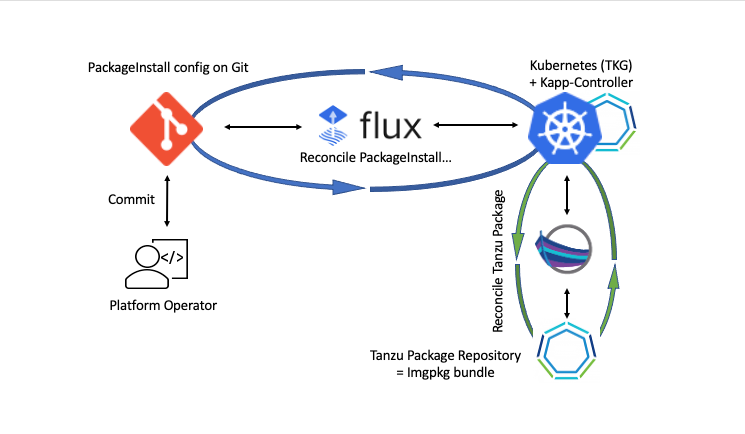
Flux Overview: Flux, another popular GitOps tool, focuses on automating the deployment and lifecycle management of applications. It is lightweight and flexible, offering a decentralized approach to GitOps.
Advantages of Flux: 1. Lightweight and Fast: Flux is known for its speed and efficiency, making it suitable for various deployment scenarios. 2. Customization: Flux provides a high level of customization, allowing users to tailor their workflows to specific project requirements. 3. Decentralized Architecture: Flux’s decentralized architecture minimizes the risk of a single point of failure and simplifies scaling.
Disadvantages of Flux: 1. Limited Built-In UI: Flux lacks an extensive built-in UI, which may require users to rely more on the command line for certain operations. 2. Steep Initial Learning Curve: The decentralized nature of Flux might pose a challenge for beginners, requiring a deeper understanding of GitOps principles.
Conclusion: Choosing between ArgoCD and Flux ultimately depends on the specific needs and preferences of your team. If you prioritize a comprehensive UI and built-in features, ArgoCD might be the preferred choice. On the other hand, if lightweight efficiency and flexibility are paramount, Flux may be the better fit.
In the end, the winner is subjective and hinges on factors such as team expertise, project requirements, and individual preferences. Both ArgoCD and Flux contribute significantly to the GitOps ecosystem, empowering teams to achieve seamless, automated deployments in the world of continuous delivery.
“If you liked my content, add a clap / respond / highlight / follow me and subscribe to get emails as soon as I publish. We all go further when we help each other!”
Buy me a coffee ❤ :
Cheers — KS:)


