
Girl Power Talk Empowers Youth
An India-based company is redefining workplace opportunities for teens in developing countries.
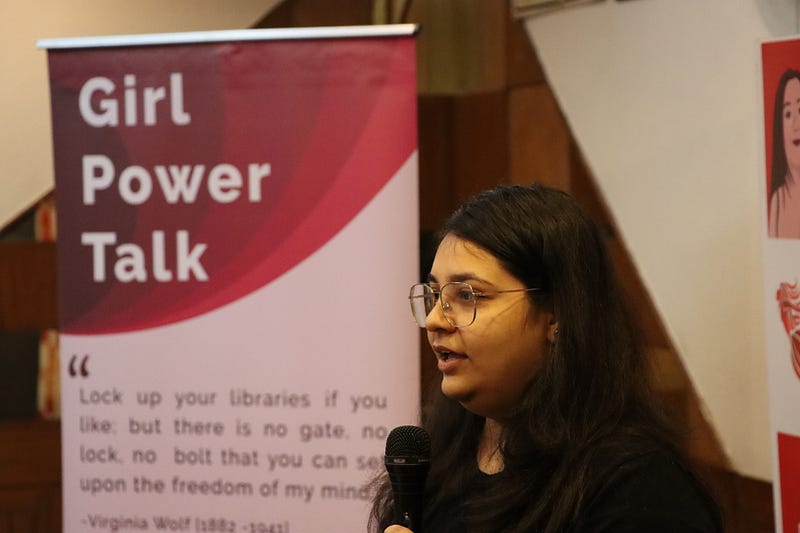
Who says teenagers can’t work on complex business projects for international clients? Not Girl Power Talk, a social enterprise based in India whose belief is that young people can, with the right support, contribute far more in business and cultural spheres than they are often given the chance to in most organizations. They believe this is especially true for women in emerging markets.
Girl Power Talk co-founder Rachita Sharma is the perfect example. Today, at age 26, she manages the day-to-day activities of the organization, made up of some 75+ youth leaders from all over the world. She also serves as Chief Marketing Officer for Blue Ocean Global Technology, the corporate partner started in 2012 by Sameer Somal, the other co-founder of Girl Power Talk.
“At 20 I started working with Blue Ocean,” she said. “I was the front face talking with clients and handling the large projects, without them guessing how old I was. They didn’t even know what part of the world I belonged to.”
It was important to be taken seriously for the young Indian woman who has been an active feminist since her early teens in a country that has still not embraced many feminist ideals.
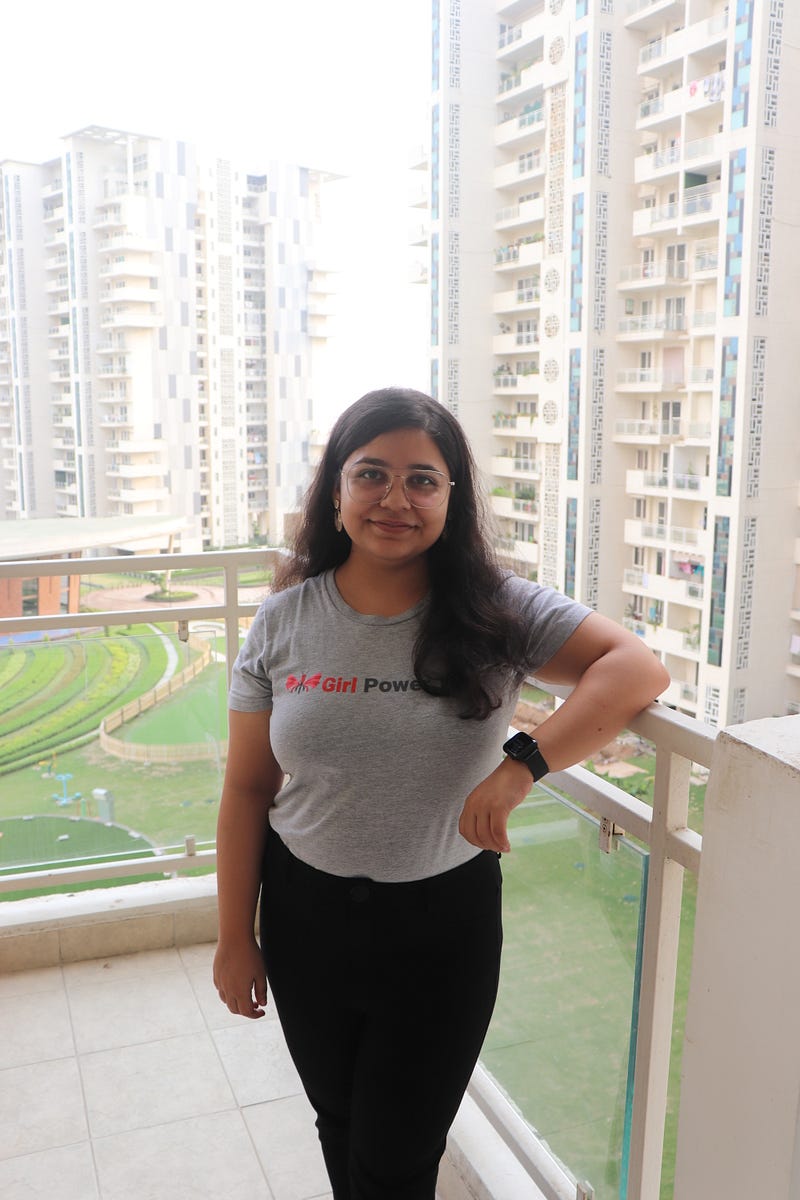
“I needed to hustle and be the best version of myself I wanted to be,” she says. “I knew I could do the negotiations, do the deals, engage and retain the clients, and do the projects.”
Identity politics
Rachita’s story of how far she was willing to go to be seen for her own merits, rather than to benefit from the centuries-old caste system, is remarkable. In Grade 8, a sheet was given to her to fill in for very important board exams. “The exams give you a primary document you need all your life as proof of identity,” Rachita says. “It’s the first legal document from the government you get in your name in India. In that moment, I was handed my sheet in class and I decided I would not put my last name down.” The name on this document was significant — it would go on future bank accounts, passports, tax cards, and border ID cards.
Rachita was reacting to the idea that her last name, Sharma, was in itself a way of unfairly determining her future. With the culturally racist caste system in India, she would benefit from her name, which was associated with a higher caste. “My last name was something I was supposed to be very proud of,” she says, “but it’s nothing to do with who we are. It’s something you have no control over. It was confusing to me to divide people that way. I remember people telling me and my friends belonging to upper castes that we should not eat from the same lunchbox as children from lower castes.”
Fuel for change
This sense of unfairness deeply affected Rachita, as it continues to, powering her work to provide opportunity for all youth, but especially women from developing countries.
Her parents were supportive of her desire to get out of the home and make a different life for herself than many Indian women can. “They never tried to hold me back,” she says. Rachita was allowed to travel across India for competing in sports, elocution, debates, and other co-curricular activities. She was out of the house and doing things that a lot of girls weren’t allowed to. “I was a wild bird,” she admits. “There was no cage I could be put into.”
A road accident during high school left her temporarily injured, but also provided her clarity on how she wanted to spend her life in a purposeful way. “Life is so fragile,” she says, “every day you have to spend doing something meaningful to change things for yourself or others.”
When she moved away from home to study at college, Rachita began working for young women from marginalized communities, interviewing people who have had traumatic experiences or were victims of social constructs that oppressed them. She also learned about the painful discrimination of transexual women. She got very involved — too involved, she admits. “I had not a peaceful night sleeping in my bed knowing there is so much women are going through and I’m lying in my bed incapable of helping them.”
She had competed in debates in high school, winning competitions over much older students, and in college found her voice in other ways, such as through spoken word poetry and rap music. “It taught me that you have a voice and that if one person says your words changed their life, it is worth it.”
The genesis of a powerful concept
After obtaining her undergraduate degree, Rachita was unsure of her next steps. Maybe travel was her calling. She did know she didn’t want to be in Delhi anymore. She received a scholarship to do an MBA. To buy more time to figure out what next, she decided to accept it and pursue the same. Soon after joining the course, she realized that a business school could not help her find a calling.
“Most people I met wanted to join their parent’s business, or start any business, or just make money. I wasn’t very interested in that. Money is of course important, but for me understanding the purpose I want to serve through my profession was a bigger question.”
Disheartened, Rachita felt lost trying to figure out the direction she wanted to move in. She went into deep contemplation of what her passion and purpose in life were, reading and attending events that allowed her to dive into these subjects. It was through one of these events that she met Sameer. Through follow-up conversations, they realized they shared a foundation of feminism, hard work, and unlocking the unrealized (and largely untapped) potential of youth, especially in developing countries.
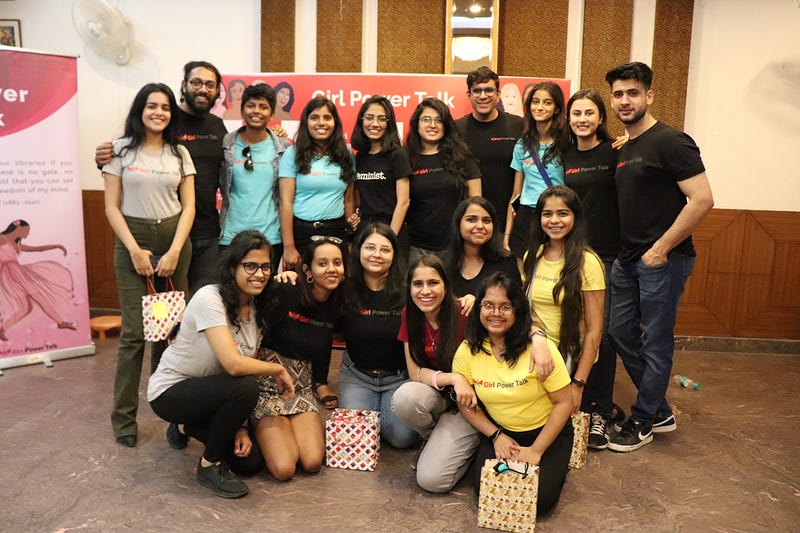
On this common ground, Rachita and Sameer built a unique business model that allows great participation of youth in leadership, and that focuses on a combination of profit-led and purpose-led work. They called it Girl Power Talk. This place is a blend of profit and purpose — a company where everyone is compensated for their work, and the profits flow into social projects about which the youth leaders are passionate. The model is sustainable and balanced and fits the philosophies of its founders to a tee.
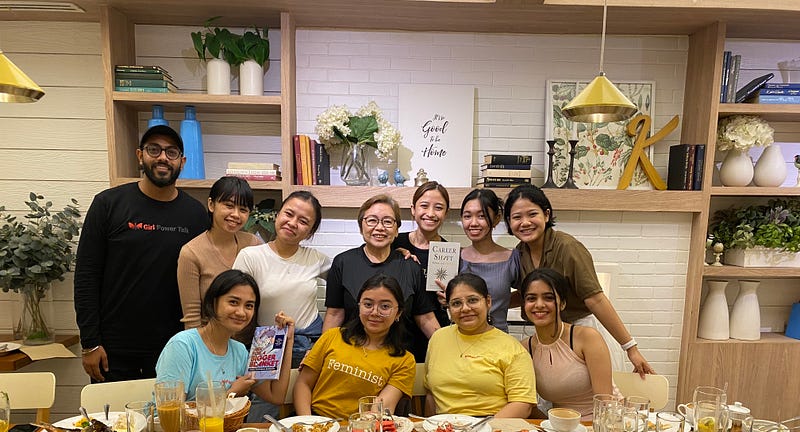
“In order to prioritize both social impact and compensating everyone for their contributions,” Rachita says, “we created a company where young leaders could choose both profit and purpose. We believe we will be successful because we are benevolent from the start. For transparency, we recently formed Girl Power Talk’s official non-profit arm Girl Power USA.”
The hiring process is rigorous and personal. Interested qualifying youth fill out an online questionnaire which is a tool for revealing signals on one’s true character, capabilities and potential. With this information, the Girl Power Talk leadership team determines whether a candidate is a potential good fit. And of the thousands of applications they receive, to date, they are still reading each questionnaire. And at least one of them at least leads the final round of interviews with other young leaders. The decision to hire has to be unanimous.
“Our youth leaders are not just any teenagers or young adults,” Rachita says, “they have extraordinary talent that we are focused on developing.”
Girls with power talk
I recently had the opportunity of interviewing two of Girl Power Talk’s Youth Leaders, Racheal Bankole and Simran Singh. With very different stories, Racheal (21) and Simran (15) came to Girl Power Talk looking for the same thing: opportunity that they didn’t have in the cultures of their childhood.
Racheal is a final level law student at the University of Lagos in Nigeria. She was born in Lagos. “Almost all my memories revolve around the city,” she said. “I was one of those outspoken, loud kids growing up and I did stand up for what I believed. I was called stubborn and rude a lot for this, but it never stopped me. I have always been an advocate for women’s rights and feminism, even before I knew what it meant.”
There are fewer barriers to women studying at university in Nigeria than in many other developing countries. Of the 300 students in Racheal’s class, 250 were women. However, this impressive-sounding statistic wilts when a bigger picture is painted.
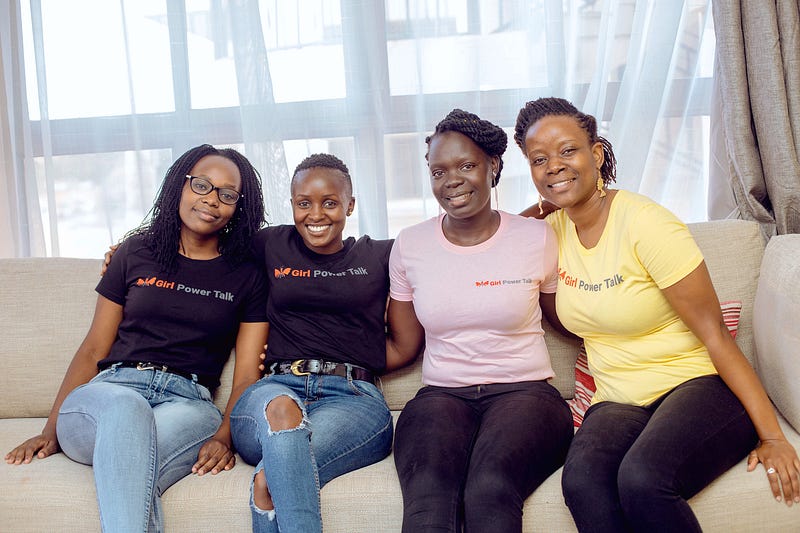
“Just because you get a degree doesn’t mean you will practice law,” Racheal said. “Most women don’t. They have to return to their family, participate in the expected social life, get married and have children.”
Though her career of choice wasn’t law initially (her strengths were in literature and English), Racheal had only a few professional career choices in Nigeria. In 2016 at university, she said, her only choice was law, medicine or engineering. “I decided that since I was pretty good with English, why not explore a new territory?” She’s since discovered that law may not be the perfect fit for her, but she’s going to stick it out anyway.
“It’s been quite the journey and there are days when I want to leave and start over with something less technical,” she said, “but the gap in gender equality is still so wide here and feminism is still a joke to so many. I can’t help but fear that if I give up many others will too, and, in the end, we will get nothing done.”
Now working in content creation for Girl Power Talk and doing legal research for an American law firm since Fall 2021, Racheal is living a “dream come true.”
“It’s a breath of fresh air to be amid many great minds who are looking out for you with just the right amount of pressure…I feel safe, actually useful and I am being acknowledged for my efforts. I wouldn’t change this for all the money in the world.”

Racheal has built her confidence and now volunteers to do things she used to shy away from and is proud of her achievements in her short time at Girl Power Talk.
“It was hard getting used to the diversity and the very different cultures, but every single person made it easier, including the CEO and co-founders,” she said. “I don’t know of any person who can tell me they relate with their boss or any person in higher offices the way I do with mine and this is something I want to continue to experience for a long time. It’s not a fantasy anymore. I am living this dream and loving every minute of it.”
Simran Singh joined Girl Power Talk in early 2021 from India. Currently, in high school studying humanities, she is an avid reader and a passionate feminist who loves playing with words. “As far as I can remember,” she said, “gender equality has always been my thing. Being a woman, living in India, one lesson that a girl can hardly help learning is that she’s different from the boys and that her whole gender is somehow inferior. There were aspects of systemic sexism that stuck with me.”
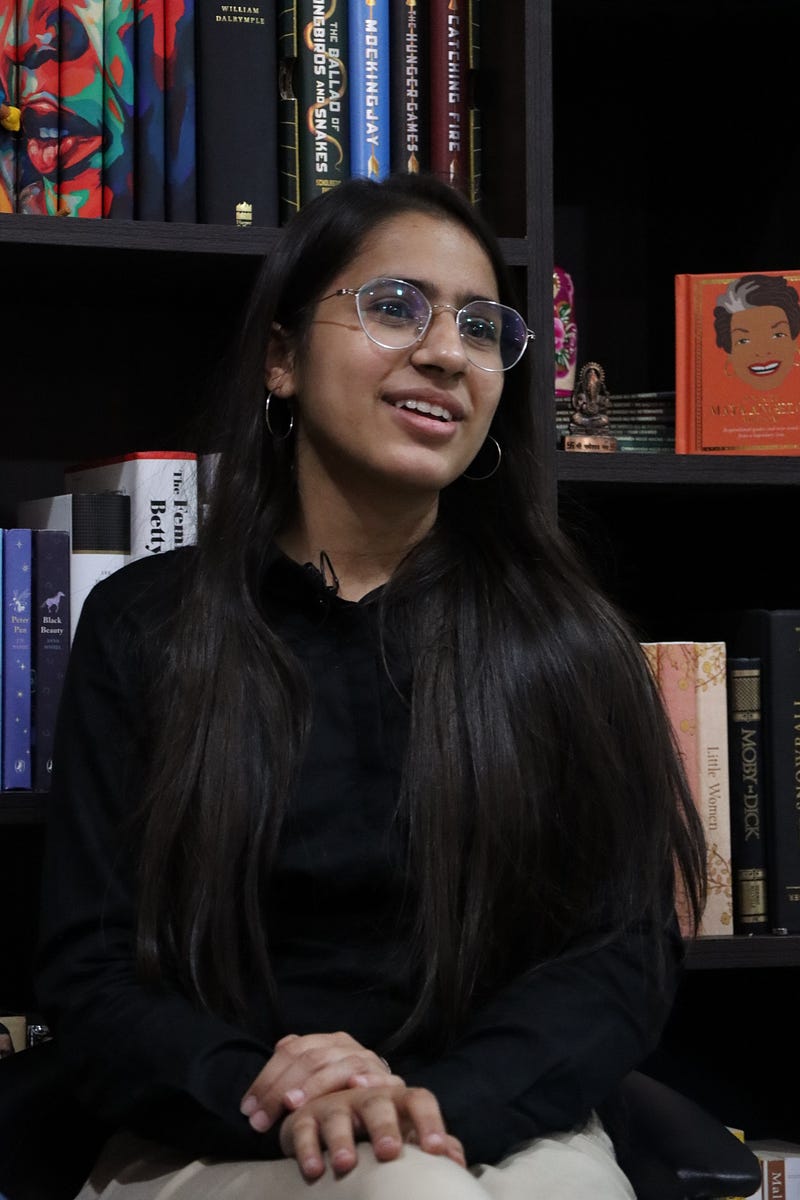
As a content writer for Girl Power Talk, Simran has been able to significantly improve her writing, and learn about SEO, digital marketing and social media management by working on actual client projects. She works on everything from video scripts to blogs to social media content. She has recently also been involved in creating writing and speaking bootcamps for high school and colleges sponsored by Girl Power Talk. “For younger people to be respected, they need to be excellent writers. Every sentence has to be clear and impactful. And for those wanting to become leaders, speaking is an essential skill. We aim to build confidence, teach how to put content together and create a connection with an audience.”
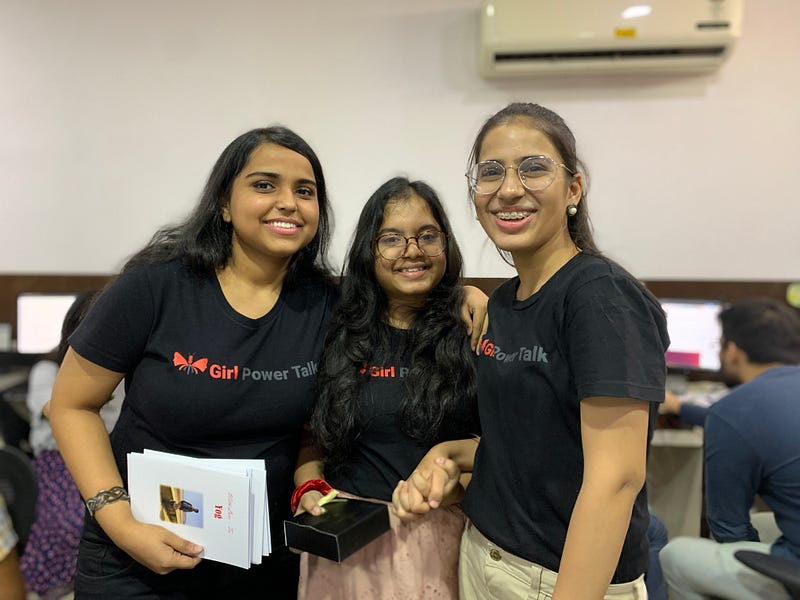
Like Racheal, Simran’s experience at Girl Power Talk has had a transformative effect on her life. “This is perhaps the first place I was treated and respected as truly equal,” she said, “and my merit spoke rather than my qualifications…it feels wonderful to not be thought of as a number, my age, but for what I can do. I strive harder to prove them right, that their trust in me is merited. It’s very empowering for any minority community, when they get it, it feels very precious and they want to hold on to it.”
“The people here really care about my personal growth and applaud and cheer me on. And whenever I need it, I always find a pillar of support or a hand reaching out for help. It is the sunshine and happiness in my life which is too good for words.”
Rachita and all the youth at Girl Power Talk hope that their culture will serve as a case study for other workplaces to value young people in a new way, and also to provide a more equitable, safer work culture. “People here are happier; they like coming to work,” Rachita said. “It’s not mundane work they have to do for a paycheck. As we grow from India to also be in other regions in Asia and Africa, we hope other countries will see how this model is working and be interesting in learning more about it.”
A new set of ‘what ifs’
“I have learned so many new ‘what ifs’ since coming to Girl Power Talk,” Racheal said. “I came here wondering what if the work culture and environment are not enough to prepare young ones for the real world? What if we’re living in a bubble and we’d be left wanting without the sheltered life Girl Power Talk provides?”
Girl Power Talk, she said, has taught her to ask instead, “What if this is how the real world ought to be? What if we don’t have to struggle and be scared of superiors? What if you can have beautiful diversity in the workplace with no disadvantages?”
These are the questions that feed brainstorming discussions at Girl Power Talk every day across video chat screens filled with young faces from around the world. Faces that are already making a change in their communities and around the world, and will continue to do so.
“We’re on the road to the right future,” Rachita said, “a youth revolution.”
New metrics of success
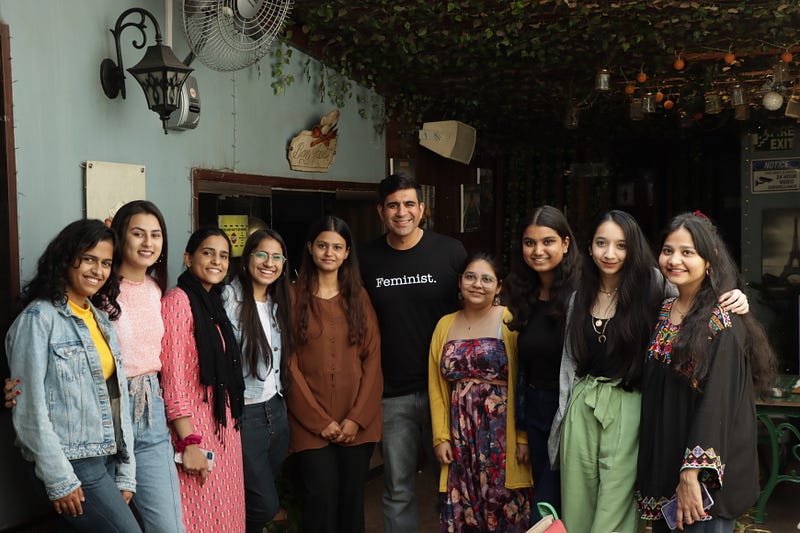
So much of Girl Power Talk’s mission surrounds the creation of a new vision for emerging market workplaces. Where character can be more valuable than experience — honesty, gratitude and humility are more prized than how many years of “experience” someone has. Where women (and other marginalized groups) are encouraged to speak up and share ideas instead of being ignored or reprimanded for the same. Where young people are treated with as much respect for their capabilities as are older people. Where a workplace is a community of people who support each other, not a place for competition or negative, toxic behaviors. And where workplaces can profit, pay young people, and still do meaningful good in their communities.
For more about Girl Power Talk… Website: https://girlpowertalk.com/ Instagram: @girlpowertalk Email: [email protected]