
Gird Your Loins People, It’s About to Get a Lot Worse
The end of CARES Act benefits and the looming wave of evictions will have you yearning for the halcyon days of the Great Recession
As with most Black women from the South, my Mom had a saying for almost every circumstance. When she wanted to prevent me from doing something ill-advised, she always had a one-liner that summarized her decision. I respected (and feared) her too much to debate the validity of those homespun locutions.
I get a flicker of satisfaction when I find myself using the same idioms, as I suspect she felt when she sent these expressions my way. But of all her maternal sayings, there is one I rarely use:
“Sometimes the worst thing to happen to you is the best thing for you.”
I can recall the soul-crushing finality — the irreversibility — of those words rolling from her lips. Once I heard them, I knew the conversation was over.

If you are fortunate enough to work from home, you can be forgiven for believing the economy is improving. You are still employed. You diligently wear your mask and practice social distancing the few times you leave home. Aside from the inconvenience of homeschooling your kids, you’ve gotten by pretty well.
Or maybe you think the whole thing is a hoax. The mask business is a liberal plot to control you. You’re ticked off because there are no sporting events, and you can’t get a decent haircut. You’ve surfed through the pandemic without falling ill.
Either way, who can blame you for thinking things have improved? After all, the stock market has bounced back. And even though unemployment is 11%, we added nearly 5 million jobs last month — a record! Things are headed in the right direction, right? So you plan to wait it out. Wait on the V-shaped recovery you’ve been promised.
I hate to break it to you, but your strategy for making it through a trifecta of social unrest, a pandemic, and a depression (yeah, I said depression) reminds me of something Mike Tyson said:
“Everybody has a plan until they get punched in the mouth.”
Ladies and gentlemen, we’ve been punched in the mouth already, and we’re about to get punched again.
The ‘worst thing’ is about to happen
First, here’s the good news: the $600 boost to unemployment benefits that came with the CARES Act, allowed millions of jobless Americans to avoid the brunt of economic calamity. Besides, moratoriums on mortgages and rental payments have kept people in their homes. Government aid related to the CARES Act staunched the predicted rise in poverty expected due to the historic spike in unemployment.
The bad news? Where do I begin? While the $600 a week kept folks afloat, most state eviction moratoriums ended last month. Now, renters face months in unpaid bills. To make matters worse, the bump in unemployment benefits ends for most people not on July 31st, but before the end of the month — on July 25th.
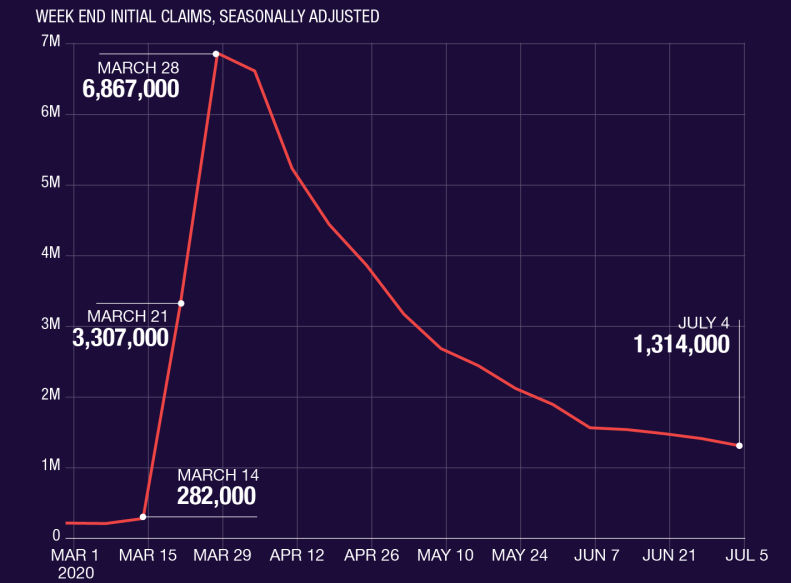
Nearly 50 million filed for unemployment since March. The number of people receiving benefits via state and federal programs, known as continuing jobless claims, neared 33 million as of the week ended June 20. One thing is for sure: the level of joblessness is orders of magnitude worse than during the Great Recession.
The numbers are stunning: for every person who filed for unemployment in January 2008 of the Great Recession, nearly seven people (6.7) filed in March of this year. There were more than 3.3 million unemployment claims by the third week of the lockdown — eight times the 402,000 of the Great Recession.
On top of the job losses, as many as 5.4 million of the newly-unemployed lost their health insurance to boot. According to a new study, that’s the most significant loss in healthcare coverage in U.S. history.
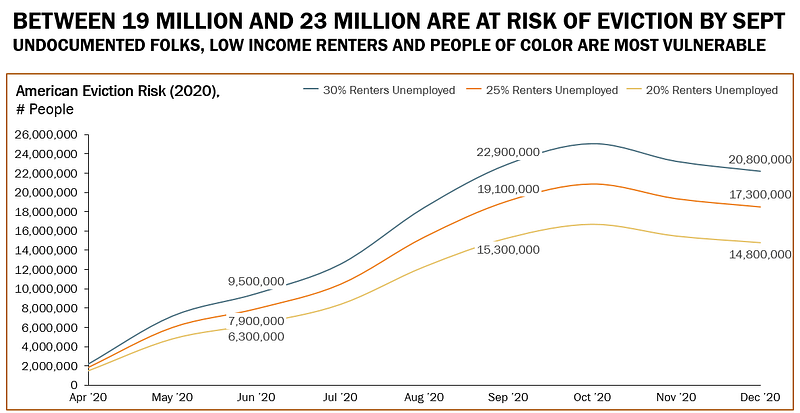
Add to the bad news a potential tidal wave of evictions. Without an extension of the $600 bump to unemployment benefits, plus additional an extension to the 120-day rent moratorium in the CARES Act, 19 to 23 million of the 110 million who live in rental properties, are at risk of eviction by the end of September. As with the COVID-19, minorities and the poor are the most vulnerable.
As bad as things are, there may be a perverse silver lining. The pandemic has laid bare the systemic racism and inequality in our country’s version of capitalism. The sudden, massive rise in unemployment exposes the flaw of healthcare tied to employment, making a case for more progressive policies.
I can’t help but think that, as with so many things, Mom was right. Perhaps the worst thing to happen to us is the best thing for us.
Sign up for my newsletter, The Journeyman, covering the intersection of politics, race, and the economy.
Gain Access to Expert View — Subscribe to DDI Intel


