
Ghost Town Beneath the Waves
A Popular South Carolina Lake Hides a Submerged Town and Cemetery
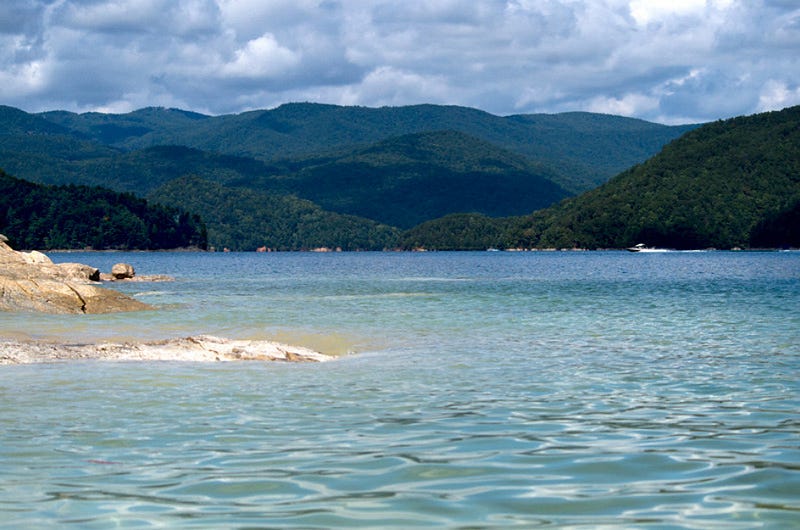
Lake Jocassee is one of the true treasures of South Carolina
Tucked away in the foothills of Pickens and Oconee counties, this 7600-acre reservoir holds crystal clear water and boasts 75 miles of shoreline.
Surrounded by 43,000 acres of public access land, the verdantly forested banks are peppered with waterfalls, accessible by both hiking and boating.
Lake Jocassee’s center reaches a depth of 351 feet, making for a rewarding but challenging experience for the fishermen who flock to the area in search of trout and bass.
The lake is also a favorite for boaters, paddlers, and scuba divers, and is home to an impressive state park, Devil’s Fork, which has campsites at the water’s edge.
What is Hidden Below?
Lake Jocassee is a man-made reservoir, the result of the flooding of Jocassee Valley in 1973.
The area had seen its peak decades before, as a popular resort area in the 1920s.
By the 1950s, the population of year-round residents was low, as people moved to areas with more work, either selling their land to timber companies or if they could afford it, keeping their homes as summer residences.
Those who remained year-round were mostly farmers — often families who had been sharecroppers for generations, with a scattering of businesses able to hang on during the slow winter season.
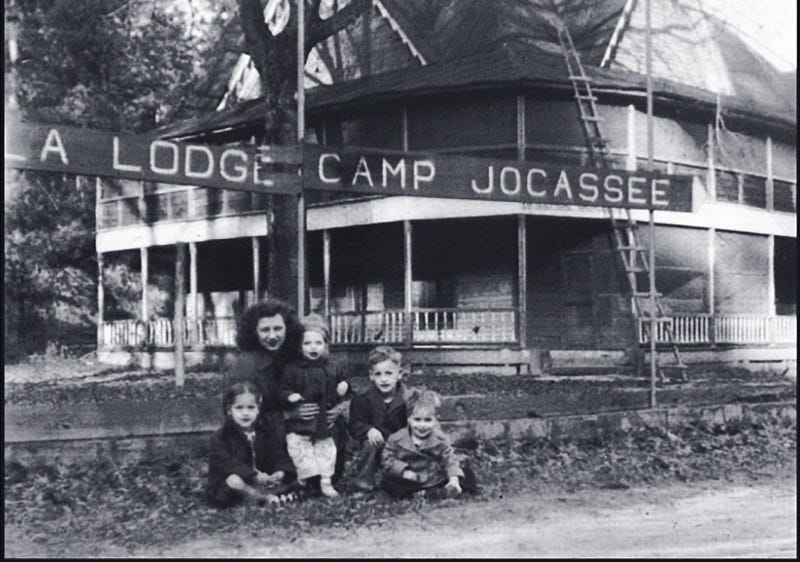
During the summer months, Jocassee Valley was still a major tourist destination, able to sustain several lodges and a popular summer camp, “Camp Jocassee for Girls”, established in 1922. The camp sometimes attracted 100 girls each season, set amid nature’s beauty on the banks of the Whitewater River.
The Attakulla Lodge (named for the Cherokee Chief Atakullakulla) was a ten-room home built in 1898 overlooking the Whitewater River.
It was originally owned by the Whitmire family who began renting rooms to vacationers, eventually expanding to accommodate more guests. The lodge officially opened for business in 1904. It operated as a bed and breakfast for half a century, and closed to guests in 1960, remaining a family retreat for family and friends.
But the tranquility and natural beauty of the four rivers running through the sleepy valley was not to last.
As the need for electricity grew in the neighboring towns after World War II, Duke Power Company began eyeing the favorable geographical characteristics of the foothills of South Carolina.
The many rushing rivers and waterfalls surrounding the valley lent themselves perfectly to their vision: constructing two hydroelectric dams by flooding the valleys of Keowee and Jocassee.
Duke Power began stealthily buying up land in the area, operating incognito through a subsidiary named South Carolina Land and Timber Company (renamed later as Crescent Land Company).
Without breathing a word of their plans to the local residents, Duke Power purchased more than one hundred thousand acres of land in Oconee County for the “Keowee-Toxaway Project” between the 1920s -1960s.
On January 2, 1965, Duke Power made the official announcement of their plans: they intended to flood the Jocassee and Keowee valleys to create two hydroelectric dams, after buying out the remaining properties.
Not all area residents were agreeable. Unfortunately, the sharecroppers in the valley did not own the land their houses were on, and essentially had no voice, nor compensation for having to relocate away from the only home their families had ever known.
Of the landholders in Jocassee Valley, several court cases ensued, the most notable outcome being a restraining order granted to the owner of Attakulla Lodge, prohibiting Duke Power from bulldozing his land. Although the plot of land was never razed, the power company’s plans to flood the valley continued.
Jocassee Valley took two years to fill and became completely flooded in 1973, with Attakullah Lodge still standing.
“Jocassee Valley, peacefully tucked in the arms of the Blue Ridge Mountains of Oconee County, was finally laid to rest in 1973. Duke Power Company’s multi-million dollar Keowee-Toxaway project abruptly choked the natural flow of four wild rivers: Whitewater, Toxaway, Horsepasture, and Keowee, inundating the Valley under a chilling shroud, in some places over 300 feet deep.” — Debbie Fletcher, Whippoorwill Farewell: Jocassee Remembered
Debbie Fletcher’s family owned the Attakullah Lodge, and she wistfully remembers spending summers there, never knowing the clock was ticking. Lazy summer days were spent inner-tubing on the Whitewater River, visiting the small town’s only general store for an old-fashioned glass bottle of Coca-Cola, and watching her brothers fly model airplanes from the lodge’s top floor windows.
“ The idyllic sights and sounds of Jocassee are forever lost, except in the hearts of those of us who lived and played there…I wish I had understood the magic of the place, before it was too late. But a child thinks that things will last forever.” — Debbie Fletcher, Whippoorwill Farewell, Jocassee Remembered
Today
Attakullah Lodge was discovered still intact, though turned on it’s side, hundreds of feet below the lake surface in 2004, by diver Bill Routh of Off the Wall Charters.
The stone pillars on either side of the Jocassee Girls Camp’s gate are still standing, as well, and divers have identified the steel bridge that, decades past, crossed the Whitewater River.
Mount Carmel Baptist Cemetery (made famous by the movie “Deliverance”) was located on a ridge at the edge of the valley and bound to the same cruel fate decreed by Duke Power, though efforts were made to exhume and relocate remains before the valley was flooded.
The cemetery now lies 130-feet below the surface. Divers confirm that headstones are still standing, with some engraved names still legible. See this video taken by “Brandon” while diving with Lake Jocassee Dive Shop
If you ever have a chance to visit this remarkable and picturesque lake, I’m sure you’ll find it delightful.
Take a moment, though, as you float on the crystal clear water, hundreds of feet above Jocassee Valley.
Think about all those who came before you… the families who called this area home and wept when it was taken from them.


