
Racism
Ghost Skinning: The Biggest Domestic Terrorism Threat You’ve Never Heard Of
The FBI got some splainin’ to do. . .
Reading Allison Gaines’ article, Do You Hate White People? reminded me of how uninformed the general public is about domestic terrorism in the United States. Allison’s article mentions “the growing threat of domestic terrorism” centered around “confronting white supremacy.”
We don’t know the half of it.
The FBI has been in the hot seat for over 15 years for its failure to adequately address the growing threat of white supremacist terrorism. While underfunding and underreporting play a big part in this, I can’t help but wonder how much of the problem can be contributed to ‘ghost skinning.’
Ghost skinning (their word, not mine) is a term for white supremacists who infiltrate different organizations to attain a position of power; — allowing them to recruit more individuals to their cause. The key to ghost skinning is ‘blending in’ and subtly peddling your ideology to receptive ears. It’s a long con; — a way of seeding sleeper agents within an institution.
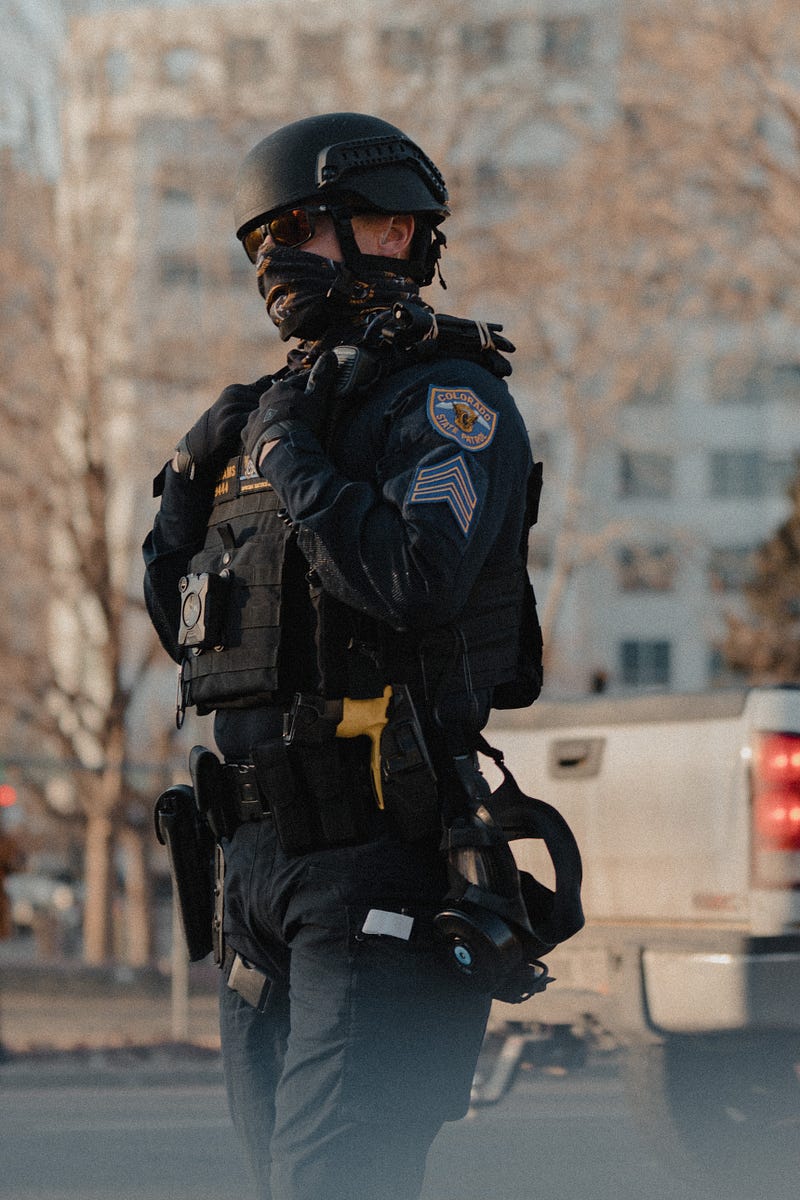
But what happens when that institution is the police?
Since the early 2000s, the FBI has known that ghost skins were infiltrating law enforcement and first responder jobs. By 2006, the FBI reported that white supremacists and ghost skins were: “the most dangerous, if not the most prolific, domestic terrorist threat to the country.”
Think about that. White supremacists have been seeding ‘inside men’ into law enforcement agencies, fire stations, and emergency responder jobs like EMTs for 15 years. There’s no way of knowing how many of them are out there, how many have been recruited, how many are watching and waiting for their chance to help rid America of ‘inferior nonwhites.’
It’s horrifying.
Ghost skinning could be one of the reasons why more than a thousand people a year are killed by police.
It could also help explain why the FBI grossly and consistently fumbles the ball when it comes to tracking and reducing the white supremacist terrorism threat.
By the numbers
You can’t target what you can’t see, and FBI reporting standards obscure the true breadth and depth of the problem. For the past ten years, the FBI has reported an average of 7,000 hate crimes per year. While any number of hate crimes are too many, this number simply doesn’t line up with the number of hate crimes reported by the Bureau of Justice Statistic’s National Violent Crime Survey (NVCS). The NVC estimates about 200,000 hate crimes occur annually.
This gross disparity in numbers comes from different reporting standards for each agency. The NVCS counts the number of victimizations that have occurred, including instances that were not reported to the police. The FBI counts the number of incidents that have been reported to police departments.
Those police departments get to decide whether or not they are going to report their hate crime data to the FBI. That’s right, if a police department decides not to turn in their hate crime data, it’s their prerogative. Less than 15% of law enforcement agencies nationwide opt to submit data to the FBI.
Some states, like Alabama, don’t even require their police to keep track of hate crime data at all.
Skewed data like this contributes to misallocation of counterterrorism funding. Although nearly 80% of terrorism in the US comes from domestic actors, only 20% of counterterrorism employees are assigned to domestic anti-terrorism efforts*.
To further complicate matters, the NVCS counts hate crimes based on whether or not the victim believes a hate crime has occurred. The FBI counts something as a hate crime if:
“law enforcement must have sufficient evidence that would lead a reasonable and prudent person to conclude that the offender’s actions were motivated, in whole or in part, by his or her bias.”
In other words, if the police don’t think it’s a hate crime, or the victim doesn’t have “sufficient evidence” to convince the police that a hate crime has occurred, it doesn’t count in the eyes of the FBI.
Ready to throw something yet?
But wait — there’s more!
For the FBI to initiate a hate crime investigation, the following three requirements must be met:
There must be an act of violence, threatened violence, or conspiracy to do so.
the perpetrator must have acted willfully or intentionally.
And, the perpetrator’s actions must have been motivated by an actual or perceived statutorily recognized bias.
Rules like this place the burden of proof on the victim(s). Any lawyer will tell you that proving intent and motivation in court is no small task. But hate crime victims who haven’t spent years in law school are supposed to prove these things before the FBI can even investigate? Make it make sense.
What’s in a name?
Words matter. One small change that has made a big difference in the way we perceive and prosecute domestic terrorism is the FBI’s use of the words “terrorist” and “extremist.” Once considered interchangeable terms, the current definition of these terms are a bit more murky.
The FBI has historically used a category called “white identity extremist” to describe the 54% of domestic terrorists' motivated by race. Their other categories were:
“anarchistic extremists, animal rights extremists, antiabortion extremists, black supremacist extremists, environmental rights extremists, homegrown violent extremists, militia extremists, sovereign citizen extremists, and racist skinhead extremists.”
Instead of ten categories of domestic terrorism, the FBI now uses four categories: racially motivated violent extremism, antigovernment/ antiauthority extremism; animal rights/environmental extremism; and abortion extremism. This aggregation makes it seem like racially violent extremism is ‘everybody’s problem’ instead of a white American problem.
Nothing could be further from the truth. In 2018, there were 39 murders committed by white supremacist extremists. Guess how many murders were committed by Black supremacist extremists?
If you said zero, you get a cookie. According to FBI Director Christopher Wray:
“73.3 percent [of extremist-related killings in the United States] were committed by right-wing extremists . . . [and three out of four of this number] were committed by [w]hite supremacists.”
Here’s another problem: not all extremists are considered domestic terrorists. The phrase extremism creates a gray area for talking about terrorism without having to prosecute the perpetrators as terrorists. *coughs in January 6*
Maybe that’s why Heather Heyers’ murder wasn’t in the FBI’s 2017 Hate Crime Statistics Report (although Heyers’ killer was later charged with 30 hate crimes in 2018). Or why the thousands of people who committed acts of terrorism on their lunch breaks have yet to be charged.
Honestly, I would love to believe that semantics, statistics and inconsistencies are why we do such a piss poor job of preventing and apprehending white supremacist terrorists, because the alternative is Derrick Bell level whack.
The alternative is that nearly twenty years of ghost skinning has done its job, that there are enough white supremacists in high places to shift the focus away from the threat of white supremacy. That only 2% of officer involved shootings end in a murder conviction because the ghost skins work together to make sure of it.
That right under our noses, white supremacists are building an insurgency within our law enforcement and first responder agencies. That they are getting in formation, preparing to strike.
As if I needed another reason to fear the police.
Since 2006, the FBI has released no data on their investigation of ghost skinning in law enforcement. The 2006 report notes their intelligence gaps as not knowing whether the ghost skinning is an individual or systemic movement, how many white supremacists had already infiltrated these positions, what recruiting methods are being used, and “To what extent has infiltration into law enforcement adversely affected investigations into white supremacist activities?”
So like, yall don’t know any of these things? None of them?
This is fine gif
Could it be that they don’t want to know? Or just that they don’t want us to know? It’s one thing to suspect white supremacists are infiltrating police departments nationwide, another entirely to release data that proves the extent of the plot.
The public deserves to know about ghost skinning. We deserve to have white supremacist domestic terrorism treated as the threat that it is. We deserve adequate staff and resources to investigate and prevent white supremacist terrorist attacks. We deserve a transparent reporting system that doesn’t place an undue burden of proof on the victims of hate crimes.
But we probably won’t get it, because our country has a track record of sweeping inconvenient truths under the rug. Still, it feels good to share this with you, to remind you that when Black people say we live in a white supremacist country, we aren’t hallucinating or exaggerating. We’re just seeing ghosts.
References
UNREDACTED FBI DOCUMENT SHEDS NEW LIGHT ON WHITE SUPREMACIST INFILTRATION OF LAW ENFORCEMENT
FBI Intelligence Assessment: (Unclassified) White Supremacist Infiltration of Law Enforcement, 17 October 2006
Congessional Research Service Federal Data on Hate States. Updated March 22, 2021 Crimes in the United Congressional Research Service https://crsreports.congress.gov R46318
Congressional Research Services The Domestic Terrorist Threat: Background and Issues for Congress 17 January 2013
Council on Foreign Relations Militant Extremists in the United States. 7 February 2011
CONFRONTING VIOLENT WHITE SUPREMACY (PART II): ADEQUACY OF THE FEDERAL RESPONSE. U.S. Government Publishing Office, House Hearing, 116 Congress, Serial №116–32, 4 June 2019
Confronting the Rise of Domestic Terrorism in the Homeland: Hearing Before the H. Comm. on Homeland Security, 116th Cong. (2019)
Amy Collins, GWU Program On Extremism, Confronting Racially and Ethnically Motivated Terrorism: A Call to Designate Foreign White Identity Extremist Groups Under U.S. Federal Law 89 (September, 2020), https://extremism.gwu.edu/sites/g/files/zaxdzs2191/f/Confronting%20Racially%20and%20Ethnically %20Motivated%20Terrorism.pdf.
Gaines, A. Do you hate white people? Medium. https://aninjusticemag.com/do-you-hate-white-people-85d22b72dbc.(2021, September 19).
Ajah Hales is a writer, race educator, and social thinker from East Cleveland, Ohio. When her mother asked her what she wanted to be when she grew up, Ajah replied: “A dictator.”
These days Ajah is more interested in changing the world than taking it over. You can find Ajah on Twitter @AjahsWrite, you can hire her through ajahhales.com.