avatarEd Ergenzinger, JD, PhD

Free AI web copilot to create summaries, insights and extended knowledge, download it at here

2233

Abstract

ttps://www.cell.com/cancer-cell/fulltext/S1535-6108(21)00051-9">February 8 issue</a> of <i>Cancer Cell</i>, an interdisciplinary team from Memorial Sloan Kettering (MSK) reports that COVID brain fog appears to be associated with the presence of inflammatory molecules in the cerebrospinal fluid (the liquid surrounding the brain and spinal cord).</p><figure id="1898"><img src="https://cdn-images-1.readmedium.com/v2/resize:fit:800/1*9mCiwKfmXRJSm9Bs0ti0Eg.jpeg"><figcaption>Image by <a href="https://pixabay.com/users/thedigitalartist-202249/?utm_source=link-attribution&amp;utm_medium=referral&amp;utm_campaign=image&amp;utm_content=5939842">Pete Linforth</a> from <a href="https://pixabay.com/?utm_source=link-attribution&amp;utm_medium=referral&amp;utm_campaign=image&amp;utm_content=5939842">Pixabay</a></figcaption></figure><h2 id="209e">Assembling a Team</h2><p id="b304">Dr. Jessica Wilcox, Chief Fellow in neuro-oncology at MSK and one of the first authors of the new study, recounts being approached by colleagues in critical care who had observed severe delirium in many patients who were hospitalized with COVID-19.</p><p id="1e37">“That meeting turned into a tremendous collaboration between neurology, critical care, microbiology, and neuroradiology to learn what was going on and to see how we could better help our patients,” <a href="https://www.sciencedaily.com/releases/2021/02/210209121044.htm">she said</a>.</p><p id="e0c0">When the team first began studying COVID brain fog, they suspected that the virus itself was having an effect on the brain. They studied 18 patients who were hospitalized at MSK with COVID-19 and were experiencing severe neurologic problems. The patients were given a full neurology workup, and when nothing was found that would explain their condition, the researchers turned their attention to the patients’ cerebrospinal fluid.</p><p id="62e9">“We found that these patients had persistent inflammation and high levels of cytokines in their cerebrospinal fluid, which explained the symptoms they were having,” <a href="https://www.sciencedaily.com/releases/2021/02/210209121044.htm">said</a> Dr. Jan Remsik, a research fellow in MSK’s Human Oncology and Pathogenesis Program and the pape

Options

r’s other first author.</p><p id="ad05">“We used to think that the nervous system was an immune-privileged organ, meaning that it didn’t have any kind of relationship at all with the immune system,” <a href="https://www.sciencedaily.com/releases/2021/02/210209121044.htm">adds</a> Dr. Adrienne Boire, the physician-scientist in whose lab Dr. Remsik led the analysis of the cerebrospinal fluid. “But the more we look, the more we find connections between the two.”</p><figure id="b630"><img src="https://cdn-images-1.readmedium.com/v2/resize:fit:800/1*XklfbFzk7iMFEhLTk6QTpg.png"><figcaption>Image by <a href="https://pixabay.com/users/vsrao-8105725/?utm_source=link-attribution&amp;utm_medium=referral&amp;utm_campaign=image&amp;utm_content=3168269">VSRao</a> from <a href="https://pixabay.com/?utm_source=link-attribution&amp;utm_medium=referral&amp;utm_campaign=image&amp;utm_content=3168269">Pixabay</a></figcaption></figure><h2 id="93ad">Mimicking Immunotherapy-Induced Encephalopathy</h2><p id="362e">It turns out that the inflammatory markers found in the COVID-19 patients were similar, but not identical, to those seen in people who had experienced side effects from a certain type of immunotherapy.</p><p id="d99b">Known as chimeric antibody receptor (CAR) T cell therapy, this treatment for blood cancer causes immune cells to release molecules called cytokines. These cytokines help the body to kill cancer, but can also seep into the space around the brain and cause inflammation.</p><p id="694c">In both COVID-19 and CAR T cell therapy, neurologic effects are sometimes delayed by days to weeks. The initial inflammatory response to CAR T cell treatment is very similar to the cytokine storm that occurs in people with COVID-19.</p><p id="d1b7">In CAR T cell patients, neurologic symptoms are treated with anti-inflammatory drugs like steroids, suggesting that similar treatments may be useful for treating the COVID brain fog.</p><p id="c18c">Further research is needed to assess the efficacy of such treatments. Dr. Wilcox <a href="https://www.sciencedaily.com/releases/2021/02/210209121044.htm">notes that</a> “Many of them are already getting steroids, and it’s possible they may be benefitting.”</p></article></body>

COVID-19 | Health | Neuroscience

Getting to the Bottom of “Brain Fog” from COVID-19

New research suggests that inflammatory molecules in the cerebrospinal fluid are the cause of “Covid brain.”

Photo by Paweł Czerwiński on Unsplash

In a New York Times article back in October 2020, health and science writer Pam Belluck reported on what was “becoming known as Covid brain fog: troubling cognitive symptoms that can include memory loss, confusion, difficulty focusing, dizziness and grasping for everyday words.”

Rick Sullivan, 60, described his experience with COVID brain fog along a spectrum, ranging from his head feeling heavy to a full-on “fog” when he “cannot function” and just sits and stares, “unmotivated to move, my mind racing.”

Mr. Reagan, 50, was described as having to leave his job as a vascular medicine specialist due to finger tremors and seizures — neurological symptoms that sometimes accompany brain fog. Mr. Reagan had no memory of the previous Christmas and New Year’s, or of a Paris vacation in March. He stopped cooking after turning on the stove to heat a pan and then absent-mindedly leaving to walk the dog.

At the time, the leading theories as to what causes COVID brain fog were that it arises from inflammation in blood vessels leading to the brain or when the body’s immune response to the virus doesn’t shut down.

Now, researchers may have unlocked the mystery. In the February 8 issue of Cancer Cell, an interdisciplinary team from Memorial Sloan Kettering (MSK) reports that COVID brain fog appears to be associated with the presence of inflammatory molecules in the cerebrospinal fluid (the liquid surrounding the brain and spinal cord).
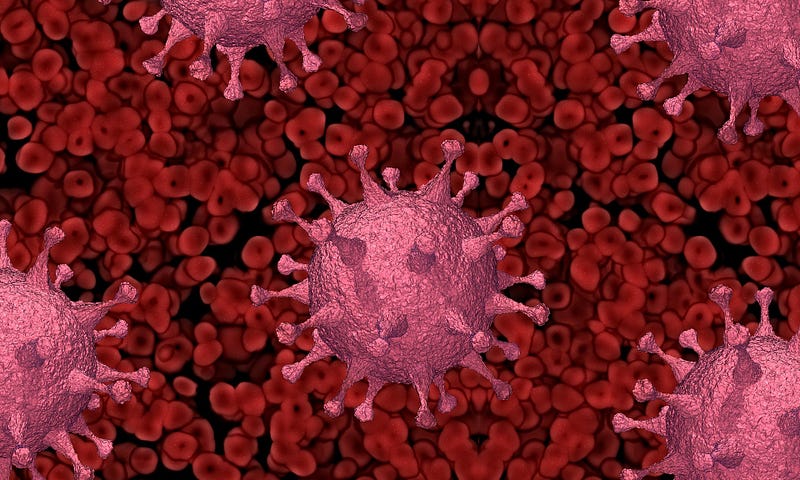
Image by Pete Linforth from Pixabay

Assembling a Team

Dr. Jessica Wilcox, Chief Fellow in neuro-oncology at MSK and one of the first authors of the new study, recounts being approached by colleagues in critical care who had observed severe delirium in many patients who were hospitalized with COVID-19.

“That meeting turned into a tremendous collaboration between neurology, critical care, microbiology, and neuroradiology to learn what was going on and to see how we could better help our patients,” she said.

When the team first began studying COVID brain fog, they suspected that the virus itself was having an effect on the brain. They studied 18 patients who were hospitalized at MSK with COVID-19 and were experiencing severe neurologic problems. The patients were given a full neurology workup, and when nothing was found that would explain their condition, the researchers turned their attention to the patients’ cerebrospinal fluid.

“We found that these patients had persistent inflammation and high levels of cytokines in their cerebrospinal fluid, which explained the symptoms they were having,” said Dr. Jan Remsik, a research fellow in MSK’s Human Oncology and Pathogenesis Program and the paper’s other first author.

“We used to think that the nervous system was an immune-privileged organ, meaning that it didn’t have any kind of relationship at all with the immune system,” adds Dr. Adrienne Boire, the physician-scientist in whose lab Dr. Remsik led the analysis of the cerebrospinal fluid. “But the more we look, the more we find connections between the two.”

Image by VSRao from Pixabay

Mimicking Immunotherapy-Induced Encephalopathy

It turns out that the inflammatory markers found in the COVID-19 patients were similar, but not identical, to those seen in people who had experienced side effects from a certain type of immunotherapy.

Known as chimeric antibody receptor (CAR) T cell therapy, this treatment for blood cancer causes immune cells to release molecules called cytokines. These cytokines help the body to kill cancer, but can also seep into the space around the brain and cause inflammation.

In both COVID-19 and CAR T cell therapy, neurologic effects are sometimes delayed by days to weeks. The initial inflammatory response to CAR T cell treatment is very similar to the cytokine storm that occurs in people with COVID-19.

In CAR T cell patients, neurologic symptoms are treated with anti-inflammatory drugs like steroids, suggesting that similar treatments may be useful for treating the COVID brain fog.

Further research is needed to assess the efficacy of such treatments. Dr. Wilcox notes that “Many of them are already getting steroids, and it’s possible they may be benefitting.”

Neuroscience
Health
Science
Coronavirus
Mental Health
Recommended from ReadMedium