
Getting to Know Your Garden Soil
Organic gardening basics
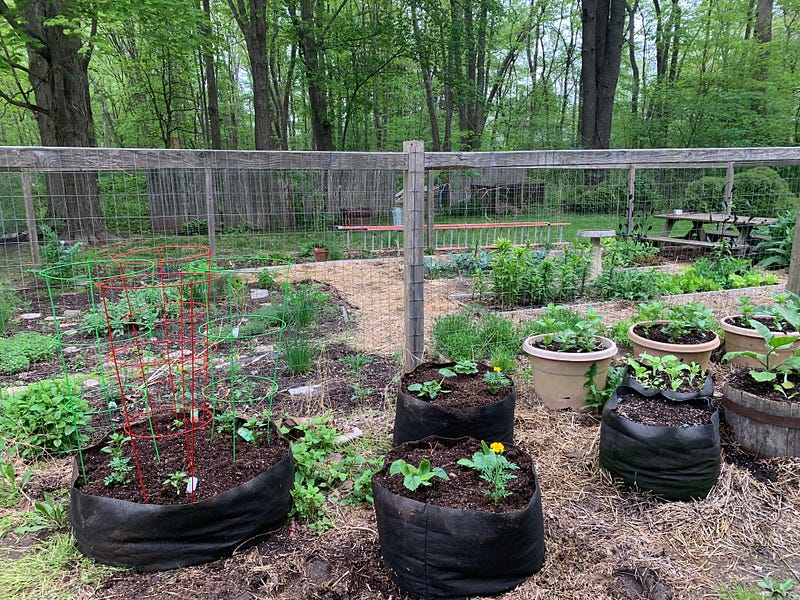
It’s time to get our hands dirty and think about preparing our gardens by feeding the soil. Although people often refer to feeding their plants, the earth itself needs to be fed with organic matter to have a healthy and vibrant garden. To properly feed our soil, we need to know what it needs.
The chances are good that unless you have been gardening organically for years, the soil in your garden needs some help.
Reasons why your soil may need help
There are many reasons why your soil may be in a distressed state. Below are some of the most common ones.
- Soil may be have been disturbed. For example, construction may have removed surface soil from your property.
- Soil may be compacted. Walking, driving, or tilling may have compacted the soil.
- Natural characteristics may not be conducive to growth. For example, your soil may be naturally sandy or acidic or have other such qualities.
- Soil depletion may be an issue. Your soil may have been depleted of nutrients because it hasn’t been fed or microorganisms have died off.
Getting to know your soil
There are several types of soil, each with its unique structure and qualities. The soil types differ according to the size of the particles and determine how well the ground will hold water and nutrients.
- Sand has the largest-sized particles (0.05 to 2.0 millimeters in diameter), and the particles tend not to stick together. As a result, they don’t hold water or nutrients well and therefore don’t support many plants on their own.
- Silt has medium-sized particles (0.002 to 0.05 millimeters in diameter) and has both the benefits and challenges of sand and clay.
- Clay has the smallest sized particles (Less than 0.002 millimeters in diameter) and can create a hard layer the keeps water from penetrating at all. This type of layer is called a crust on the top of the soil. When the clay forms a barrier deeper down, it is called a hardpan. These layers are often caused by tilling or walking on the ground.
The ideal soil structure is called loam and combines all three types of soil mixed with organic materials. It can be easily damaged by excessive tilling, being walked on, or being worked when it’s not ready. It takes a considerable effort to repair soil texture.
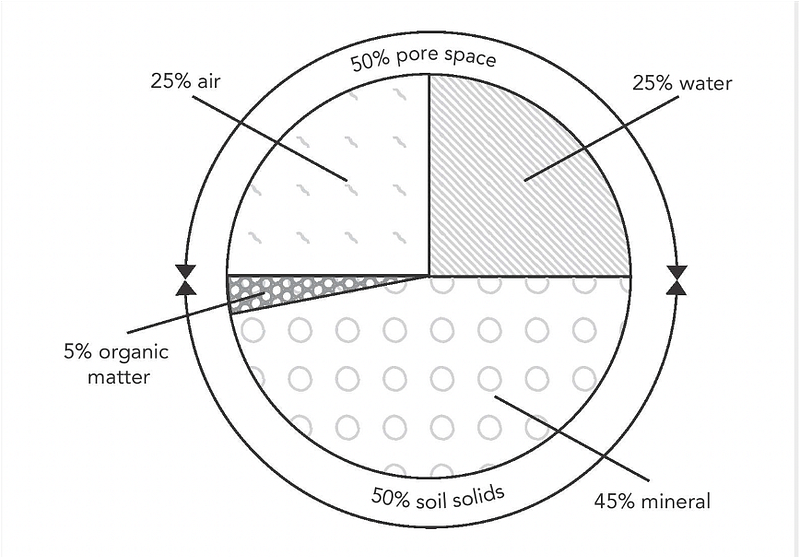
As you can see from the above chart, a good soil structure consists of approximately half solids and half-open space.
What else is in that soil?
Microorganisms are only a tiny part of the volume of soil but are vital to the health of the ground. Additionally, insects like millipedes and earthworms help build organic matter, either by breaking down dead and dying plant tissues or improving aeration as they move through the soil. Even moles have a beneficial aspect as they help improve the soil structure.
Testing your soil
Soil tests will help you know about your soil and what amendments may be needed. While you can get great information by sending a soil sample to a laboratory, there are also do-it-yourself tests that can give you excellent information. The following DIY tests I’ve used for 50 years are taken from and described in more detail in Rodale’s Ultimate Encylopedia of Organic Gardening. This is not an affiliate link; it’s just a resource I’ve been using for many decades and highly recommend.
The squeeze test: This test will tell you most of what you need to know about your soil. By squeezing the soil in your palm and letting go, you can tell if your soil is sandy, clay, or silt. Sandy soil will feel gritty, clay will feel slippery, and silt between the two and feel more greasy. Now, squeeze it harder and let go. If it holds its shape, it is clay. If it falls apart, it is mostly sand. If it crumbles into larger particles, it is probably a balanced loam and is ready to work. On the other hand, if it forms a muddy ball, it is too wet to work, and you need to wait a few days before stepping on it or digging.
The perc test: Dig a hole that is one foot across and 1 foot deep. Fill the hole with water and as soon as the water has drained, fill it again. If the hole takes longer than 8 hours to drain the second time, it means your soil has a drainage problem, possibly because it is compacted or primarily made of clay.
The watering test: This test will let you know if your soil drains too quickly. Two days after watering a small area of your garden thoroughly, dig a small hole 6 inches deep where you watered. If the soil is already dry to the bottom, your soil drains too quickly. It is probably mostly sand.
The undercover test: This test involves getting right down into the ground. Dig a hole at least 2 feet across and, if possible, 2 feet deep, placing the soil on a tarp. Get down on your hands and knees. Look closely at the earth, in the hole, and on the side. Healthy soil will have earthworms and other creepy-crawly things. It will also have healthy-looking roots. The color of the dirt will tell you a lot, with deeper colored topsoil indicating healthier soil. A lack of earthworms or other living things, including roots, means you have work to do.
Other tests can be valuable. For example, ph tests are done with strips you can buy in a drug store or online and will let you know if your soil is too acidic or alkaline. Nutrient tests range from sending your soil to a lab to online kits that give you results in your own home. I’ve found these more involved tests helpful when I first started to garden in a new location.
Once you’ve determined if your soil needs amendments or other interventions, you will be ready to take the actions required to prepare your garden to be planted.
If you enjoyed this article, you might be interested in the course I’m offering in organic gardening beginning in February. You can find out more about the class, which is offered by zoom on five consecutive Monday evenings, from 19:00 to 20:30, CET, by visiting the Volks Universiteit website. (Note, this link will take you away from Medium to a link where you can sign up for a paid course I’m offering.)
If you don’t already have a membership subscription to Medium, please consider using my referral link when you join.


