avatarStanley C.

Free AI web copilot to create summaries, insights and extended knowledge, download it at here

1207

Abstract

. The third is vocal forms of mixed local and foreign origin.</p> <figure id="e5ab"> <div> <div> <img class="ratio" src="http://placehold.it/16x9"> <iframe class="" src="https://cdn.embedly.com/widgets/media.html?src=https%3A%2F%2Fwww.youtube.com%2Fembed%2F5OA8HFUNfIk%3Ffeature%3Doembed&amp;display_name=YouTube&amp;url=https%3A%2F%2Fwww.youtube.com%2Fwatch%3Fv%3D5OA8HFUNfIk&amp;image=https%3A%2F%2Fi.ytimg.com%2Fvi%2F5OA8HFUNfIk%2Fhqdefault.jpg&amp;key=a19fcc184b9711e1b4764040d3dc5c07&amp;type=text%2Fhtml&amp;schema=youtube" allowfullscreen="" frameborder="0" height="480" width="640"> </div> </div> </figure></iframe></div></div></figure><p id="2b74">The three major elements of Gagaku are the wind, string, and percussion sections. Like Beijing opera, strings are usually played for dramatic effect. Due to the generally restrained performance style of Gagaku, the wind and percussion's are intertwined to produce a calming aura.</p><p id="30c6">In modern times, Gagaku has been viewed as a part of Japanese culture that should be preserved, and an art form to export, mainly to the West. In 1959, Th

Options

e Ministry of Foreign Affairs directed The Music Department of the Imperial Household to perform Gagaku overseas. The performance was made in over 30 locations across the globe. In 2009, Gagaku performances by the Music Department of the Imperial Household were put on UNESCO’s list of intangible cultural heritage of humanity. The ancient history of Gagaku will continue to remain an imprint on the Japanese people and move into the future as a representation of their culture.</p> <figure id="10a9"> <div> <div> <img class="ratio" src="http://placehold.it/16x9"> <iframe class="" src="https://cdn.embedly.com/widgets/media.html?src=https%3A%2F%2Fopen.spotify.com%2Fembed%2Fplaylist%2F0ig2IiVTh2rnTcTgHZPHPi&amp;display_name=Spotify&amp;url=https%3A%2F%2Fopen.spotify.com%2Fplaylist%2F0ig2IiVTh2rnTcTgHZPHPi&amp;image=https%3A%2F%2Fi.scdn.co%2Fimage%2Fab67706c0000bebbab5d5dbf1b56eb57e761f5a7&amp;key=a19fcc184b9711e1b4764040d3dc5c07&amp;type=text%2Fhtml&amp;schema=spotify" allowfullscreen="" frameborder="0" height="380" width="300"> </div> </div> </figure></iframe></div></div></figure></article></body>

Getting to Know Genres: Japanese Gagaku

The Ancient Genre Is The Longest Continuous Music Form In Japan.
Source: Study.com

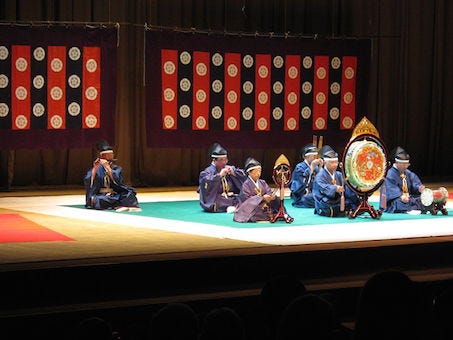
Welcome to the ancient sounds of Gagaku! Gagaku is the longest continuous music form in Japan. The classical music is rooted in mainland China and was introduced to the Japanese in the 7th century. Due to its origin in Asia, Gagaku has traces of Chinese, Korean, and Indian music within it. The Japanese, during the 7th century, sent diplomats to China to learn more about Buddhism and Chinese court music. As a result, Gagaku is also played at the imperial court in Kyoto. Gagaku is typically accompanied by a dance called bugaku. The performances demonstrates the importance of restraint and flawless symmetry in Japanese culture

Musically, there are three groups of Gagaku. The first is indigenous Japanese songs and dances. The second is foreign music, like togaku and komagaku. The third is vocal forms of mixed local and foreign origin.

The three major elements of Gagaku are the wind, string, and percussion sections. Like Beijing opera, strings are usually played for dramatic effect. Due to the generally restrained performance style of Gagaku, the wind and percussion's are intertwined to produce a calming aura.

In modern times, Gagaku has been viewed as a part of Japanese culture that should be preserved, and an art form to export, mainly to the West. In 1959, The Ministry of Foreign Affairs directed The Music Department of the Imperial Household to perform Gagaku overseas. The performance was made in over 30 locations across the globe. In 2009, Gagaku performances by the Music Department of the Imperial Household were put on UNESCO’s list of intangible cultural heritage of humanity. The ancient history of Gagaku will continue to remain an imprint on the Japanese people and move into the future as a representation of their culture.

Japan
Music
Diversity
Music Discovery
Gagaku
Recommended from ReadMedium