
Getting to Know Carlos Ruiz Zafon’s Barcelona
The House on Tibidabo in The Shadow of the Wind
One day during our trip to Barcelona a few years ago we decided to ride all the way to the top of Mount Tibidabo, the highest hill in the city. We had to ride on three separate means of transportation to get to the top, but we did it!
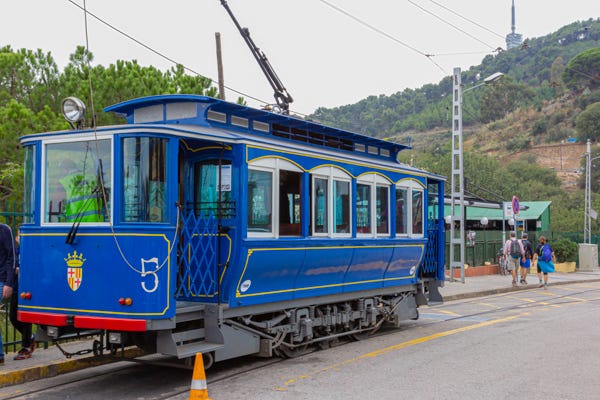
First of all, we walked to the Metro station at Placa de Catalunya and boarded the brown line (L7) train which took us to the base of Avenguda Tibidabo. Then we walked across the street from the Metro exit to board the Tramvia Blau, an old streetcar line, which brought us halfway up the mountain. Finally, we transferred to the Funicular de Tibidabo to get to the top.
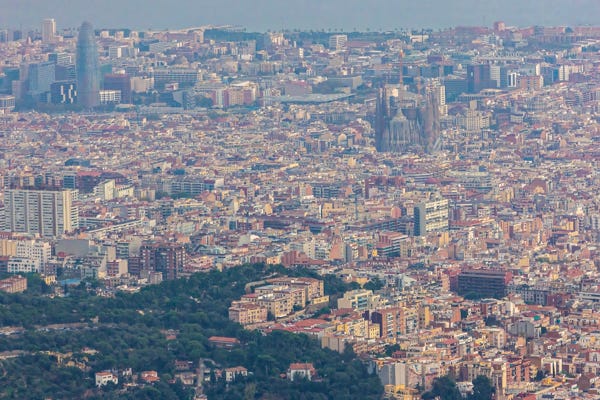
There at the top we found an old amusement park adjacent to a Catholic church called Temple Expiatori del Sagrat Cor (The Expiatory Temple of the Sacred Heart). You can see this church and some of the park’s rides from just about anywhere in Barcelona. And we soon found out that you can get one of the best views of Barcelona from the roof of this church.
In Carlos Ruiz Zafon’s masterpiece The Shadow of the Wind we follow Daniel Sempere as he traces the journey of Julian Carax (the author of a book also called The Shadow of the Wind) to the Tibidabo mansion where his love Penelope resides. Zafon himself loved to ride the tram and then the funicular to the top and gaze at the view of Barcelona. The tram opened in 1901 and the blue cars reminded me of San Francisco’s fabled cable cars. It was thrilling to consider that we may have ridden on the same car that carried both Zafon and Sempere up Tibidabo.
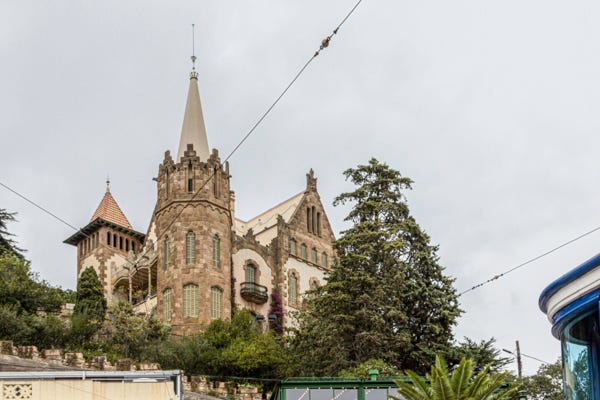
There are many turn-of-the-century mansions that line the slopes of Tibidabo. The most prominent is El Pinar, the home of the banker Manuel Arnus near the base of the funicular and the end of the line of the blue tram. I photographed this house after exiting the funicular on the way back down Tibidabo. I at first thought that this was Zafon’s mansion but later discovered that Zafon himself told us that the address of Torre Aldaya in The Shadow of the Wind was Avenguda Tibidabo 32, which is a few hundred meters down the hill. The building at this address is not as gothic looking like El Pinar and Zafon probably combined the appearances of several Tibidabo mansions when he imagined Torre Aldaya. The building at # 32 is now the Hotel Mirlo, a five-star boutique hotel.
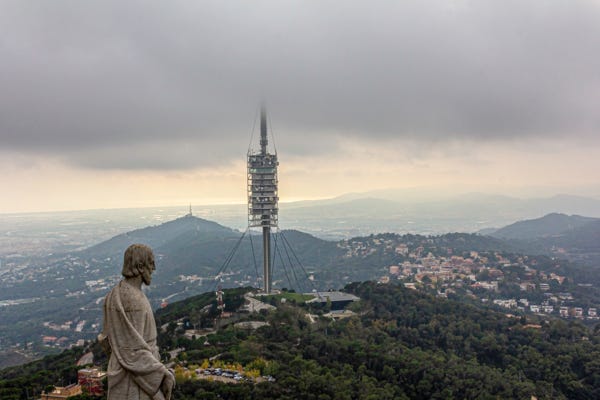
El Pinar was designed by the famous architect Enric Sagnier in 1902 and the house was completed in 1904. Sagnier also designed the magnificent Sagrat Cor at the top of Tibidabo. The church’s crypt was built between 1902 and 1911 and construction of the upper church began in 1915. Sagnier’s son Josep Maria Sagnier completed the construction in 1961. The original statue of the Sacred Heart on the roof of the church was destroyed during the Spanish Civil War in 1936. The present statue, by Josep Miret, was completed in 1950. In this photo one of Christ’s apostles overlooks Barcelona and the huge communications tower on the next hill.
I understand the Tramvia Blau is presently closed for reconstruction. There is a bus (# 196) that now connects the Metro with the funicular.
Zafon wrote The Shadow of the Wind in 2002. It was translated into English by Lucia Graves in 2009. I came across it in early 2015 and immediately began plans for a trip to Barcelona and we flew to Spain later that year. The second book in the cycle Zafon has named The Cemetery of Forgotten Books is called The Angel’s Game. I read most of that book on the plane and finished it during our stay in Barcelona. It is a prequel to The Shadow of the Wind. I then read the third book in the cycle, The Prisoner of Heaven, shortly after returning from our trip. Lucia Graves, the excellent translator of Zafon’s Spanish works, completed the translation of The Labyrinth of the Spirits in 2019. I didn’t get around to reading it until last year. Then I reread the other three books and enjoyed them considerably. I’ll probably read all of them again someday.
Zafon was born in Barcelona in 1964 and later moved to Los Angeles where he wrote screenplays in English. But he wrote all of his fiction in Spanish. He died of cancer in 2020 at the age of 55.
Most of the actions in The Shadow of the Wind take place in the Bari Gotic and Raval neighborhoods south of Placa de Catalunya. Visitors to Barcelona can sign up for a three-hour literary walking tour that covers these areas. Tibidabo is too far away to be included in this tour, however. We didn’t take the walking tour, but we came across many of Zafon’s landmarks while following a couple of walks that Rick Steves recommends in his Pocket Barcelona.
Tibidabo gets its name from two Latin words: dabo meaning “I will give” and tibi meaning “to you.” For more info on Barcelona’s highest hill see my Crow Canyon Journal blog postings here and here. Better yet, read either an English version of the Bible or St Jerome’s translation into Latin of Matthew 4:09. And then read all four books in The Cemetery of Forgotten Books cycle for the full story of the Semperes, Daniel’s friend Fermin Romero de Torres, and that haunted mansion halfway up Mount Tibidabo.


