avatarShirley Willett

Free AI web copilot to create summaries, insights and extended knowledge, download it at here

1256

Abstract

imbalance.</p><p id="69e3">2. Emotions are very <b>individual</b>, so emotional exercise will be individual as well.</p><p id="8be2">3. <b>Recognition</b> of our own personal emotions is the number one goal.</p><p id="d686">4. Drop scientific search for cause — just <b>feel the feelings.</b></p><p id="6d61">5. As with all exercises, there is no magic, only <b>practice</b>, practice to achieve knowing emotions.</p><p id="c60b">6. The importance of <b>smiling</b>.</p><p id="970e">7. Learn to take <b>power</b> and <b>will</b> over our own emotions and mind</p><p id="cab4"><b>Let’s have a setup for you and you…………</b></p><figure id="95e3"><img src="https://cdn-images-1.readmedium.com/v2/resize:fit:800/1*XjX3ARPi5HXkkHq-ICiM5w.jpeg"><figcaption><b>Face in the Mirror, </b>Unsplash</figcaption></figure><p id="fcc6">1. Sit in front of a mirror so you can see the outer expressions of your inner emotions.</p><p id="d040">2. Be relaxed and take time, going slowly, with no disturbance from outer reality.</p><p id="48c8">3. Attitudes and knowing them is critical to the exercises.</p><p id="1916">4. Have a notebook handy to write thoughts as they arise, and to help memory. No thought is useless, but if it concerns you write it down to ponder later. Re

Options

member, thoughts and feelings are very different mental experiences.</p><p id="a964">5. Depending on how you wish to proceed, (there are no rules) you can write a list of emotions to experience, or simply present each as they intuitively come to mind.</p><p id="97d2">6. Think of an emotion — let’s say anger. For beginners it may help to think of something that makes you angry. But <b><i>do not get lost in a cause.</i></b></p><p id="8d3d">7. Close your eyes and <b>feel</b> the anger inside.</p><p id="e726">8. Keep feeling it while you open your eyes, and look in the mirror.</p><p id="f3f2">9. If you are anything like me who has long-practiced that “face in the mirror”, you’ll find it funny. Don’t be surprised if you <b><i>smile, </i></b>the healthiest thing you can do for your body and your mind.</p><p id="ebe1">10. It’s not magic. Once is not enough. Practice, practice for each emotion.</p><p id="a2f4">Kathleen Parker, Washington Post 3.24.20, wrote, “A time for <b><i>creating in place </i></b>… Creation, like life, is a force that won’t be denied. Who knows what masterpieces await the imaginations of still-sheltered artists among us.” And it is the emotions that are the seeds and nutriments for flowering creativity.</p></article></body>

GETTING FIT EMOTIONALLY CAN BE FUN WHEN ALL ALONE

Higher Development of Emotions is the Future of Humanity
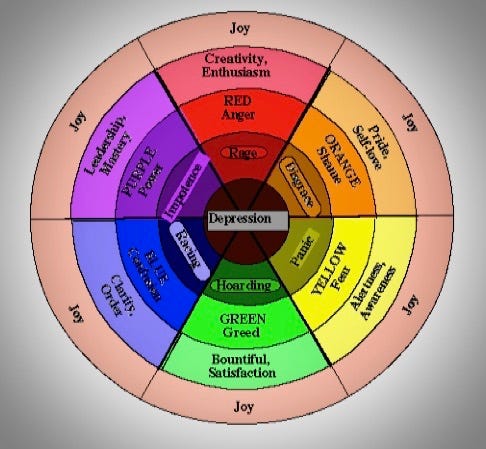
The Colors of Emotions, chart I presented at Boston University Innovations conference, 2002

“Emotional Intelligence: Why it can matter more than IQ”, by Daniel Goleman is one of many books pointing to a different and higher consciousness of emotions.

There are times in the history of the world, and each in our personal history, that we are faced with being alone — I call it all one. It is a time to study and know ourselves, especially our inner reality where emotions spring like seeds into flowers or bad dreams. It is a time to know ourselves and come to love ourselves, and learn to enjoy the powerful sense of emotions.

The teacher in me wants to help others to do with emotions what I have done — in getting fit emotionally.

Some points for guidance…………

1. There is no right or wrong in emotions, only balance and imbalance.

2. Emotions are very individual, so emotional exercise will be individual as well.

3. Recognition of our own personal emotions is the number one goal.

4. Drop scientific search for cause — just feel the feelings.

5. As with all exercises, there is no magic, only practice, practice to achieve knowing emotions.

6. The importance of smiling.

7. Learn to take power and will over our own emotions and mind

Let’s have a setup for you and you…………

Face in the Mirror, Unsplash

1. Sit in front of a mirror so you can see the outer expressions of your inner emotions.

2. Be relaxed and take time, going slowly, with no disturbance from outer reality.

3. Attitudes and knowing them is critical to the exercises.

4. Have a notebook handy to write thoughts as they arise, and to help memory. No thought is useless, but if it concerns you write it down to ponder later. Remember, thoughts and feelings are very different mental experiences.

5. Depending on how you wish to proceed, (there are no rules) you can write a list of emotions to experience, or simply present each as they intuitively come to mind.

6. Think of an emotion — let’s say anger. For beginners it may help to think of something that makes you angry. But do not get lost in a cause.

7. Close your eyes and feel the anger inside.

8. Keep feeling it while you open your eyes, and look in the mirror.

9. If you are anything like me who has long-practiced that “face in the mirror”, you’ll find it funny. Don’t be surprised if you smile, the healthiest thing you can do for your body and your mind.

10. It’s not magic. Once is not enough. Practice, practice for each emotion.

Kathleen Parker, Washington Post 3.24.20, wrote, “A time for creating in place … Creation, like life, is a force that won’t be denied. Who knows what masterpieces await the imaginations of still-sheltered artists among us.” And it is the emotions that are the seeds and nutriments for flowering creativity.

Emotions
Mental Power
Creativity
Smile
Future
Recommended from ReadMedium