
Get Ready Now for Banned Books Week the First Week of October
It’s more crucial now than ever
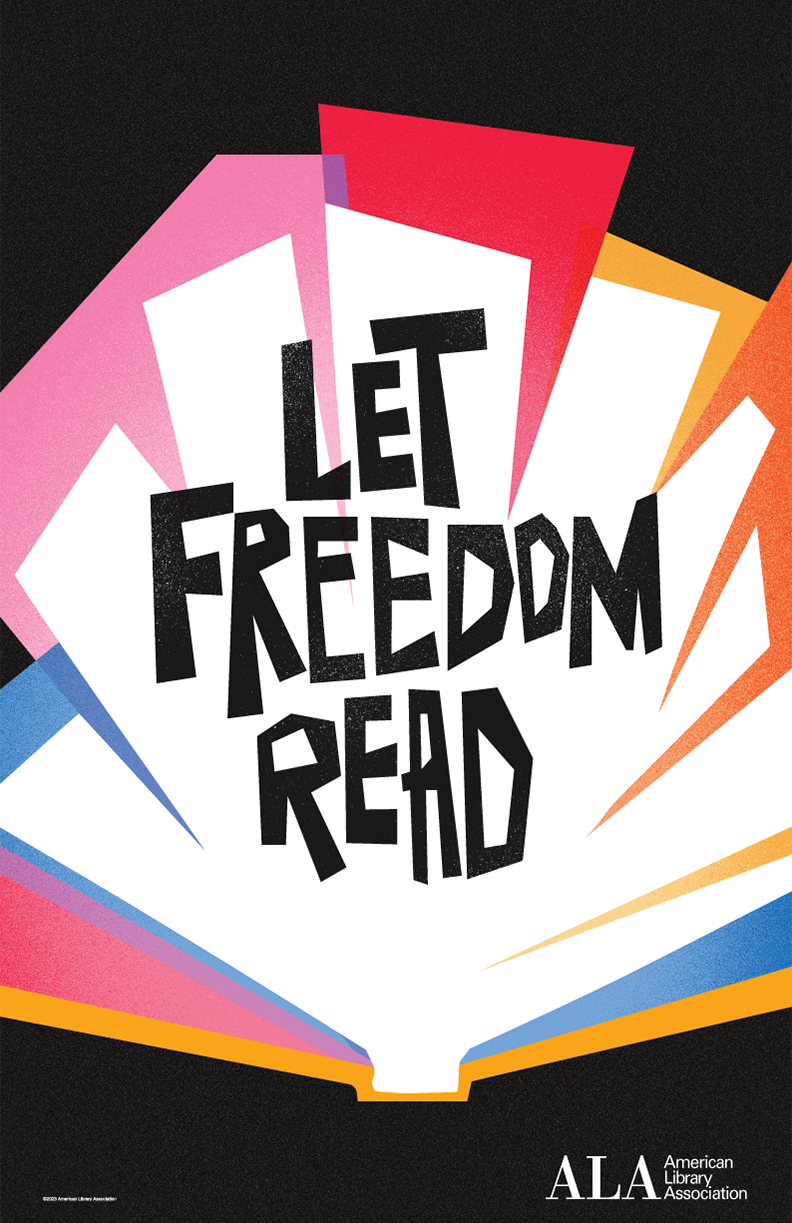
Every year I encourage people to celebrate Banned Books Week, an annual celebration of the freedom to read that has been held at the end of September or beginning of October every year since 1982. This year’s Banned Books Week happens from October 1st to October 7th, and the theme for 2023 is “Let Freedom Read.” Normally, I will write a story on the first day of the event and at least one other during the week highlighting a specific banned book.
This year is different. This year, I’m beating the drum two weeks early as well so that you can prepare for it rather than realize it’s happening midway through (or worse, two days after it’s over). The American Library Association doesn’t have the resources to promote the thing that the NFL, college football, and the new season of The Voice do, so it’s up to us to spread the word because this matters far more than any of those things.
The attempt to ban books from schools and libraries has always existed, but the issue has reached a crisis point over the past year. I’ve written about it multiple times recently, including stories on the banning of books about farting, the use of ChatGPT to choose which books to ban, and the accidental banning of the Bible in Texas. It’s madness, and just this morning I read a story showing that the menace is spreading from school libraries to public libraries.
A story on the NBC News website reports that the Board of the Alabama Public Library Service voted to compile a list of books that it deems inappropriate for children. Board member John Wahl (who coincidentally is also the chairman of the Alabama Republican Party) said: “Parents still have access to it if they want to buy this for their children. But we don’t want to have it in libraries where innocent children can stumble upon it.”
I completely agree that there are legitimate questions (and legitimate debates) about what books are appropriate for various age groups. There are age restrictions on movies and there is no reason there shouldn’t be for books as well. But these decisions should be made objectively, without bringing politics or ideology into the decision, and certainly not by the leader of a political party.
Most of the current attempts to ban certain books are related to issues in the ongoing culture wars: Critical Race Theory, books with LGBTQ themes, and revisionist history. And while the focus has been heavily on books with LGBTQ content, there is legitimate concern that the recent action in Alabama could also be aimed at sanitizing the state’s history of attacks on the Civil Rights movement and treatment of its Black citizens to the present day.
Make no mistake, though; while coverage of attempts to ban books has focused on conservative states, the attempt to control what our children (and we) read comes from both sides of the ideological spectrum, because it’s always about something beyond the obvious focus of the attack. Banning books is, at its core, about people in power holding on to that power in the most desperate way possible.
Sometimes such efforts are blatantly obvious, as with Vladimir Putin’s recent revision of Russian school textbooks to show occupied areas of Ukraine as part of Russia on maps and his “special military operation” as an effort to reclaim land that rightly belongs to Russia because “Russia and Ukraine are one people.” The effort to revise history is not confined to the United States.
With literature, where the bulk of the attacks today are concentrated, the perfect example is the assault on the novels of Ernest Hemingway, which have been attacked from every possible angle over the past century. It started with, of course, the Nazis; they burned all of his books in the 1933 bonfires because of their “decadence.” In the 1930s and 1940s, Hemingway’s classic The Sun Also Rises was banned in Soviet Russia for being anti-communist; in the 1980s, the same book was banned in a Florida school district for being pro-communist.
The opposition to Hemingway’s books had nothing to do with their literary merit. All of the bans were solely intended to protect the narrative of whatever group was in power at the time from a voice they considered dissenting, whether that dissent was real or simply perceived. We must vigilantly stand against the banning of books, which is nothing short of an all-out assault on intellectual freedom. We must do this even when — especially when — we disagree with the very books and ideas we are protecting.
We really shouldn’t need a week dedicated to protecting intellectual freedom in 2023, given that we once fought a world war against a gang of lunatics in Germany who loved burning books that offended them, but apparently we don’t learn from the past. So, make plans now for how you will celebrate Banned Books Week two weeks from now, and definitely show some love to your local school and public librarians and indie booksellers. They are on the front lines of crucial battle that too many aren’t even paying attention to.
If you enjoyed this story, you can support my writing directly by leaving a tip below using the small (and kind of weird) hand icon (you tip waiters and bartenders, so why not writers?).


