
George Monbiot Day by Day
Climate disruption and colonialism.
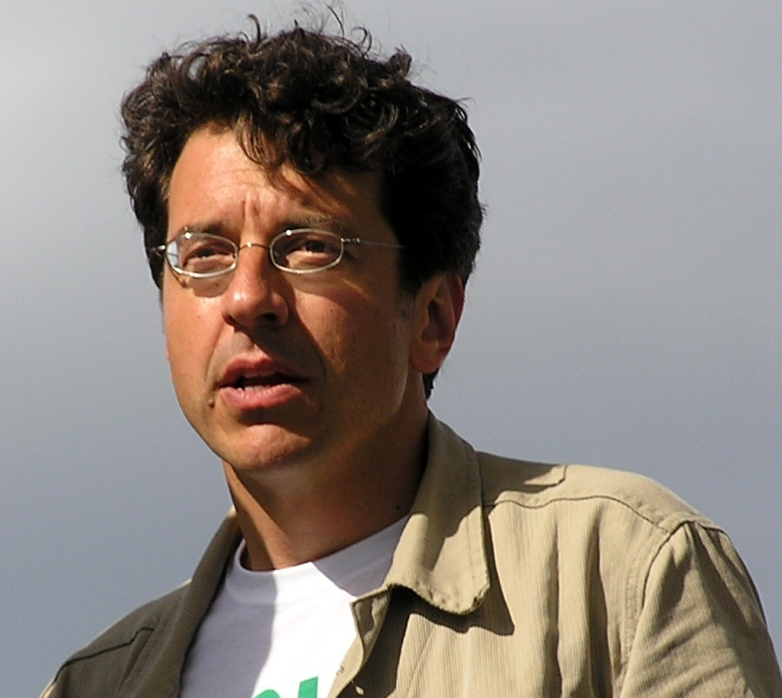
I cannot say when was the first time I read British writer, George Monbiot. Yet, from that first piece of journalism or opinion I read, he remains the go-to print journalist on climate disruption.
I suspect there are other more formidable writers on the topic but they don’t have Monbiot’s wide platform with The Guardian.
George Monbiot never wavers. Never gives in.
Here he is writing in his 2016 book, How Did We Get In This Mess, a book about seemingly every conceivable problem in the world:
Monbiot originally wrote those words in 2007 and he has been sounding the alarm on climate change stronger and stronger each day. Yet, Monbiot goes way back in his writings. Climate disruption is, if you read carefully, about colonialism, greed, and the misuse of resources for profits and not sustenance. In brief — Capitalism.
In 1994, in the Scientific American, Monbiot wrote the following:
Around the world, changes in the ownership of land lie at the heart of our environmental crisis. Traditional rural communities use their commons to supply most of their needs. To keep themselves alive, they have to maintain a diversity of habitats, and within these habitats they need to protect a wide range of species. But when the commons are privatized, they pass into the hands of people whose priority is to make money. The most efficient means of making it is to select the most profitable product and concentrate on producing that. As the land is no longer the sole means of survival but an investment that can be exchanged, the new owners can, if necessary, overexploit it and reinvest elsewhere.
Monbiot is explaining what happened throughout the world during the colonial period. European settler invasions seized lands, slaughtered the indigenous populations and/or enslaved them, enclosed the land in the name of King and country, and land and its bounty became profit and power. Despite a lot of change over the past 75 years or more, that arrangement remains in place.
American and European oil companies continue to extract fossil fuels from lands they seized in the colonial period. They extract other resources for the same reasons. As Monbiot and many others have written, this is unsustainable for life on earth.
What is the point? Give it up!
Just last week in the Guardian, Monbiot writes — “Destroying the world’s living systems and draining its wealth are not perversions of capitalism. They are capitalism.”
Monbiot’s daily literary production says loudly without being rude the following — Every human being should begin or keep taking steps to end the Oil Century once and for all. Small or big steps. This, I suspect, is him trying to get around the colonial system and the corporate super-structure.
Monbiot also, at least according to an article in the RSA Journal in 2006, is taking those small steps on a personal level. He is trying to walk it and talk it.
The article, written by David Milibank, notes that Monbiot “rarely travels by car,” and “avoids flying,” two activities noteworthy for contributing to climate disruption. His carbon footprint for that year was exceedingly low.
But it is Monbiot’s words that continue to land heavy blows onto the fossil fuel system.
Here he is, in August, in the Guardian, making it plain:
“Almost everyone is now at least vaguely aware that we face the greatest catastrophe our species has ever confronted. Yet scarcely anyone alters their behaviour in response: above all, their driving, flying, and consumption of meat and dairy.”
And here he is in the same essay, bringing the hammer this time to the utter stupidity of the actions of the UK government on energy issues:
Astonishingly, it is still government policy to “maximise economic recovery” of oil and gas from the UK’s continental shelf. According to the government’s energy white paper, promoting their extraction ensures that “the UK remains an attractive destination for global capital”, which is “the best way to secure an orderly and successful transition away from traditional fossil fuels”. It’s hard to imagine a more perverse argument. But when you pursue incompatible aims, the first casualty is logic.
Monbiot writes that this is like spraying petrol on a house that is in flames.
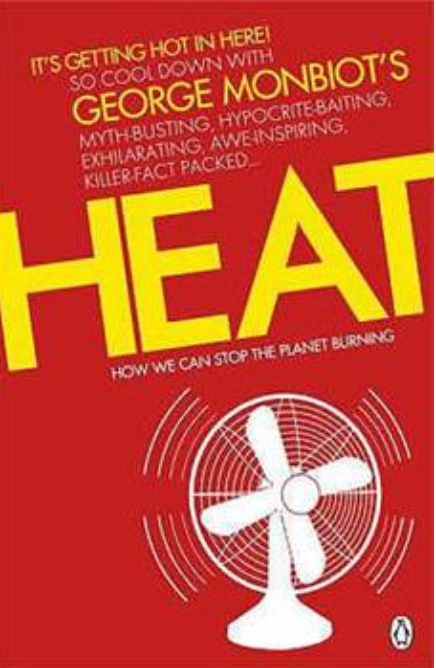
Yet, it is Monbiot’s book, Heat: How To Stop The Planet From Burning that is his modern classic and a must-read. This is the one that scared me into reading about the topic of climate disruption much closer. I have been reading Monbiot and many others ever since trying to figure my own way into the discourse.
It is here, well before the modern desperation over climate disruption began, that Monbiot slowly walks the reader through everything that went wrong and has gone wrong. Heat is part science, part commentary, part memoir, a narrative of a world society stuck in denial, and on stupid regarding climate change.
It is a must-read if you want to understand Monbiot’s vision but also at the top of the list for books on climate disruption right now even though first published in 2006. Monbiot himself describes Heat as a “manifesto for action and a thought experiment.” He writes that he is seeking to show how a “modern economy can be de-carbonized and still remain a modern economy.”
If you find yourself disagreeing with him, it is fine. He has continued to write on the topic since 2006 in an even bolder, and more informed manner. I suspect he welcomes the critique but mostly your interest in the issue of our time.
Regardless, if you don’t read hard on climate disruption, Monbiot’s spirited prose will help you along. And hopefully, help us all.
Source Materials
Jon Snow, David Miliband, George Monbiot, and Gerry Archer, RSA Journal, Vol. 153, №5526 (December 2006), pp. 40–41
George Monbiot, HOW DID WE GET IN THIS MESS: POLITICS, EQUALITY, NATURE, Verso Books, 2016
George Monbiot, HEAT: HOW TO STOP THE PLANET FROM BURNING, Penguin Books, 2006
in a book called Heat. That is the book that got me interested in his writing.