
Gentleness
Thanks to Bingz Huang for bringing the idea of Gentleness to my awareness.
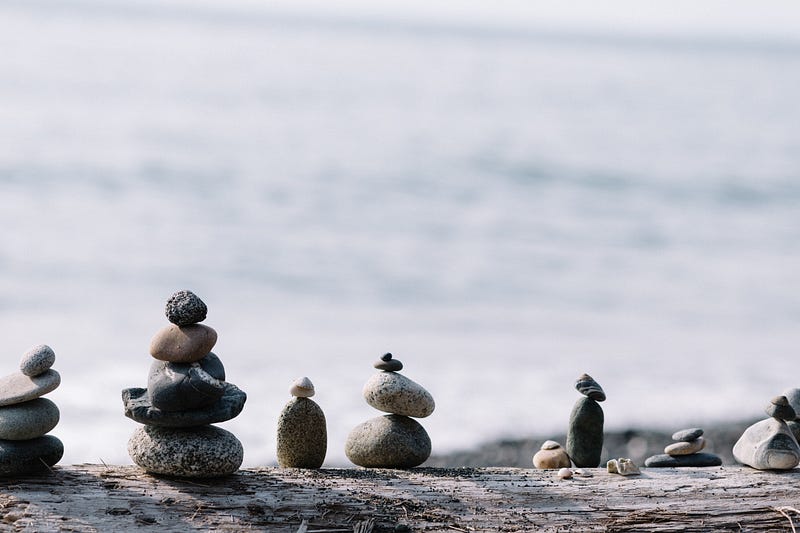
I’ve been reflecting on this principle. It seems that gentleness requires noticing when we’re not gentle with ourselves and others. When we try to force an outcome. When we demand (of others, ourselves, or of Life) that our desires must be met by any means necessary.
Gentleness = Valuing the means more than the ends
Of course, it’s fine to have desires and goals. Yet, the means of achieving them — the process we use — needs to be respected and consciously approached. Why? Because the process ends up shaping who we become.
Gentleness is valuing the means more than the ends, the process more than the results, and not being attached to (and therefore not forceful) the timeline of achieving those results.
It’s not that we don’t work diligently. I hope we take on joyful diligence. But more than anything, I hope that we will work gently, with deep trust that the results will get better (and faster) the more that we practice and the more that we get skillful over years of gentle effort.
Gentleness allows more personal sustainability, which allows us the longevity of practice, which then grows our skillfulness and gives us the best chance to reach our potential.
Gentleness = Gratitude
Gentleness is connected to our Gratitude for the reality that we are each on an inevitable path towards maturity, no matter how slow it might sometimes seem.
Gentleness supports an appreciation for this moment, this stage of life, while it is still with us.
Gentleness means practicing equanimity, the state of being at peace with whatever is happening now, no matter the external or internal storms.
Gentleness calms the internal storms and conveys the faith that the external storm will work itself out and that we will, somehow, still be fine.
Gentleness = Strength
Gentleness does not necessarily mean weakness. When done consciously, it evidences strength.
In fact, it takes both emotional and physical strength — and skill — to be very gentle.
Think of a violinist playing a piece that is both sweet and soft. So much precision, heart, and (strong) gentleness is needed.
Another example is the last time you had to carry a bowl of hot soup from the kitchen to the dining table. Got it in mind? Observe your gentle strength and mental state, especially when carefully placing it on the table.
That kind of care and skillfulness is what I am aiming for in my interactions with others… and with myself.
Gentleness does not necessarily mean slowness.
A cross-country runner can be quite fast, for example, but is aware of their body’s limits. With each landing, they are aware of being soft with their knees and feet if they want longevity in their sport.
Another example — I can talk quickly yet still be aware of the impact it has on others, gently holding them in my heart.
Again, true gentleness requires skillfulness. The opposite? A bull in a china shop :)
The ability to work lightly requires Gentleness
From how hard we are typing, how tense we hold our body, to how forceful our intentions are in “just getting this done,” applying gentleness brings more health, longevity, and wholeness to our way of working.
At first, gentleness takes energy to bring more care and intentional softness to the situation at hand.
Over time, though, it is more sustainable, since the energy expenditure becomes more even throughout each day.
The world responds with more Gentleness as well. As I put gentleness into the world, I notice more gentleness coming back to me.
I’m sure some of it is my mental bias since I notice what I focus on. But some of it is the natural reciprocity of energy-for-energy.
Working gently causes less strain
I’ve observed the forcefulness with which I do certain things, such as rushing to finish something yet holding the result to a high standard.
Overexertion.
(Often, it’s easier to learn a lesson by observing the opposite.)
Since most of us work at the computer a lot, it’s a wonderful situation to practice Gentleness. Notice how hard we are typing the keys, and how tense are our hands, arms, shoulders, neck, jaw, and face.
Go ahead, notice that now :)
Being gentle at the computer doesn’t mean we have to type slowly. We can still type quickly but lightly. Yes, it will take practice, but it’s worth it.
By using the computer with gentleness, less strain is created. It’s better for your arms and body, and it’s better for the computer.
Gentleness is not lazy
Gentleness is not lazy. It requires care.
It is not weak. It requires discipline.
It is not only feminine. It is the hallmark of a gentleman.
Don’t misuse Gentleness
As with any value, it needs to be balanced. Gentleness could be used as an excuse to enable unhelpful behaviors in ourselves or others.
For oneself, gentleness could be misused to give in to inertia and shirk one’s responsibilities. Instead, aim to be “strict” in showing up as promised, yet gentle with the results.
When interacting with others, gentleness could be misused as an excuse to enable harmful behavior. In such situations, we need to activate courage to confront harm, even as we try to do it gently yet effectively.
It is ongoing learning, for sure.
Final thoughts
Ultimately, gentleness is based on trust that the best transformations and results take their own time that cannot be forced.
And respect for the process — the way we accomplish something — being as important (or more so) than the goal itself.
May there be more gentleness in ourselves and in the world.