

Genomics and the Personalization of Healthcare
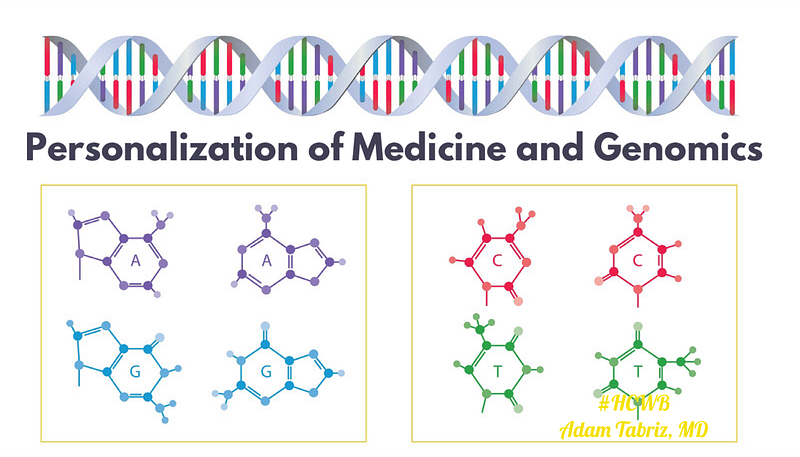
Medicine is the science of relativity where every individual is unique, and every scenario and case is different. Every factor, from molecules to genes, psychology to physics, environmental to social, contributes to the diversity of medical delivery. Medicine is complex, but that doesn't mean healthcare must be complicated.
Every medical case can be taken as a textbook, but delivery can be seamless between the patient, physician, or provider. The right technology and strategy have become vital, especially with the advent of value-based physician reimbursement, Medicare Access, and the CHIP Reauthorization Act of 2015 (MACRA). The measures question the effectiveness of the population health model in ensuring the necessary prerequisites which define the quality and ultimately the value of service provided to the patient.
We can achieve effective delivery by providing healthcare that follows the free market system without pluralistic and populist bias. Thus, we can entail the production of services and products by pharmaceutical and technological companies, the manufacturing and sale of medical equipment by private companies, and the training, marketing, and practice of medical practitioner skills and labor.
Personalization of Medicine and Genomics
We can reach our target by using and improvising the tools as healthcare is not a destination but a journey where the doctor walks with the patient. The physician customizes the experience using required resources, giving birth to the personalization of healthcare.
The definition of personalized medicine has gone through many changes over the years, with the latest focusing on technologies that deliver precision treatment to patients like genomics, intelligent polymers, immunotherapy, biomarker immunoassays, and so on.
My prerogative is that personification of the practice of medicine becomes a separate branch that deals exclusively with the individual, and the care provided becomes personalized healthcare. Personalized medicine, personalized health information, personalized reimbursement coverage, and personalized clinical interaction are prerequisites for authentic customized care.
For the sake of the current discussion, I would like to concentrate on "personalized medicine" and genomics which are within the scope of the article.
Genomics is a multidisciplinary approach comprised of the science of structure, function, evolution, mapping, and editing of genetic building blocks called Genome. It can be considered the golden standard of future medicine as it represents the epitome of personalization of treatment delivery. I want to call it the artificial intelligence (AI) or Precision medicine of biotechnology!
Extracting data from the different utility branches of genomics like medicine, anthropology, and social sciences and channeling it through optimally designed, validated, and quality-proofed artificial intelligence algorithms will unleash personalized medicine and personalized healthcare.
For example, being able to deliver precise treatment for an exact duration through an accurate method and does not only maximizes the outcome but also minimizes the side effects. Also, you can't expect a unique cancer treatment outcome through conventional means like chemotherapy, radiation, and surgery, as every individual comes with a different genetic structure.
In the same way, you can't reduce the tolerance to specific medications that the doctor would have prescribed at the same rate despite knowing that 10 to 20 % of the patients will have no response or even face untoward side effects.
Genomics is a subcategory of technologies that open many doors to personalized care; however, its precision is also determined by complementary technologies like "smart polymers" for tissue generation and controlled drug delivery or Blockchain and machine learning for incorporating social, environmental, and emotional criteria.
As I have said in my previous articles, the value of healthcare can only be determined by the quality of medical service delivered at a given place and time based on available resources perceived by the individual patient and acknowledged by the provider or physician. Therefore, genuinely personalized healthcare doesn't only need a village to heal one patient- it has to be reformed, equipped, transparent, and scientifically appropriate! Only then can we even think of delivering quality healthcare with the personalization of medicine?
Genomics is the future, and a personalized delivery model is a way to go. But we must remember that genomics in the context of the population health model and current reimbursement challenges will not go down a smooth road. We will encounter hybrid models of personalized approach, which are nothing new, as we have gone through similar experiences in the past. But full personalization and adapting of Hippocratic medicine of the 21st Century by reversing 18th Century population healthcare model will be inevitable.
Political partisanship and hybrid market structure will only give rise to pushbacks based on cost and delivery criteria.
What is the Solution?
We have to ensure a competitive environment, a high level of government oversight and introduce more options without restricting the driving factors. I don't want to go into the cost details as it is out of the scope of this article. But history has revealed time and time again that a free, transparent market and technology work well to deliver high-quality, affordable services and products at every industry level only if coupled with "high-level" government intervention.
One downside is that precision medicine and personalization of medicine are only possible through correct implementation and control. It would be best if you had extreme discipline, quality assurance, and organization for it to function optimally.
As healthcare stakeholders, we must embrace the fact and take charge of those designs, validations, and quality assurance. We need a platform to tie all the components of precision medicine together. We need a platform that combines multidisciplinary professional efforts with multi-modular technology platforms and channels it to individual patients, physicians, and stakeholders. The result will lead to customized medical care for individual patients and create a niche environment. Based on that, we can create a healthcare system that goes beyond geographic and socioeconomic boundaries, evolving realistically into more sustainable healthcare for the masses.


