avatarKurt Dillon

Summary

Genetic genealogy has led to the identification of a young woman's remains, Lisa Coburn Kesler, 33 years after they were found in North Carolina, solving a cold case that had eluded traditional investigative methods.

Abstract

The use of genealogical DNA has once again proven instrumental in solving a decades-old cold case. After 33 years, the remains found in 1990 have been identified as those of Lisa Coburn Kesler, a 20-year-old from Jackson County, Georgia. Despite various methods employed over the years, it was forensic genealogist Leslie Kaufman's application of genetic genealogy that ultimately led to the identification. Kaufman traced the remains to Lisa's cousins, providing a significant breakthrough. The young woman, who is believed to have been strangled, was discovered by road workers along Interstate 40 East near Chapel Hill. This success story underscores the effectiveness of genetic genealogy in cases where conventional techniques have fallen short.

Opinions

  • The author likely views genetic genealogy as a powerful tool for solving cold cases, surpassing traditional investigative methods.
  • The article may suggest a level of frustration with the limitations of conventional investigative techniques in comparison to the breakthroughs achieved through genetic genealogy.
  • There is an implicit endorsement of forensic genealogist Leslie Kaufman's approach and expertise in the field, which has been crucial in cracking the case.
  • The identification of Lisa Coburn Kesler's remains is presented as a significant achievement, possibly reflecting the author's belief in the importance of closure for families and the justice system.
  • The author likely supports the continued use and development of genetic genealogy as a means to provide answers in unsolved cases.

Genealogical DNA Solves Another 33-Year-Old Cold Case

The constantly evolving, highly controversial science has once again done what conventional investigative techniques have failed to do for over 3 decades
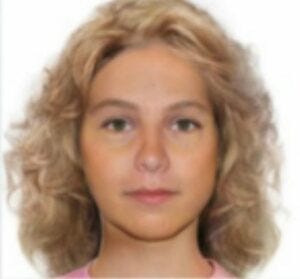
Over the past three decades, various methods have been employed to identify the remains. It was only with the advent of genetic genealogy that forensic genealogist Leslie Kaufman successfully located a couple of Lisa’s cousins, leading to the breakthrough in the identification of the human remains discovered some 33 years previously in North Carolina.

The remains were initially found in 1990 and have now been determined to belong to Lisa Coburn Kesler, a 20-year-old Jackson County, Georgia resident.

Investigators suspect that the young woman was tragically strangled to death approximately one week before her body was discovered by road workers along Interstate 40 East, near the Chapel Hill exit.

About The Author

Kurt is the owner of WOMEN — Wild Orchid Media & Educational Network, Inc., the parent company of The Veritas 7 — True Crime Podcast and The Veracity Report global news agency.

Originally published at https://veracityreport.org on September 28, 2023.

Science
Genealogical Dna
True Crime
Veritas True Crime
The Veritas 7 Podcast
Recommended from ReadMedium