
Gen Z: The Generation of Modern Loneliness
Thousands of friends on social media but can find nobody to pour out your soul
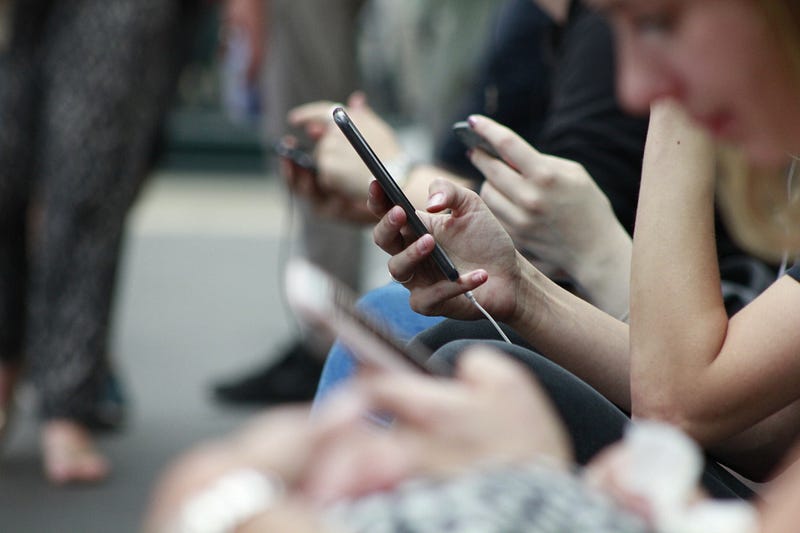
Members of Gen Z — people ages 15 to 21 — reported the worst mental health of any generation published in the American Psychological Association’s annual Stress in America report of nearly 3,500 interviews with people ages 18 and older, plus 300 interviews with teenagers ages 15 to 17.
According to a new nationwide survey conducted by global health service company Cigna, America is currently undergoing a “loneliness epidemic” with almost 50% of participants feeling isolated based on the analysis of 20,000 adults aged 18 and older of UCLA.
In the modern technology era, it’s much easier to connect with people around the globe. With just an app, we can text anyone in just a second which suppose to bring us closer. But this is not the case. Instead of making genuine connections, technology has been a culprit in separating people apart.
My childhood
New research shows that today’s 16–22-year-olds, the emerging adults from Generation Z, are significantly unhappier, lonelier, more lacking in confidence and less satisfied with life than older people. Contributor Mark Fawcett, Chief Executive — We are Futures.
I can remember clearly that when was a kid, about 6–12 years old (2004–2012), I ran around my neighborhood every single day to play with my friends.
We gathered in a group of 5–10 and played some traditional games such as hide and seek, tossing marbles, tug of war, or video games. Sometimes, we went to the ponds or fields to swim or play soccer, basketball.
If we get fed up with the games, we just sat and talked about schools, foods, or came up with a new game to play. Nobody knew about cell phones. We did have old-school video games- the ones with tapes on top. The most famous video game we played was Mario of Nintendo.

After school, I and my friends often went to a coffee shop to relax. We rarely called or texted, usually, I just went to their houses to play or vice versa.
I was so excited when someone in the group had a birthday party as I knew it’s playtime with lots of food and soda — every child loved soda at that time and we only drank soda at the party.
It was not a big party but I really enjoyed it, I felt the joy of the owner of the party. We celebrated everything in the most genuine way.
My childhood was so sweet and kids today can never enjoy that anymore.
Then, things have changed as we’ve grown up. The introduction of social media has transformed the way people interacted with each other.
When virtual “like” determine your validation
Social media is a tool that people can connect and update each other’s activities. The like button is overrated and supposed to be a validation tool for the netizens.
Many young people seek validation from others based on the number of like they got. If that number doesn’t meet their expectation, the anxiety level will be likely to rise with a thought that their value is low and that people aren’t interested in them.
Young people are coming to realize their mental wellness and sense of identity are too firmly attached to their social media status. Research shows that 83% acknowledge their mood is affected by the number of likes, comments, shares they get on their post.
Moreover, 54% now accept being continually connected to their phones worsens their mental health.
The superficial culture has negatively impacted the way people socialized. Many people post their photos that went through a lot of editing apps and filters, making their images look unnatural and fake.
Worse, people post some luxury items like handbags, cars, clothes, shoes, etc that don't belong to them. Recently, police just arrested a young Instagram fashion influencer ages 19 in Sydney for shoplifting luxury handbags. They found out that he posted his photos holding the handbags on Instagram like he actually owned them. The total value of all stolen handbags was estimated to be $55,000.
What young people get back is just virtual validation. It’s not a way to live a meaningful life.
Face-to-face conversations are replaced by video calls and texts
What this comes down to is that we, as a society, are experiencing a lack of connection — Douglas Nemecek, MD, Chief Medical Officer for Behavioral Health at Cigna
It can be accepted that if you live far away from your family, friends,.. a phone call should be the easiest and fastest way to keep in touch.
Ridiculously, nowadays, even people who live in the same city or study at the same school don't want to meet up in person. They simply text or video call when in need.
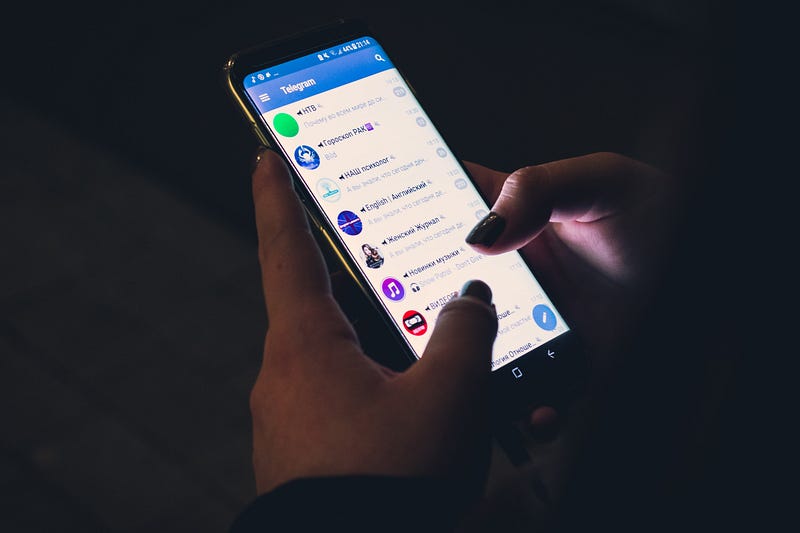
Even people living in the same house or apartment don’t even talk to each other. They just stay in their rooms all the time and when to communicate with roommates, they text! That’s sad.
This is my true experience when I moved to stay with my relatives in Atlanta last summer. I stayed in the basement and my aunt was upstairs. Whenever she needed to talk to me, she just called or texted me instead. During the day, I didn’t even see her.
The physical distance isn’t a matter anymore but emotional distance matters a lot.
When I went to class, my classmates didn’t talk much. They just on their phone silently, which made me think about the deteriorating social interaction.
Young people — especially gen Z don’t mind talking to each other anymore. Even when they get together, they tried to take as many photos as possible and post on Facebook, Instagram. They don’t enjoy the moment of hanging out with friends anymore, they don’t fully live in the present. Everyone wants to be an influencer, I guess.
In fact, a recent study published by Clinical Psychological Science revealed that adolescents between the ages of 13 and 18 who spent more time on social media and smartphones were also more likely to report mental health issues, as opposed to teens who spent more time hanging out with friends, exercising, doing homework, reading print media and attending religious services.
A lot of kids today have access to tech devices at an early age like iPads, iPhones. For example, my niece just turned four this month but she already knows how to use the iPad smoothly. She can unlock the iPad, surfing the Internet, and find videos on Youtube.
I don't see the kids today run around the neighborhood or go out anymore. They just want to play with their devices.
An astonishing 43% of participants (that’s 2 in 5 Americans) sometimes or always feel isolated from others and that their relationships are not meaningful. Additionally, 27% (that’s 1 in 4 Americans) rarely or never feel as though there are people that really understand and connect with them. Only 53% of participants felt that they have meaningful in-person social interactions on a daily basis.
Researchers are attributing these figures to the current lifestyle trends of Americans — more and more people are focusing on work, living far away from loved ones, and relying on social media rather than a face-to-face conversation.
As a result, real and meaningful relationships have diminished, and isolation has peaked.
Lack of human interaction has resulted in mental health and development, Half of the respondents who rarely have in-person interactions reported they are in fair/poor overall health, while just 12% of those who have daily in-person interactions are in fair/poor overall health. Half of those who rarely have in-person interactions also say they’re in fair/poor physical health (52% vs. 23% of those who are socially active) and mental health (51% vs. 12%).
Additionally, a strong social network can help alleviate the impacts of stress and improve mental health overall. People who rarely have in-person interactions are also less likely to lead healthy balanced lives than those who are socially active.
Technology has altered the dating culture
As Carole Lieberman’s book says in her book Bad Boys. Dating has changed from a “romantic serendipitous meeting to a virtual shopping spree”.
Online dating apps have been dehumanizing the notion of love and dating. The game and time-efficient nature of dating apps are way more important than finding an actual relationship.
Take a look at the way how our parents met. My parents met on blind dates at a mutual friend’s birthday party. They had dated for six years before getting married. Like my parents, other couples of the same generation also knew each other in person before moving on to the next stage. Before the popularity of online dating, meeting partners was pretty much dependent on work, through friends or out on a Saturday night.
Under the influence of dating apps, young people have too many choices of finding a potential partner. They swipe left and right and wait for a reply from the others. Their dopamine levels hit as someone matches their profiles and the sound of notification gets them addicted.
Datings apps are supposed to be created to find a partner, but it is distorted to search for a hook-up instead. Take Tinder as an example, a popular dating app allows you to find single partners in the local area who are looking to meet for dating or any other activities you could mention.
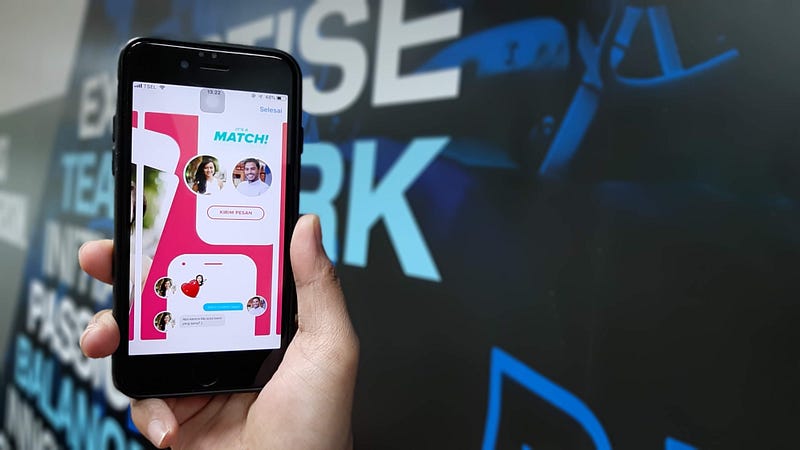
People mostly look for a “quickie” hookup rather than a real relationship these days. Easy come easy go. Humans are greedy. As someone has a long list of suitors, they want to meet each of them to obtain the best one like “relation-shopping”. But this doesn’t happen in reality and the more people you meet, the less willing for you to commit a long-term relationship.
The true value of the relationship is twisted and damaged, leading to more superficial rather than true relationships.
“Online Dating is Like Online Shopping Except You’re Looking for People No One Wants and It’s $50 a Month.” If you’re online dating, you’re looking for people no one wants, and it’s $50 a month,” said funny man and magician Phil Pivnick.
The hook-up culture has brought up anxiety and depression, notably among college students. The validation seeking involves the number of boys/girls people had sex with. The unspoken rule is if no one wants to hook up with you, you are worthless.
According to the Times, rather than doing a dinner and a movie, most daters now instead exchange “phone texts, Facebook posts, instant messages.” Emoticon flirting is a new trend for the first date.
There are so many easy choices that cheating happens everywhere and has become the new norm. When you hear about a happy couple living with each other for years without cheating, you are stunned.
After many quick datings, you will find yourself immersed in loneliness. You feel it deep down in your soul that you lose trust in love. Dating apps are a two-edged sword, first, you find it fun but later it destroys your emotion unconsciously.
Self-aware is the key to solve gen-Z loneliness
Regardless of the reason, loneliness is an epidemic that America’s youth is currently struggling.
Technology has helped people have a better and more comfortable life. We shouldn't blame technology for what we are experiencing today. Technology is bad to some extent because we are abusing it. Everything has both benefits and drawbacks.
To solve the loneliness epidemic, young people should spend more time on social interaction, playing sports, joining clubs, and other group activities. Additionally, reduce the amount of time on social media and the internet without a certain purpose.
Not everything you see on social media is real, so don’t compare your life to others on social media and depreciate yourself.
Finally, young people should establish real connections with people instead of superficial relationships. More importantly, parents should encourage teens to hang out with friends and have regular, meaningful social interactions.