
Gen Z Mental Health and the Emotional Burden of Our Climate Crisis
When we look at the increasing number of environmental issues facing a world in climate change, it’s easy to feel a sense of dread. Major storms are becoming more common and heatwaves have created mega droughts beyond the levels seen in the childhoods of Baby Boomers (b. 1946–1964) and Generation X (b. 1965–1980). The roughly 1.8 billion global Gen Z members (b. 1997–2012), are entering adulthood as natural disasters reach record-breaking levels. The UN reminds us that there’s still time to make major changes in the next decade to ensure the security of our youth. But a growing generation gap makes it difficult for Gen Z in particular to feel reassured that we will stabilize the planet in time. What is the emotional toll of the climate crisis on our youth and what can their elders do to help them?
The Mental Health of our Youth
The latest American Psychological Association (APA) Stress in America study found that Gen Z is feeling more stressed than the older generations about climate change. The APA surveyed 3,192 adults age 18+ and 300 Americans ages 15–17 regarding their mental health. Only 45% of Gen Z are likely to report very good or excellent health compared to 56% for Millennials, 51% for Gen X, and 70% for Boomers. Gen Z also reported the highest amount of stress regarding climate change at 58%.
Why is Gen Z Angry?
Gen Z isn’t just anxious about the increasing storms, floods, and wildfires. They’re angry at their elders for not doing more. “Anger can be hugely motivating,” said Britt Wray, a Millennial old postdoctoral fellow at Stanford University’s Center for Innovation in Global Health. “When it is based in a real sense of injustice, it shows that your conscience is alive.” She believes that this anger can be transformed into meaningful action among our youngest adult generation.
Wray is one of the study authors of a 10-nation study titled Young People’s Voices on Climate Anxiety, Government Betrayal and Moral Injury published in the Lancet. This largest-ever survey of climate anxiety in members of Gen Z aged 16 to 25, queried 10,000 participants in the United States, the United Kingdom, France, Finland, Australia, Portugal, Brazil, India, the Philippines, and Nigeria. The authors concluded that “Distress about climate change is associated with young people perceiving that they have no future, that humanity is doomed, that governments are failing to respond adequately, and with feelings of betrayal and abandonment by governments and adults.”
Intergenerational Inequity
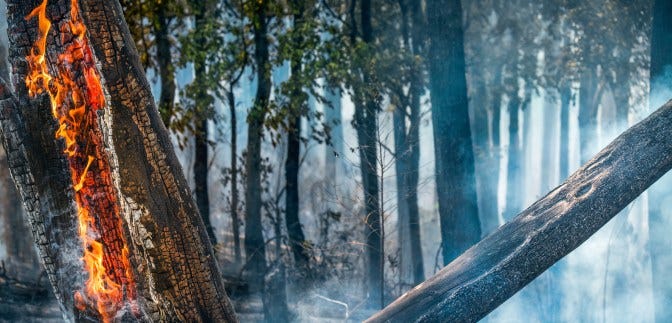
Generation Z and climate change are inextricably linked. While the emotional burden of the climate crisis weighs on all of us, a study by Science Magazine estimates that someone born in 2020 is 2–7 times more likely to experience an extreme weather event than a member of the Baby Boomer generation born in 1960. The authors of this study concluded this finding “raises important issues of solidarity and fairness across generations that have fueled a surge of climate protests led by young people in recent years and that underpin issues of intergenerational equity.” Simply put, the younger generations are inheriting a damaged planet that is more unstable and dangerous than the world our elders grew up in.
The Generation Gap
It can be difficult for older adults to hear that their children or grandchildren are angry at them about the world they’re inheriting. Ever since Gen Z activist Greta Thunberg read her scathing speech in front of the United Nations, many Boomers and members of the Silent Generation are afraid of being blamed for a lack of climate action. This unaddressed intergenerational conflict has widened the generation gap, leading to Gen Z members feeling isolated.
Heads of companies, who are overwhelmingly Boomers and Gen X, are frustrated with the idealistic demands of Gen Z workers. Recruiters are burned out as they’ve already raised pay and tried to make work from home options available. Job hopping is at an all time high among younger workers. Many from Gen Z don’t want to be a cog in the economic machine that is destroying the planet. Yet professional mentorship isn’t possible with qualified, caring elders if Gen Z doesn’t stay with a professional team long enough to form meaningful bonds.
Gen Z are Carving their Own Path
Gen Z are choosing different career paths than their elders because they see a need for climate action. Baby Boomers grew up during a time of economic prosperity and relative environmental stability, while Gen Z has come of age during a time of environmental turmoil. But the deep loneliness that Gen Z expresses in numerous studies reveal their need to be understood and mentored. They need help, but there aren’t many opportunities to receive support from the older generations.

Our Youth in Action
According to research from the Pew Research Center, Gen Z and Millennials are more likely to have environmental concerns and to actively engage with the issue on social media compared to older generations. A survey of 13,949 US adults conducted by the Pew Research Center found that 76% of respondents considered global warming to be the most significant issue facing the world.
Our youth are pouring into the streets to protest a society that profits from it’s decline throughout the world. The overwhelming presence by Gen Z in particular shows that political and ethnic distinctions are not as significant as the separation between the generations.
The Online Conversation about Climate Change
Gen Z and Millennials are trying to sway the direction of our society through social media and blogging. Both generations were more likely to have climate anxiety than older adults in the previously mentioned Pew Research study, with 88% of Gen Z respondents and 84% of Millennial respondents expressing concern about climate change. The younger generations were also more likely to engage with the issue on social media, with 37% of Gen Z respondents and 33% of millennial respondents reporting that they had seen an increase in climate change content on social media. We need to address climate change content online to ensure a multi-generational conservation is happening, supported by the latest research from climate scientists to help us coordinate what changes need to be made.
In addition to expressing their climate concern, Gen Z and Millennials are also taking action. The same Pew Center survey found that 71% of Gen Z respondents and 72% of millennial respondents reported reducing their electricity consumption in an effort to reduce their carbon footprint. Similarly, 27% of Gen Z respondents and 26% of Millennial respondents reported using gas or diesel instead of more sustainable forms of transportation towards net zero carbon emissions. In both of these efforts, Gen Z is leading the way when compared to older generations.
Educating the Future Generations
Young people in the United States are increasingly committing themselves to careers in environmentalism and sustainability, driven in part by the urgent need to address the climate crisis. This trend is reflected in the surging numbers of students enrolling in environmentally themed courses of study. Many are taking an interdisciplinary approach, combining their studies in fields such as ecology, literature, and philosophy, in order to help repair humanity’s relationship with the environment. The University of Southern California has launched the Sustainability Across the Curriculum program to teach its 20,000 undergraduate students about the intersection of their majors with sustainability and the environment.
Many members of Generation Z are choosing to pursue such programs as they aspire to start careers in sustainability and environmentalism instead of filling the ranks of the corporate world. This trend is being driven in part by the increasing availability of environmental-related degrees and the growing demand for workers in renewable energy. The cultural ideal of becoming a doctor, lawyer, or hedge fund manager has shifted towards becoming an environmental activist with their own podcast or YouTube channel.
Mentorship
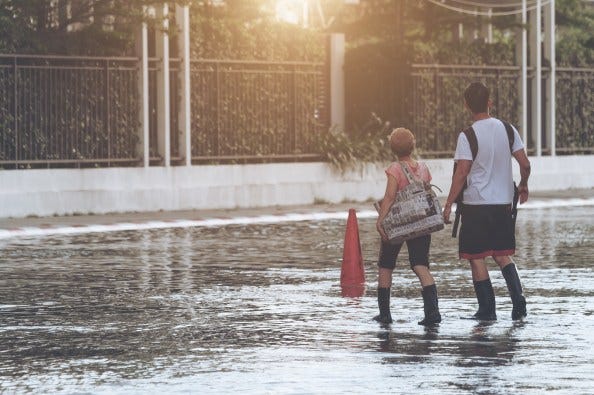
But our youth still need mentorship. The years of experience and resources of the older generations can’t be thrown away like an empty plastic bottle. Imagine what could be accomplished if tech savvy and ultra creative Gen Z were to team up with the vast experience and connections of Millennials, Gen X and Baby Boomers. What’s missing are the intergenerational bridges, those occasions to connect around projects that prepare communities for the droughts and storms. As part of an intergenerational team, our youth feel supported and our elders have a chance to leave them a better world. And all the generations feel valued in this exchange.
To bridge the generation gap, trust must be built. Many from the Baby Boomer generation are targeted for not doing enough to challenge the slow actions of our governments. However, many Boomers are taking action just like they did during the civil rights movements in the 1960’s and 1970’s. Organizations like the Elders Climate Action network, Moms Clean Air Force, and Third Act all have significant Boomer representations as they organize the youth in their communities to lobby congress and organize clean-ups. As Third Act President Vanessa Arcara said, “We have to assume that there’s significant power in the people who actually hold the resources in saying, ‘Enough is enough!’” Such efforts are showing the younger generations that there are elders who support their right to inherit a stable planet. They are actively advocating for Gen Z and our future generations, bridging the generation gap in the process.
Hope
According to the World Economic Forum, the vast majority of these young adults, including 93% in the United States and 84% in the United Kingdom, say addressing climate change is critical for the future of the planet. NASA reminds us that there’s still time left to mitigate global warming if we join our youth in redesigning our society. We can all draw inspiration from their passion to stand up for a more sustainable humanity. When facing the climate crisis, hope doesn’t come from just one generation. We won’t be saved by the richest generation, nor will a generation digital natives with the most social media presence be the lone heroes. True hope comes from unity of team made up of every living generation.
G. K. Hunter is the founder of GenUnsion, an online community that is bridging the generation gap in the era of Climate Change. He’s the Director of the PBS Documentary Sakura & Pearls: Healing from World War II, which exclusively captures a special meeting between US Pearl Harbor Attack Survivors and Japanese Atomic Bomb Survivors at Pearl Harbor. Hunter is the Author of Healing Our Bloodlines: The 8 Realizations of Generational Liberation, a guidebook on how to break free from the cycles of abuse. He is also a surfer.
References available at https://gkhunter.com/gen-z-mental-health/