Gen X’s Soundtrack Warned of a Looming Crisis of Unfettered Capitalism & Political Corruption
A Retrospective Analysis: How Music Lyrics Foreshadowed Our Current Socioeconomic Crisis
For the purposes of this article, Gen X refers to individuals born between 1965 and 1980. The music that was prevalent during their formative years spans a period from about 1969 to 1999.
talkin’ ‘bout my generation
— The Who (1965)
We Were Warned
Music has always been a powerful tool for social and political commentary, and it continues to be so in 2023. Specifically, the music listened to by Gen X has played a significant role in conveying social and political criticism of society today.
Gen X grew up during a time of significant social and political change, including the rise of neoliberalism, globalization, and the emergence of digital technology. Many Gen Xers found themselves alienated from mainstream society, and turned to music as a way to express their discontent and criticism of the dominant culture.
The 60s was a decade of social and political upheaval in America. It was a time of great change, marked by various significant events, movements, and cultural shifts. The parents of Gen X children were the advocates and catalysts of social change during the 1960s. It could be argued that as Gen X children, we were taught our perceptions of life through the perspective of our left-wing parents who were advocates of radical change.
At the age of 5, I was initiated into Transcendentalism and learned my very own meditation mantra. The fact that my mother had just returned from India, where she studied the teachings of Meher Baba, perfectly exemplifies the origins of the Gen X upbringing.
Yes, I am a Generation X’er.
In the 1980s and 1990s, Gen X musicians produced a wide range of music that reflected their experiences and perspectives. Hip hop, punk, alternative rock, and grunge were all genres that emerged during this time, and each of them had its own unique take on social and political critique.
Hip hop, for example, emerged as a way for young underrepresented groups of Americans to express their experiences of poverty, racism, and social marginalization. Hip hop lyrics often dealt with issues such as police brutality, drug addiction, and the criminal justice system, and the music became a powerful voice for social justice movements.
One example of a hip hop song that addresses social injustice is “Alright” by Kendrick Lamar. The song was released in 2015 and features lyrics that speak to the systemic injustices that black Americans face, such as police brutality and racial profiling. The chorus of the song, “We gon’ be alright,” has become a rallying cry for social justice movements, and the song as a whole has been praised for its powerful message and impact.
Punk and alternative rock, on the other hand, often criticized mainstream culture and consumerism. These genres rejected the slick, polished sound of mainstream pop music, and instead embraced a raw, DIY aesthetic that emphasized authenticity and creativity over commercial success. Bands such as Nirvana, Pearl Jam, and Soundgarden were particularly influential in this regard, with their music often dealing with themes of alienation, disillusionment, and social criticism.
At 15 years old, I attended my first grunge concert while visiting my aunt in Portland, Oregon. The experience was a raw and belligerent introduction to the unrefined nature of the genre. Although I have long forgotten the names of the bands, I’ll never forget that concert.

Fast Forward To Now
In the present day, music continues to be an important tool for social and political criticism. Gen Xers, who are now in their 40s and 50s, continue to produce and consume music that reflects their perspectives and experiences. New genres and subcultures have emerged, such as the resurgence of punk and post-punk, and the rise of alternative hip hop and electronic music.
The role of music in conveying social and political criticism of society today cannot be understated. Music provides a powerful medium for expressing dissent, criticizing dominant culture, and mobilizing social justice movements. As long as there are social and political issues to be addressed, music will continue to be a vital tool for critique and activism.
A prevalent theme in the music of the Gen X era was a criticism of the social, political, and economic systems that dominated American society. Specifically, many Gen X artists focused on the dangers of unfettered capitalism and political corruption. In their lyrics, they expressed concern over the growing economic inequality between the rich and poor, the concentration of wealth and power in the hands of a few, and the impact of these trends on the average person’s ability to live a fulfilling life.
The musicians of this era were not afraid to speak out against the corruption that they saw in the political system. Many of them were disillusioned with the establishment and saw it as a tool to maintain the status quo rather than work for the benefit of the people. Through their music, they called for a more just and equitable society, and challenged the idea that greed and self-interest should be the driving forces behind economic and political decisions.
The music of the Gen X era is characterized by a passionate and unapologetic criticism of the societal structures that they saw as contributing to the problems of their time. Their music remains relevant today, as many of the issues that they identified are still present in our society.

The Words of the Prophets
Many songs and lyrics from this period specifically addressed these themes, providing insightful commentary on the dangers of these issues.
For example, Pink Floyd’s “Money” from their 1973 album “The Dark Side of the Moon” is a scathing criticism of consumerism and greed. The lyrics condemn the power of money and the way it can corrupt individuals and societies alike.
Money, it’s a crime Share it fairly, but don’t take a slice of my pie Money, so they say Is the root of all evil today
But if you ask for a rise, it’s no surprise That they’re giving none away
— Pink Floyd, “Money”
Rage Against the Machine’s “Killing in the Name” from their self-titled 1992 album criticizes the systemic racism and police brutality that is often a result of corrupt political systems. But it also has a broader message about the way that power is used to oppress people.
Killing in the name of Some of those that work forces Are the same that burn crosses And now you do what they told ya But now you do what they told ya! Well, now you do what they told ya You justify those that died By wearing the badge, they’re the chosen whites Some of those that work forces Are the same that burn crosses Now you do what they told ya And now you do what they told ya (Now you’re under control) And now you do what they told ya
— Rage Against the Machine, “Killing in the Name Of”

Other examples of Gen X music that highlighted the themes of capitalism and political corruption include Bob Dylan’s “Masters of War” from his 1963 album “The Freewheelin’ Bob Dylan,” John Lennon’s “Working Class Hero” from his 1970 album “John Lennon/Plastic Ono Band,” and U2’s “Bullet the Blue Sky” from their 1987 album “The Joshua Tree.”
The song, “Working Class Hero” by John Lennon (1970) , criticizes the idea of the ‘American Dream’ and the myth that anyone can achieve success through hard work, arguing that the system is rigged against the working class. Those lyrics are more relevant today than they have ever been
Through their music, Gen X artists brought attention to the dangers of unfettered capitalism and political corruption, and provided a platform for social and political criticism. The specific songs and lyrics from this era that highlighted these themes continue to resonate with audiences today, serving as a reminder of the need for continued activism and change.
As a youth, I was introduced to high-pitched philosophy by Geddy Lee, starting with this particular lesson…
One likes to believe in the freedom of music But glittering prizes and endless compromises Shatter the illusion of integrity, yeah Invisible airwaves crackle with life Bright antennas bristle with the energy Emotional feedback on a timeless wavelength Bearing a gift beyond price, almost free For the words of the prophets Were written on the studio wall
— Rush, “The Spirit of Radio”
It’s like time played a trick on us and gave us the wisdom we need today decades ago. The notion of endless compromises rings true, as does the trade off of glittering prizes and the illusion of ‘almost free’.
Perhaps nothing is more ‘before its time’ than these lyrics:
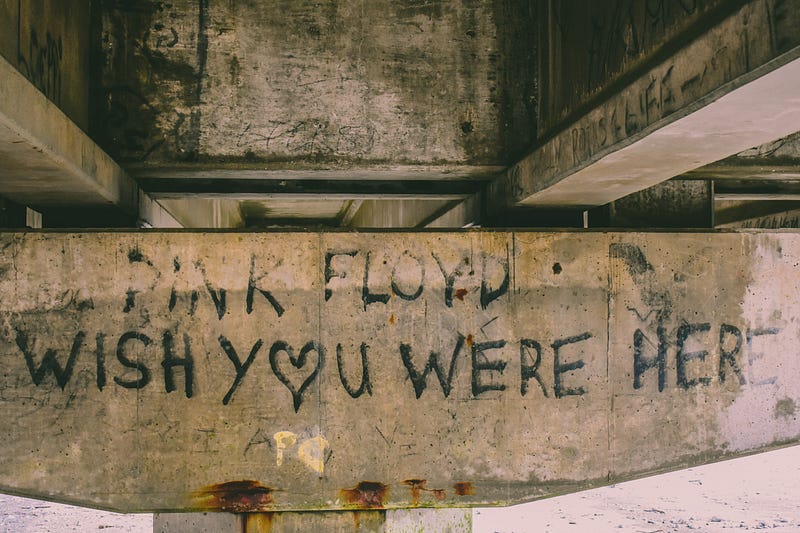
So, so you think you can tell Heaven from hell? Blue skies from pain? Can you tell a green field From a cold steel rail? A smile from a veil? Do you think you can tell?
Did they get you to trade Your heroes for ghosts? Hot ashes for trees? Hot air for a cool breeze? Cold comfort for change? Did you exchange A walk-on part in the war For a leading role in a cage?
— Pink Floyd, “Wish You Were Here”
Little did I know that life would surround me with that cage sooner than I thought possible.
Later, as I embarked on my journey into adulthood, I found Sting (Gordon Sumner).
You could say I lost my faith in science and progress You could say I lost my belief in the holy church You could say I lost my sense of direction You could say all of this and worse
Some would say I was a lost man in a lost world You could say I lost my faith in the people on T.V. You could say I’d lost my belief in our politicians They all seemed like game show hosts to me
I never saw no miracle of science That didn’t go from a blessing to a curse I never saw no military solution That didn’t always end up as something worse
— Sting, “If I ever lose my faith in you”
Sting once said to the International Herald Tribune, “If I were a Brazilian without land or money or the means to feed my children, I would be burning the rainforest too.”
That was as powerful a statement as one can make about the cause of climate change and the human engineered destruction of the planet.
If it were not for the profiteering of deforestation, it would not happen. People would not work for those companies if they had a choice.
Despite the popularity of the many songs from the 60s that called for radical change, society failed to demand the necessary transformation, leading to the persistence of many of the issues that we still face today.
Lesser know songs had some of the most important lessons.
We all figure that our homes are set above Other people than the ones we know and love In every place with a name They play the same territorial game Hiding behind the lines Sending up warning signs The whole wide world An endless universe Yet we keep looking through The eyeglass in reverse Don’t feed the people But we feed the machines Can’t really feel What international means In different circles We keep holding our ground Indifferent circles We keep spinning round and round They shoot without shame In the name of a piece of dirt For a change of accent Or the colour of your shirt Better the pride that resides In a citizen of the world Than the pride that divides When a colourful rag is unfurled
— Rush, “Territories”
Fans of Bad Religion will recount how society let them down. Their song “I Want to Conquer the World” advocates for a complete overhaul of the government system and starting anew.
Hey, Mr, Diplomat with your worldly aspirations Did you see your children cry when you left them at the station? Hey, Moral Soldier, you’ve got righteous proclamation And precious tomes to fuel your pulpy conflagrations
And I wanna conquer the world Give all the idiots a brand-new religion Put an end to poverty, uncleanliness, and toil Promote equality in all of my decisions
I want to conquer the world Expose the culprits, and feed ’em to the children Do away with air pollution, and then I’ll save the whales We’ll have peace on Earth and global communion
— Bad Religion, “I Want to Conquer the World”
Not a bad idea after all.

The Predictive Power of Music Lyrics
The warnings in the music of the Gen X era regarding unfettered capitalism and political corruption have proven to be prescient and continue to play out in our current socioeconomic crisis. The concentration of wealth and power in the hands of a few has only intensified, leading to widespread economic inequality and a growing sense of social unrest. The impact of neoliberal economic policies, such as deregulation and privatization, has led to a decrease in social mobility and an erosion of the social safety net.
Political corruption and the influence of money in politics continue to be major issues, with the political system being seen by many as serving the interests of the elite rather than the people. This has led to a growing sense of disillusionment and mistrust in government institutions, as well as an erosion of democratic norms and values.
The warnings in the music of the Gen X era are particularly relevant today, as we continue to grapple with the consequences of unfettered capitalism and political corruption. Through their music, Gen X artists provided a powerful criticism of these issues, calling for a more just and equitable society. The analysis of how their warnings have played out in our current socioeconomic crisis highlights the need for continued activism and change, and the importance of examining the role that music can play in shaping our understanding of the world around us.
Comparative Analysis: Then vs Now
When comparing the issues highlighted in the music of the Gen X era with the realities of today’s society, it becomes clear that many of the concerns raised by Gen X musicians have persisted and continue to shape our present moment.
The lyrics of Gen X artists often emphasized the dangers of economic inequality and the concentration of wealth and power in the hands of a few. This remains a pressing issue today, as the gap between the wealthy and the poor has only continued to widen, with a small percentage of the population holding a disproportionate amount of the world’s wealth.
Many Gen X musicians were critical of political corruption and the role of money in politics. In the present day, we continue to see examples of politicians and institutions being influenced by wealthy individuals and corporations, leading to policies that serve the interests of the elite rather than the common good.
Gen X artists were often concerned with the ways in which societal structures could contribute to feelings of isolation and disconnection. Today, we see these concerns manifesting in phenomena such as social media addiction, increasing rates of mental health issues, and a sense of alienation from political institutions and systems.
The issues highlighted in the music of the Gen X era continue to resonate in our present moment. Through examining the parallels between the concerns raised by Gen X musicians and the realities of today’s society, we can gain a better understanding of the roots of our current challenges and work towards creating a more just and equitable future.

Inspiring Activism
The messages in Gen X’s music remain relevant today and can serve as a source of inspiration for activism and social change. Through their lyrics and themes, Gen X artists often challenged the status quo, criticizing economic and political systems and calling for a more just and equitable society. These messages continue to resonate with people today, particularly among younger generations who face many of the same challenges and injustices.
The music of the Gen X era can serve as a catalyst for social and political action. Many of the artists and songs from this period have become anthems for social justice movements, such as Rage Against the Machine’s “Bulls on Parade,” which has been used in protests against police brutality and systemic racism.
Weapons not food, not homes, not shoes Not need, just feed the war cannibal animal I walk the corner to the rubble that used to be a library Line up to the mind cemetery now What we don’t know keeps the contracts alive and movin’ They don’t gotta burn the books they just remove ‘em While arms warehouses fill as quick as the cells Rally ‘round the family, pockets full of shells
— Rage Against the Machine, “Bulls on Parade”
The music of the Gen X era has continued to inspire social and political movements today. Many contemporary movements draw inspiration from the messages and themes found in the music of this period, as they continue to be relevant to the challenges and issues faced by people today.
The Black Lives Matter movement has used music to amplify its message of social justice and resistance to systemic racism. Songs such as Kendrick Lamar’s “Alright” draw on the themes of police brutality, racial injustice, and activism that were prevalent in the music of the Gen X era.
The movement for environmental justice draws inspiration from the music of the Gen X era, which often expressed concern for the environment and the consequences of human activity on the planet. Songs such as Joni Mitchell’s “Big Yellow Taxi” highlight the importance of environmental preservation and the need for action to protect the planet.
The music of the Gen X era continues to inspire political movements such as the fight for workers’ rights and economic justice. The Occupy Wall Street movement, which emerged in response to the global financial crisis of 2008, drew inspiration from the criticism of unfettered capitalism found in the music of Gen X artists such as Rage Against the Machine and Pearl Jam.
The “March For Our Lives” movement demanded stricter gun control laws after the Parkland, Florida shooting. My daughter participated in a #MFOL concert held on Maui Island. The concert featured a lineup of musicians that Gen X grew up with, including Lily Meola, Jack Johnson, Landon McNamara, Willie K, Marty Dread, Kris Kristofferson, Willie Nelson, Neil Finn, and Steven Tyler. The only exception was Lily Meola, who was born in 1995.
The music of the Gen X era remains a source of inspiration for contemporary movements that seek to challenge the status quo and create a more just and equitable society. By drawing on the messages and themes of this music, these movements are able to connect with the past while also creating a vision for the future.

Call To Action
In light of the insights gained from examining the messages of Gen X’s music and their continued relevance today, we need to reflect on the importance of this music and use it as a tool for social and political change in the present.
Reflecting on the criticisms made by Gen X artists can help us better understand the challenges facing our society and motivate us to take action. Whether it be through supporting social justice movements, engaging in political activism, or simply living our lives in a way that aligns with the values expressed in Gen X’s music, we can all play a role in creating a more just and equitable society.
Undoubtedly, music from other eras also holds significance for promoting social change and activism. In fact, there are many examples of recent music that echoes the same messages about today’s issues as the ones that emerged during the Gen X era.
We must not ignore the prophetic warnings in music about the dangers of unfettered capitalism and political corruption. The lyrics of popular activism songs speaks to the disillusionment and frustration of generations that saw their futures threatened by these systemic issues.
These same challenges persist today, but with an increased intensity and prevalence.
These songs are a rallying cry for social change and serve as a powerful tool for criticism and activism. Looking back on these lyrics now, it’s clear that they foreshadowed the socioeconomic crisis we face today, with growing income inequality, political polarization, and the erosion of democracy.
We must continue to use music as a means of expressing dissent, promoting social justice, and shaping a better future for all.
Note: While there are countless impactful activism songs from the Gen X era, due to the constraints of this article, I had to narrow my focus and only highlight a few of them.
Erik Blair is a jack-of-all-trades, with substantial experience and a vast array of tech skills. He’s been in the armed forces, worked as a cop, held a few different leadership positions, and is currently self-employed as a web developer, content writer, and dabbles in AI prompt engineering. Erik is a published author who contributes to a variety of publications; in his spare time, he also enjoys writing, traveling, photography, and technology.