Gas Prices Aren’t Just In Our Heads
Gas prices are in everything — as America’s city-dwelling journalistic class should remember.
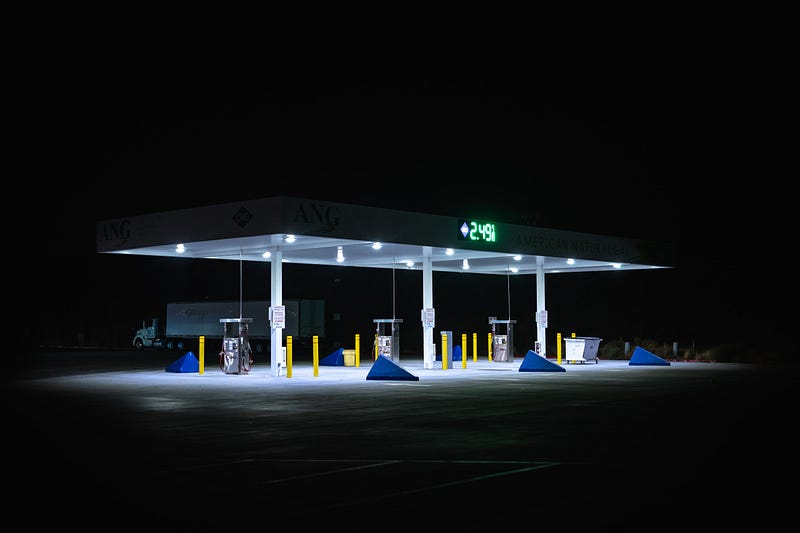
“How Gas Prices Get in Our Heads,” fretted James Surowiecki for the Atlantic this week. “
“Few things in life, it turns out, can make us feel gloomier than a spike in gas prices can,” began Surowiecki, gloomily. “But on the flip side, judging from the new consumer-sentiment numbers, few things can make us feel more optimistic than falling gas prices.”
After crunching a few numbers, Surowiecki seemed unimpressed with the impact gas prices have on the Average American Wallet. After all, he reasoned, when gas prices go up — even by two dollars — it doesn’t cost that much more to buy a tank of gas. So why are Americans so upset — in poll after poll — about spending a measly extra $60 a month filling up?
“The psychological impact of rising gas prices, then, is greater than their actual economic impact,” he mused. “Why? Well, the demand for gasoline is, at least in the short run, inelastic: People can’t significantly reduce the amount they drive in response to higher prices. And there is no substitute for gas: You can’t fill your tank with olive oil. So rising prices make people feel trapped and deprived of the ability to control their spending.”
“More important, because every gas station lists its numbers on a huge sign, the price of gas is impossible to avoid: Just driving around town means being bombarded with reminders of how much gas costs,” Surowiecki wrote. “When prices are rising, that’s guaranteed to bring you down. But when prices are falling, as they are now, you’re getting a subliminal message that things are improving.”
Yeah, or those who drive past signs displaying higher prices are smart enough to understand that the price of fuel — highs and lows — is baked into every single thing Americans buy, every day.
Journalists living in major cities can perhaps be forgiven for forgetting how much the things we buy are dependent on shipping. Two hours on any major U.S. highway would have revealed the 18-wheeled truth.
Much of what is on display at the grocery store, or being wrapped up for the Holiday season this year, had to travel hundreds, if not thousands, of miles to reach U.S. consumers.
And it isn’t as if American consumers have been given much choice in the matter. Over the past decades, a glut of over-globalization without adequate regulation has hollowed out American industries in the heartland from food production to manufacturing.
Respondents in polls who seem exceptionally grumpy about higher gas prices aren’t just being forced to drive several miles a day, as commuters in many U.S. cities do. Those living in “fly-over country” are often forced to live over 30 miles from their livelihoods.
American grocery shoppers can’t just elect to buy goods produced more closely to home that are therefore less costly to ship. Most of those old options went the way of Main Street decades ago and for the same reasons.
It was too hard to compete with low labor standards and lax environmental standards in the emerging nations that globalization-crazy corporations sought to exploit.
2023, and soon, 2024 is the inevitable result.
American consumers are grumpy and gloomy about gas prices because we understand that the price of fuel is baked into everything we buy — and we have no other choice.
Worse, we are gloomy because, going forward, there are likely to be more disruptions in global supply chains and fuel prices are likely to rise still further, and unpredictably.
The Chinese Communist Party hopes to take Taiwan without violence in the coming year, but that might not happen. The conflict between Israel and Hamas threatens to expand, as Houthis and other militant groups start to attack global supply lines.
The conflict in Ukraine is waxing on and could broaden into a wider conflict at any time.
Gas prices aren’t just in our heads.
Gas prices are everywhere.
(contributing writer, Brooke Bell)