
Garbage In, Garbage Out
Changing How We Think and Decide
Would you open an attachment to an email without knowing what it is, or who had sent it?
Of course you wouldn’t, because you know what happens when you let bad data into your computer?
Currently each year Business spends approximately $55 Billion in preventing security breaches or repairing the damages and losses caused by malware that entered their systems. (Webefx.com)
It’s just one form of GIGO — Garbage In, Garbage Out.
We install expensive software in our computers and office systems to prevent them from being corrupted and producing bad results. We constantly update and upgrade our hardware, so they are better and faster at computing, analyzing, and resolving myriad problems that we encounter in our daily business and professional lives.
We do this to stay competitive. To be efficient and effective. So we make the best possible decisions whenever and wherever we can.
And yet there is one “device” we possess, arguably more important and valuable than all the others, that rarely has such a concerted effort devoted to its safekeeping. To the prevention of “Malware” entering it and distorting decisions that will have a profound effect on our lives.
Our minds.
So, what software are you currently using to prevent garbage in, garbage out?
Evolution of Trust
Who do we talk to, when we don’t know? We ask our parents or friends, our teachers, our religious leaders, as we struggle to understand the problems that assail us every day and come up with the information vital for making correct decisions about them.
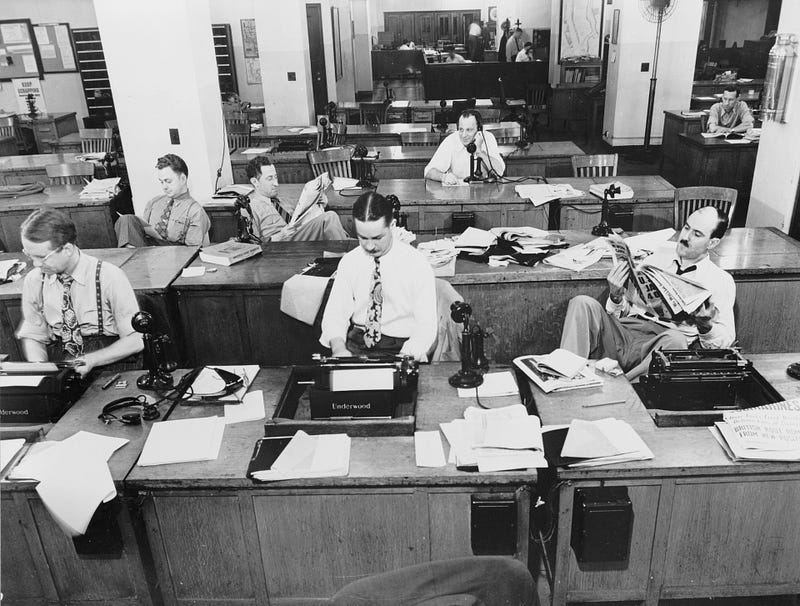
Before the Internet we read books. We sat before TV sets and radios and listened to the news. We opened newspapers and magazines to find out all about current events or what others were saying about issues that seemed important to us.
Today, we simply type in the search parameters in Google and let it fly.
Then, we vet this information carefully, by comparing it to original source materials and issue forth a stream of queries to everyone we can think of who will help verify what we are reading, before we use it to make a decision and only then do we act on it.
Not likely. Verifying data of this magnitude is daunting to say the least. But do we ever try?
Why is that?
I believe there are three distinct reasons why information on the internet is not vetted for accuracy before it is allowed online or into our minds.
1. Who would do it? Who would want to be held responsible for ensuring all information on the Internet was accurate or that the author/source, had at least made the effort to verify it? And who would pay for this?

2. Prior to the Internet’s emergence as a Major Source of information, newspapers, magazines, network television and other groups, had institutional measures in place to fact-check information being used for written stories and nightly broadcasts.
They employed the people, bought the books, made the calls necessary to verify the data before they released it. They did it because they were entrusted (and legally bound) to get it right or pass on it.
And over time, we respected them enough, and thought they were diligent enough, then we began accepting that information on face value. Somehow, and this is the tough part, this reliance on the veracity of publicly conveyed information has been transferred, mostly intact, over to Internet sources. Google and other search engines, and numerous social media platforms, have rightly or wrongly, become the gatekeepers of information before it reaches our eyes and ears.
3. The Internet is a very powerful tool in the world of persuasion and influence. Not just for the selling of millions of products and services, but in selling ideas, causes and political points of view. How do we allow free enterprise to flourish here, while simultaneously installing measures to prevent the dissemination of false or misleading information? Can these two concepts co-exist?
Google polices their data to some small extent. But are they fact-checking Uncle Arnold’s journal entries or the articles from Rightwingthing.org before they enter the search results? Not that I am aware of. And if they were, would we be okay with a single organization deciding which information should be allowed through?
We’re human and at times we hunger for agreement. For whatever reason we have become marginalized or feel out of the loop socially, so much so, that when we do come across information that matches our perspective or aligns amazingly well with how we feel about a subject or person, we tend to latch onto it without question.
It wasn’t like newscasters of old or our sainted teachers and librarians were infallible, but they were there. They took their jobs seriously (most of them) and they were, by default, our vetting systems and as a result, much of the stories and answers coming out had that ring of authenticity.
Today, can the same claim be made?
Would we be so concerned about information on Facebook and other social media platforms, being false and misleading and placed there intentionally to misinform us, if we had systems in place to catch it?
Do we have these systems and can we rely solely on them?
I personally, don’t know how to download Webroot or Norton Anti-Virus into my brain so that I can screen the information before it gets into my own algorithms and begins kicking out answers and decisions. Maybe others have processes in place to filter out bad data and keep in good data. But after viewing about 100,000 hours of recent TV news, videos, chats, interviews and the like, I’m thinking this is a continuing problem.
All I have, are the routines I have learned and “perfected” over time that I use to minimize garbage in and garbage out. They are supported, not by hardware, but by repetition. They are not infallible, but they are effective in reducing the amount of bad info from interfering with an already incredibly complex mechanism called the human mind. Perhaps they will be on some use to you.
We already know that information is easy to create and bear the hallmarks of authentic documentation.
Challenge
All data — at least initially. If it’s innocuous fluff about food, movies, TV shows, sex, celebrity mishaps, sex — then enjoy it. If it’s data you will be using to make a decision about your health, life, children, finances, mortgage or your next vote, challenge it first. Then prove to yourself by doing a little research that it’s good data and can be used. If it smells fishy, reject it and find other data that can be verified.
Grade
All data as superficial, relevant or vital. The higher the grade, the more important a role it plays in your life or career decisions, the greater the amount of time you need to spend verifying its source.

Compare
All data to other pieces of information that relate. Look for data that is consistent. That other sources keep pointing to as accurate, relevant or trustworthy. This is not an exact science, especially with the Internet’s ability to repeat itself. You are looking for a reasonable truth, data that holds together and has a ring of authenticity to it. That if you plug it into a question you have, the answer comes out reasonable as well.
Accept
Data that passes your initial grading. Relative priority of data is vital here. Which restaurant would be best for your kid’s birthday, versus what home and school district should you move into? The higher the priority for you, the greater the scrutiny the data should come under. Again, perfection is not the end result. Reasonable acceptance is the measure we are after. Don’t immediately accept what isn’t verified. Run it through the process first — then decide.
Act
On the data once verified. If you are as comfortable as you’re going to get, then pull the trigger. Your loan officer was recommended by your accountant and friend. You also found out that he was connected with a work associate who thought him diligent. Not the best communicator perhaps, but what he said, ended up being true. Short of putting him on a lie-detector, your data is verified.
Engage
With that area, subject or person, until something comes up to warrant a re-verification. Nothing personal, just due diligence.
Caveat: You grade information against a hierarchy of situations. What hotel to go to in Cancun is of lesser importance than which surgeon to use for your by-pass. The higher the priority, the more time you spend verifying the information. Unless you’re planning on putting things off forever, a decision will have to be made. These processes have proven workable in making a reasonable decision based on the facts.
We already know that information is easy to create and bear the hallmarks of authentic documentation. We also know that the amount of information out there available to us, is staggering. Creating an apparatus large enough, independent enough and trustworthy enough to vet all our information, while eliminating the bad and letting through the good, is equally staggering.
But if we all become a little better, a little more vigilant in vetting the information we personally use to make our everyday decisions, at least we’ll be minimizing the potential bad decisions we could be making and lessening our reliance on information “out there” that may be suspect.
Joe Luca is writer and editor for ILLUMINATION and a published author and writer of children’s stories, short fiction, non-fiction articles, screenplays and poetry. Publications include Child’s Life, Children’s Playmate and others. There are some other articles below — have a read. And thank you for stopping by.
George J. Ziogas, Paul Myers MBA, Michael Ritoch, Bill Abbate


