
‘Game of Thrones’ Has Two Vibes: Murder Orgy And Ominous Feast
And the new prequel serves up both, albeit unequally
George RR Martin’s Game of Thrones books are gripping but inconsistent, especially the last few freewheeling volumes. The books subvert romantic medieval fantasy stories, and Martin has grisly fun turning knights into bloodthirsty mercenaries and princesses into chattel. He bravely asks, “What if hobbits were sex-crazed lunatics?”
The first three books were excellent, at least. Pulpy, but smart. The series starts out as a twisty, cynical baroque opera that kills beloved characters in shocking ways, but as the saga progresses, the books become less disciplined, and the multiple narratives meander.
Martin’s final two books were wildly unfocused, including the last book he wrote, 2011’s ‘A Dance With Dragons’, which came out at the same time the HBO television adaptation premiered. One became a bestseller but the other an international mega-hit.
Martin has never finished writing his own series, and while he has, for years, promised to wrap up the epic he started, he allowed HBO to conclude his gory, soft-core fairy tale about dragons, zombies, and zero-sum politics instead.
I don’t blame the man. I mean, who wouldn’t pocket the cash and relax?
The truth is, Ned Stark’s surprise demise in Martin’s first tome and the Red Wedding in ‘A Storm of Swords’ are Game Of Throne’s dramatic pinnacles, and everything after that is either sex, violence, or whisperings in stairwells. This is also true for the TV show.
But the one thing he was consistent about over the course of his novels is the food. Martin loves writing about soup, that’s for sure. I’d say a third of the details in Game of Thrones are about what the kings and peasants of Westeros eat.
There are multiple cookbooks about this very same topic.
When you play the game of thrones, you’re always dramatically guzzling mead from tankards and gnawing on bones. The people of Westeros adore roast boar, lemon cakes, and thick, meaty stews served on trenchers of bread. Lamprey pies are a favorite delicacy in the seven kingdoms. What’s a lamprey? Here you go.
My favorite parts of these books are when our heroes have a moment to nosh pudding, mutton, or jellied calf brain. These moments have nothing to do with the plot, and Game of Thrones is nothing but who is stabbing whom in the back. But Martin always returns to quails drowned in butter or crabs boiled in spices. The man loves uncomfortable sex scenes and the quaffing of ale. Game of Thrones has two vibes: murder orgy and ominous feast.
This brings me to the new Game of Thrones prequel, House of Dragons, which is a couple of episodes old now (there will be 10 in total) and already a rousing success, which should surprise anyone. The original’s series finale was controversial, which is pretty standard for cultural phenomenons. The more popular a show, the greater the chance that its conclusion will be mocked on social media. You just can’t please people nowadays.
House of Dragons was cooked by executives to appeal to diehard and casual fans of Martin’s nasty little fantasy without the baggage of the original. Set 172 years before the birth of Daenerys Targaryen, House of Dragons lacks the fussy charisma of Peter Dinklage’s Tyrion and noble Brienne of Tarth, played by Gwendoline Christie. Winter isn’t quite coming yet. House of Dragons is pure uncut faux-medieval politics, The West Wing meets Conan The Barbarian. And, like Game of Thrones, House of Dragons has plenty of gross, pervy moments.
The first episode features a gut-wrenching birth scene, and, later, Matt Smith’s evil prince gives a speech during a sex party that stops the revelers mid-thrust. So far, so good.
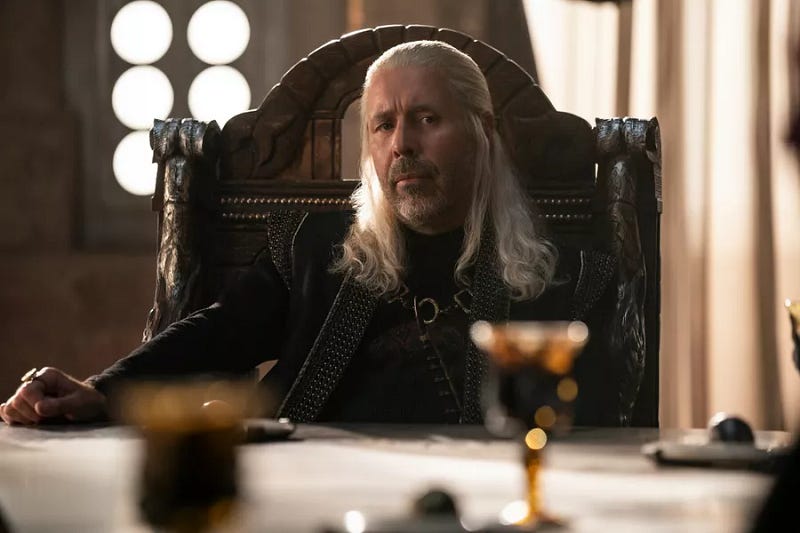
I wasn’t sold, however, until the second episode when we get our first dinner scene between two important characters, namely Paddy Considine’s dopey King Viserys and his daughter and heir to the Iron Throne, silver-haired Rhaenyra, played by Milly Alcock. Sure, in the pilot episode, there’s lots of wine pouring and wine drinking, but I had to wait a week or a scene where characters stabbed food with forks, chewed thoughtfully, and slowly gulped from goblets.
That’s all I want. Portentous meals between ambitious two faces. A few weird sex scenes. A dragon roaring, a couple of double-crosses. Nothing fancy, and that’s House of Dragons. It’s real meat and potatoes stuff.


