Game Changing Filmmaking in Succession: An Example Of What Brilliant Camerawork Can Do
A perfectly crafted TV show idea brought to life through excellent cinematography
A critically acclaimed drama series on HBO, “Succession,” which explores themes of wealth, power, and family dynamics, became one of the top shows on television and a collective force in the entertainment industry.
How?
To everyone’s surprise, it took a team of filmmaking individuals who had the unique instincts on how to capture the best shots in their full essence and energy. An expert eye, camera shots, zoom-ins and out, perspective, and rack focus are what “Succession” owes its success to.
Deliberate Approach to Camera Angles
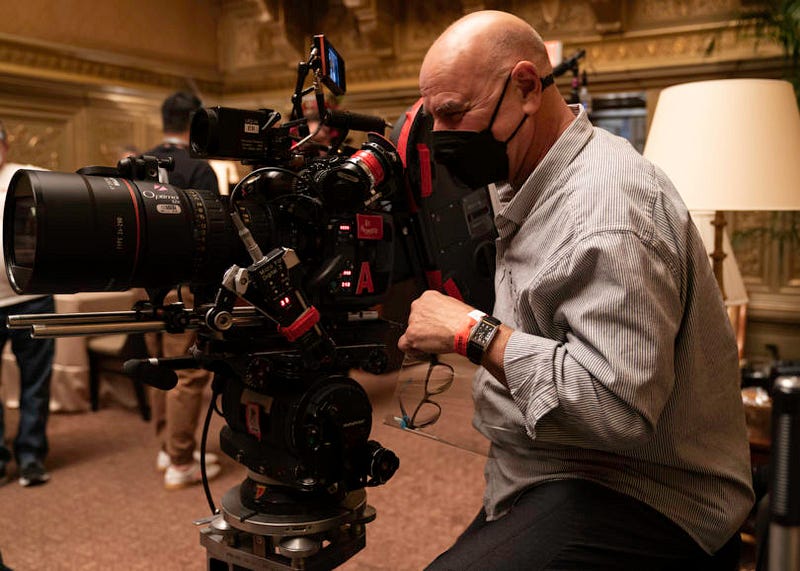
“Succession” on HBO takes a thoughtful and thorough approach to its perspective and lens research, which improves the series’ visual storytelling.
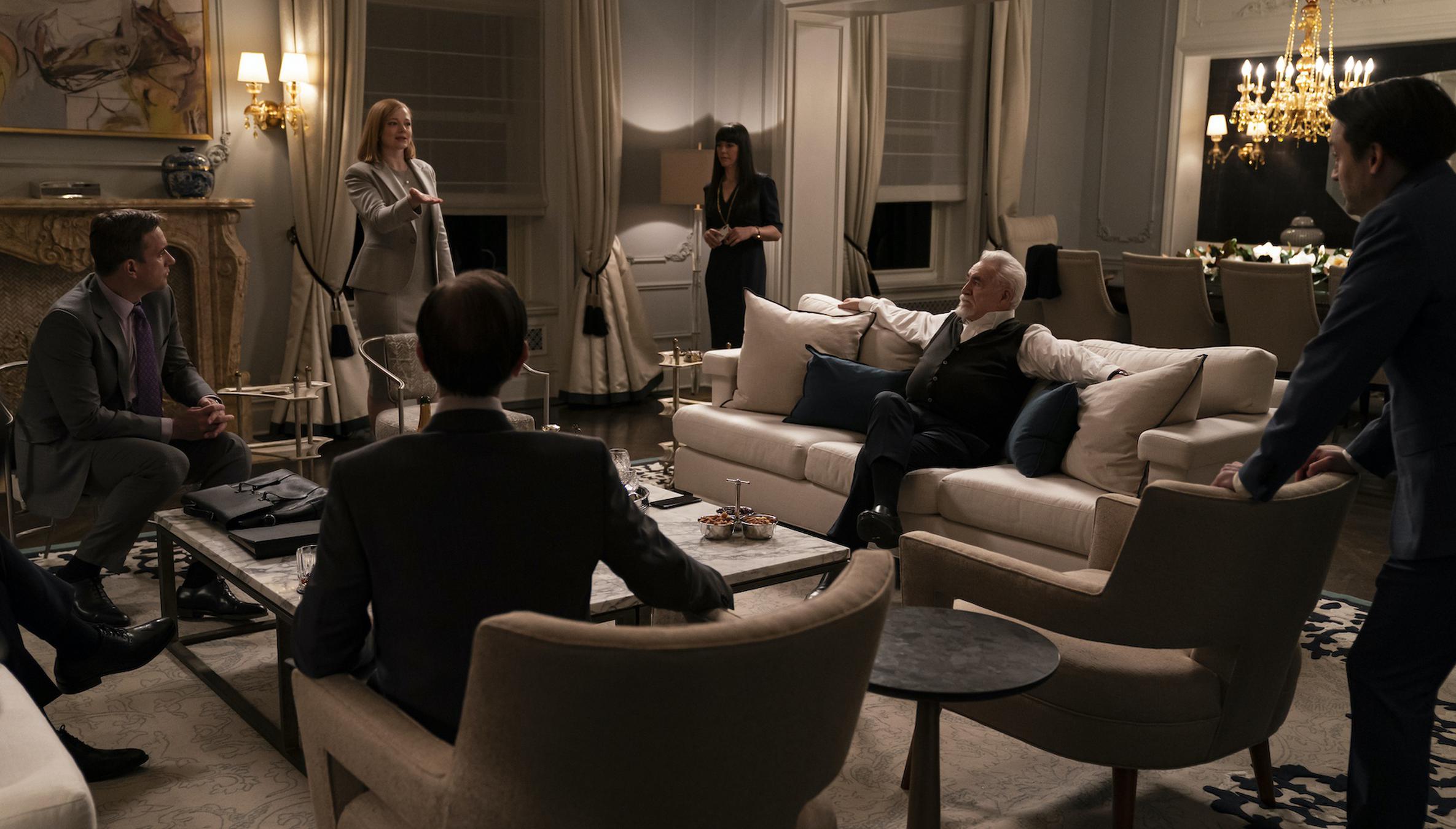
Succession frequently uses wide views to convey the grandeur and wealth of its surroundings, such as opulent boardrooms or expansive estates. A witty and clever move from the cameraman, of course.
These images draw attention to the characters’ riches and influence, elaborately adopting a fictional theme. Close-up views are commonly used to convey the characters’ complex faces and feelings. These images connect viewers closer to the people and their goals.
Flaws that are not Flaws
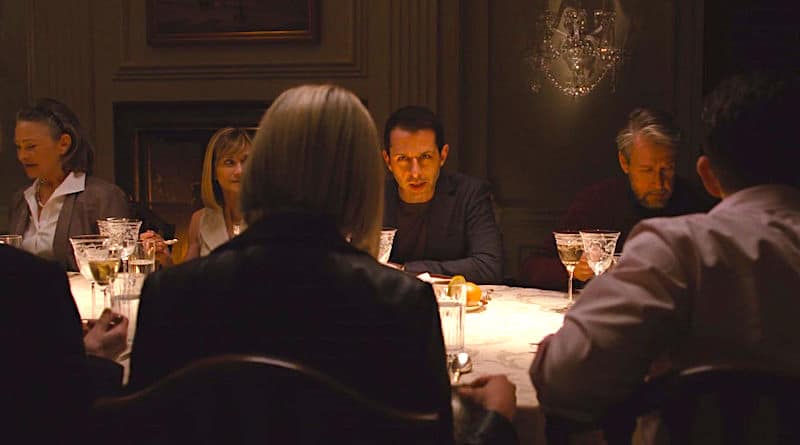
Grouped with intense dialogues and demanding scenes, the show incorporates flawed camera angles that aren’t actually flawed. Guess the fact that “flaws make one more beautiful” does not just apply to humans. These flaws in “Succession” include camera perspective so precise that it gives off the presence of an absent character in the scene.
The camera operator captures the scenes in such a way that the absence of a character that is temporarily not in the shot isn’t felt by the viewer, and the unconscious mind of the viewer is completely indulged in the storytelling tactics of the shot.
This trick is genius.
Responsive and Observational Cinematography
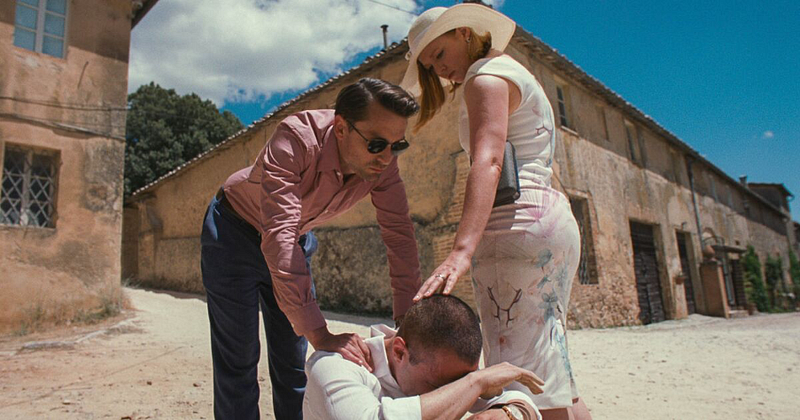
For one of the most captivating tiny screen shows on HBO, it is very surprising that “Succession” seems as energetic as it does despite the fact that almost every scene of the show is immensely popular but consists of simply two people chatting, generally while sitting in an upscale but discreet flat.
Most of the series’ visual language is comprised of talks that seem urgent and thrilling. And a significant reason behind it is that the show treats the camera like a character.
Yes, a character.
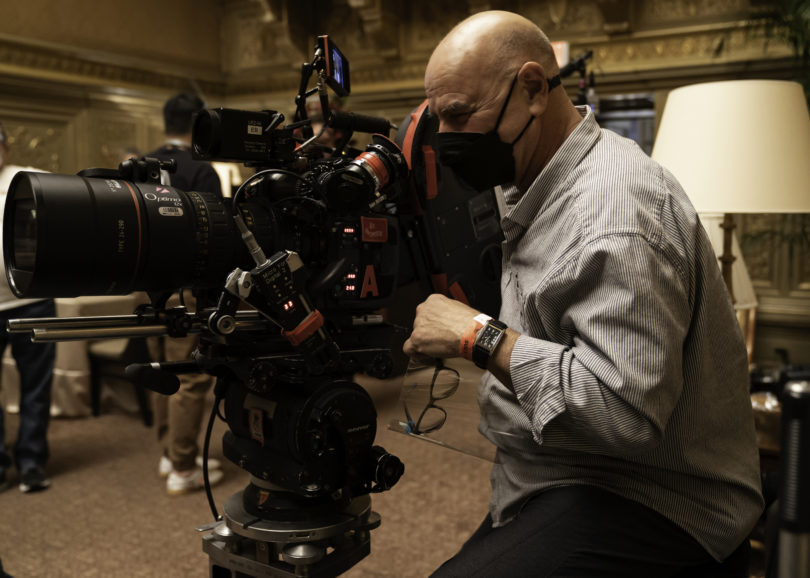
The directors of the show have treated their camera as a character, and through that character’s eye; we are all able to see what he sees. The camera on the show is responsive, it gets off-guard at times and is repulsive and doubtful, too, but most importantly, the camera itself gets shocked by the scenes captured through its lens.
Not only the viewers but the camera as well is in utter surprise by its abilities, and that is precisely why the otherwise deemed imperfect cinematography of the show works perfectly for it.
The Subjectivity of the Shots
The show employs a variety of camera angles and perspectives that not only enhance its storytelling but also take the viewers along on this journey. According to the show’s cameraman, the camera, too, just like its characters, has a subjective personality.
Consequently, what the camera shows us without getting into the faces of the characters in the narrative of a person in the same room sitting at the same table as them, a person who sees it all, knows it all, and shows it all without even saying a word. Unlike the characters on the show, the camera is a character who does all the talking by not saying but displaying.
Iconic Camera Style
A quite surprising fact about the series is that Succession was shot on a film camera.
Since its first season, the show continued to be shot on Kodak 35mm negative, with underexposure to soften the contrast. The cinematographers Christopher Norr and Patrick Capone have efficiently maintained the essence of filmmaking in the show by staying true to the texture and analog of the series.
To preserve the appearance of the film, a specialized film print emulation, “LUT,” is employed in the grade. Furthermore, the show has used a multitude of camera tactics like tracking shots, wide shots, over-the-shoulder shots, handheld cameras, and low and high-angle shots, etc., to accentuate the taste it’s giving to the viewers.
Chaotic Cinema Work
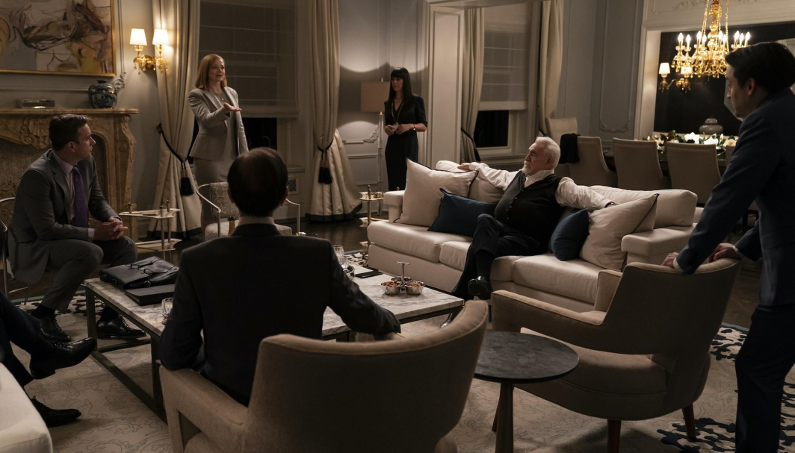
The cinematography of the series is as fast and cutthroat as its dialogue. Of course, one has to complement the other in order for the pair to work, but the chaotic and rushing style of filmmaking is what makes Succession stand out.
In the words of the show’s director, “Succession” abhors the conventional documentary style of filmmaking and adopts a less photojournalistic approach that is more raw and real, yet fictional. The visual language of the show evolves in every episode to retain the dramatic effect it has on the viewer. This absorbing impact of the show is so magnetic that one wouldn’t want their attention to trot the other way.
With due credit to acting and writing, the cinematography in Succession has currently made it hands down the standout show on HBO. A unique vision, tight-knit crew, and spectacular perspective are what it takes to bring a television show to such heights.
Succession, therefore, tops the list when it comes to not just great delivery but excellent filmmaking, top-notch editing, and elaborately planned sequencing.
If you haven’t watched the show yet, this is a very public and unofficial recommendation to grab your snacks and play the show, effective immediately.