avatarMr.Milano

Free AI web copilot to create summaries, insights and extended knowledge, download it at here

821

Abstract

ays are blowing there, some of which have high energies — and therefore, we can’t even imagine a life that would withstand such conditions, writes “National Geography”.</p><p id="0996">Again, the periphery of the galaxy lacks the elements necessary for the formation of living organisms, and life has nothing to do with it. And we are in the golden mean between these two extremes and we are about 26,000 light years from the center of the galaxy. But where?</p><figure id="bcc5"><img src="https://cdn-images-1.readmedium.com/v2/resize:fit:800/1*Ua288Txii4HhHqArtd2Ang.jpeg"><figcaption><a href="undefined">NASA Solar System</a></figcaption></figure><p id="7945">The Milky Way is a disk of stars 100,000 light-years in diameter and about 2,000 light-years thick, containing between 100 and 400 billion stars — it is not k

Options

nown exactly how many. In the center is a bar made of stars. Shorter stars twist out of it. There are four primary and several secondary ones. We live in one, on its inner edge between the two primary arms: the arm of Sagittarius and the arm of Perseus. We called our arm the Orion-Kignus arm, or more simply the Orion arm.</p><p id="a203">This branch was named after its position observed from the Earth. In the winter nights in the clear sky, we can easily see the giant and one of the most beautiful constellations, which was named after the mythical hunter Orion in ancient times. And in that constellation, observed from our planet, we see many bright objects that belong to distant areas of the Orion branch. Orion’s arm is wide, as astronomers estimate about 3,500 light-years, and over 20,000.</p></article></body>

Galactic Cadastre: Where exactly is the Sun, and where are we

The sun with its world of planets, including our Earth, is in an ideal place in the galaxy. We say that it is ideal because that very place allows us to exist.
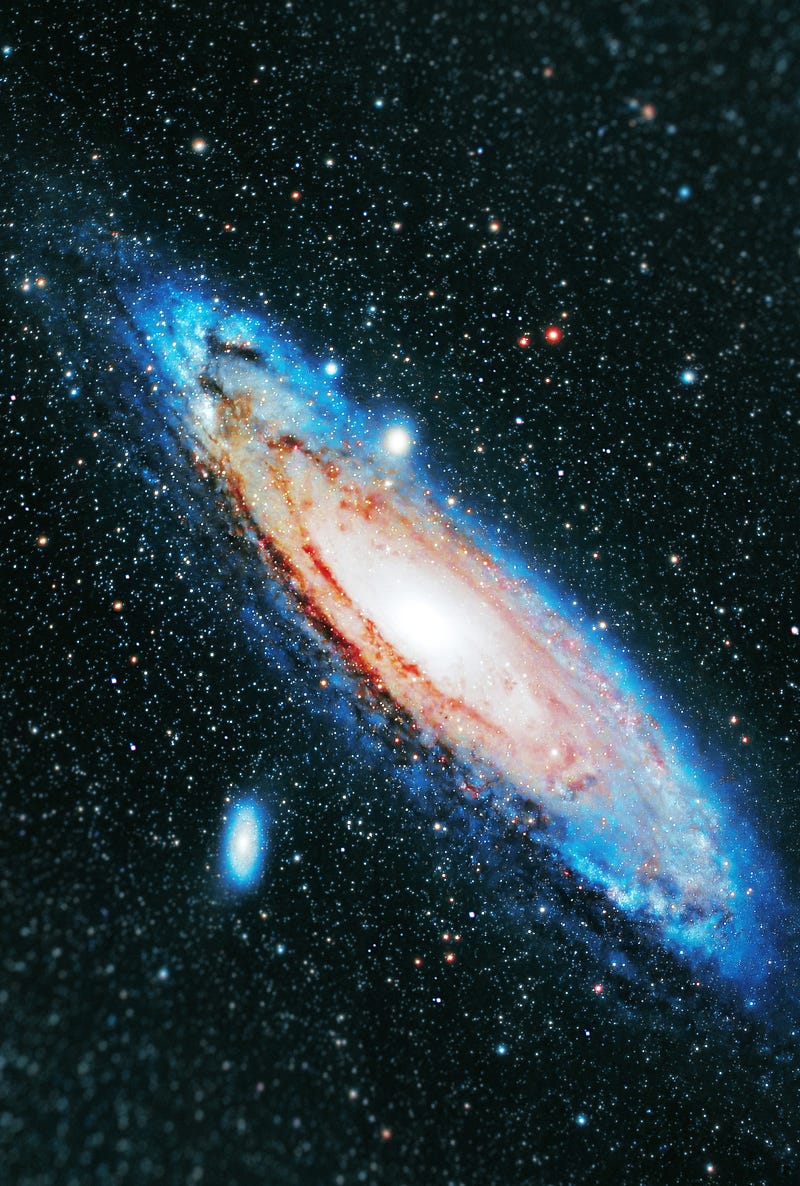
Photo by Tengyart on Unsplash

At the center of the galaxy is a galactic core with a giant black hole and densely set stars. That space is filled with a lot of radiation and life can hardly be there. Strong stellar winds and all possible rays are blowing there, some of which have high energies — and therefore, we can’t even imagine a life that would withstand such conditions, writes “National Geography”.

Again, the periphery of the galaxy lacks the elements necessary for the formation of living organisms, and life has nothing to do with it. And we are in the golden mean between these two extremes and we are about 26,000 light years from the center of the galaxy. But where?
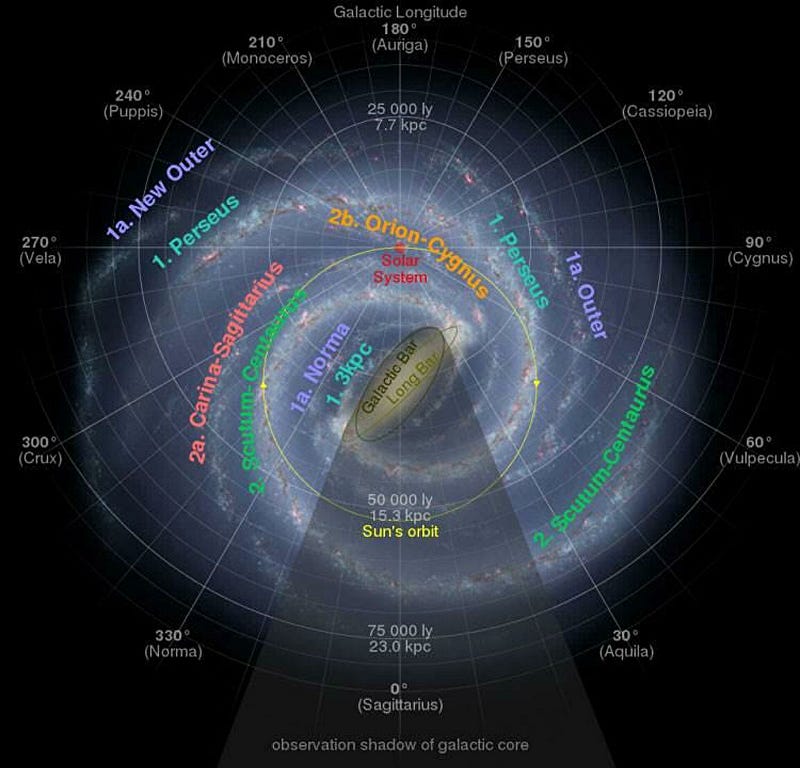
NASA Solar System

The Milky Way is a disk of stars 100,000 light-years in diameter and about 2,000 light-years thick, containing between 100 and 400 billion stars — it is not known exactly how many. In the center is a bar made of stars. Shorter stars twist out of it. There are four primary and several secondary ones. We live in one, on its inner edge between the two primary arms: the arm of Sagittarius and the arm of Perseus. We called our arm the Orion-Kignus arm, or more simply the Orion arm.

This branch was named after its position observed from the Earth. In the winter nights in the clear sky, we can easily see the giant and one of the most beautiful constellations, which was named after the mythical hunter Orion in ancient times. And in that constellation, observed from our planet, we see many bright objects that belong to distant areas of the Orion branch. Orion’s arm is wide, as astronomers estimate about 3,500 light-years, and over 20,000.

Science
Technology
NASA
Life
Tech
Recommended from ReadMedium