
G20, Temples, History and Sacred Water Bodies — My Dream Trip to Jammu (Part 1)
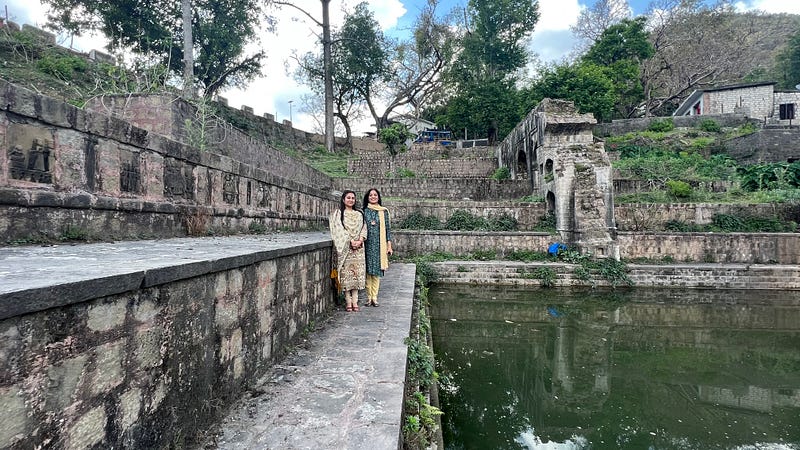
More than 30 years ago, when I visited Jammu and Kashmir with my family, I had little idea that the state will be rocked by a genocide of Hindus leading to their exodus from the Kashmir valley. With a neighbouring country perpetually sending terrorists across the border, the beautiful land, once an ancient centre of learning became a dangerous place for tourists. A heavy deployment of the army and police helped to keep the state from disintegrating into chaos. In recent times, after the abrogation of the controversial Article 370, the region has been divided into two union territories and administrative reforms are just beginning to show results in the form of reduced corruption, better transparency and upliftment of the economy.
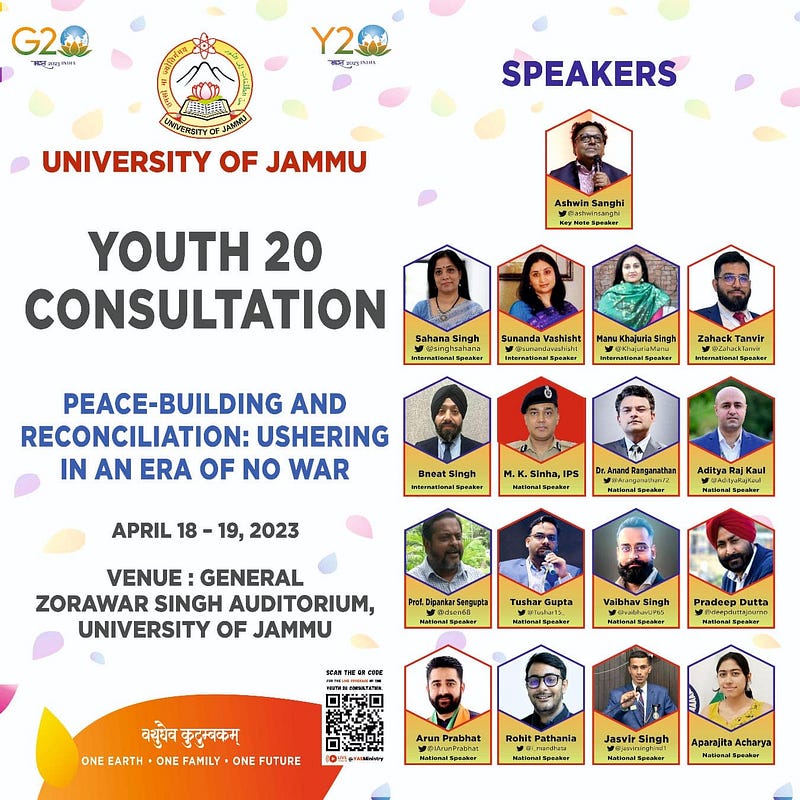
It was with much delight that I learned that Jammu and Kashmir would be hosting G-20 events this year and what’s more, I was invited to speak as an international panelist at a Y-20 consultation at the University of Jammu.
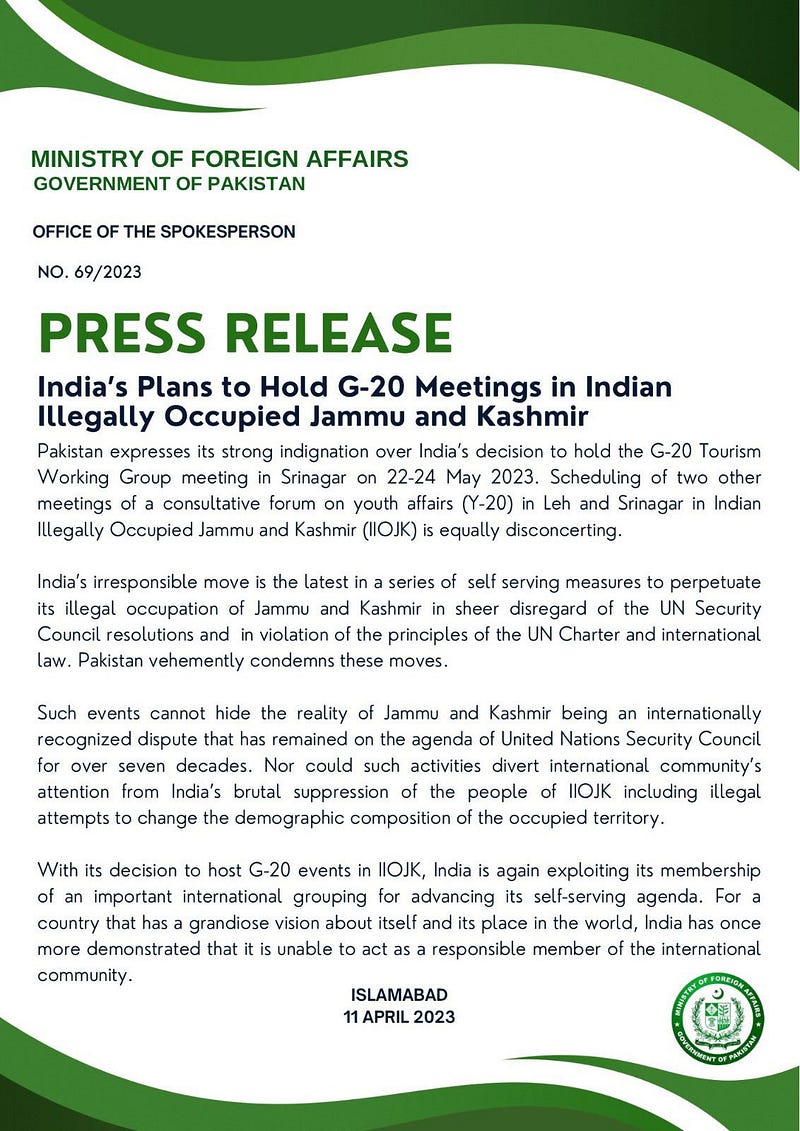
The announcement of the G20 event caused much consternation in the neighboring country which has been a terror hub for a long time. Of course, that did not stop India from going ahead with the gatherings and consultations.
I was received at Jammu Airport by two young people from the university. Though they were bright and bubbling with energy, I learned that they had grown up in the shadow of violence. They recounted that many of their relatives had died during the dark days of widespread terrorism in the 90s. Even marriage processions would be attacked.
After a short rest at the hotel, it was time to attend an evening cultural programme and dinner. The lively songs reminded me of Punjabi folk music; and I wondered if there was some connection.
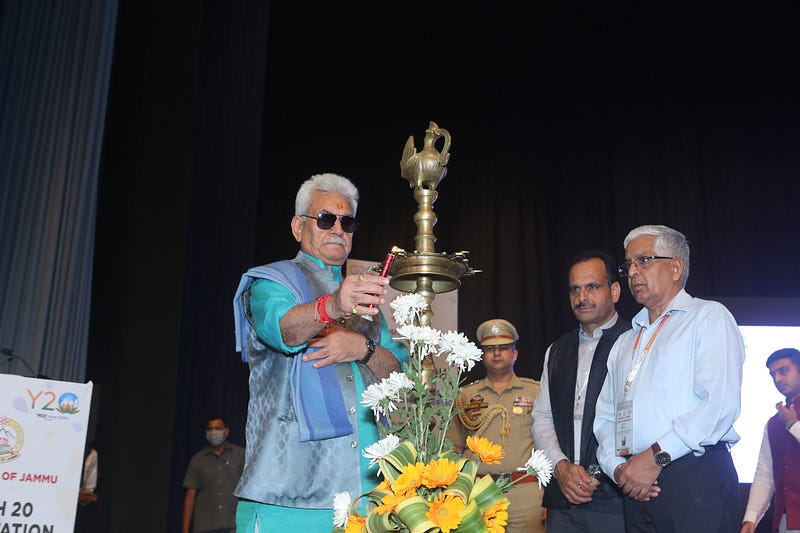
On the next day, there was a grand inauguration of the event by Shri Manoj Sinha, the Lieutenant Governor of the Union territory of Jammu and Kashmir, which was conducted amidst high security.
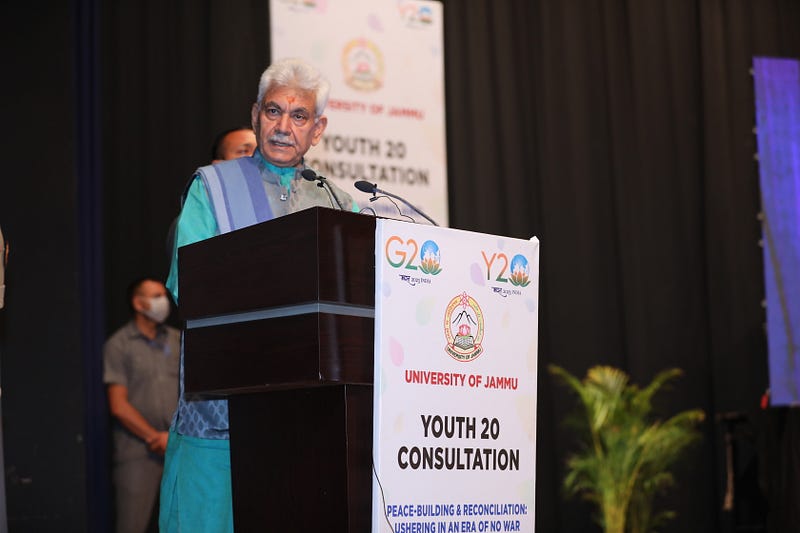
At the panel discussion on youth empowerment that I was a part of, I spoke about the need for psychological counselling and therapy for the inter-generational trauma that the youth of Jammu is experiencing. However, I stressed that the counselling needed to be rooted in Indian knowledge traditions.
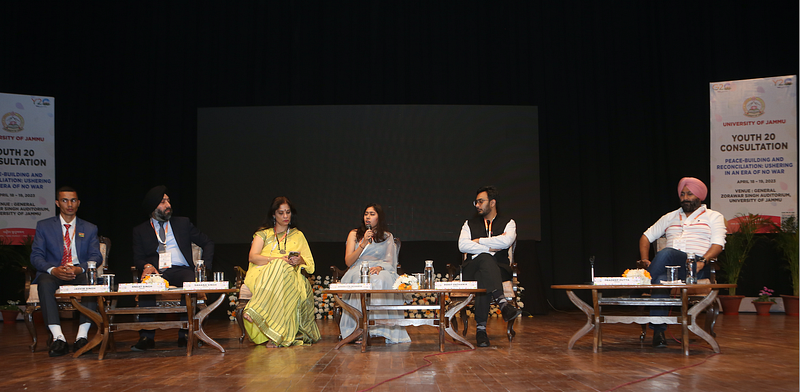
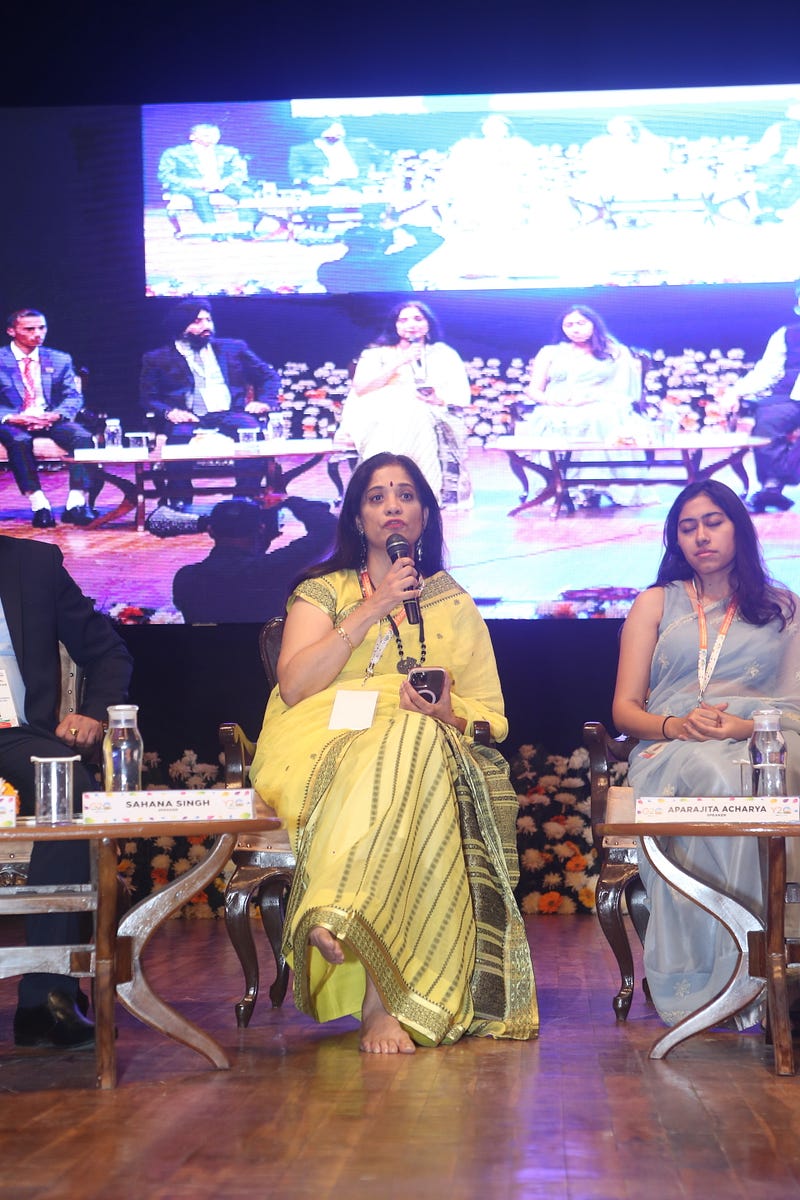
When organizations such as the UN talk about youth empowerment, they use catchwords such as inclusion, building capacity, and increasing resilience of the youth. But when I look at it from an indigenous perspective then I think that empowerment must happen at a civilizational level. It has to go to the core of our civilization and who we are as people.
If we keep aside the conflicts from the past 600–700 years, then the region has been one of the foremost centres of learning for thousands of years. If one connects to the huge reservoir of ancient Indian knowledge that has come down to us over millennia, it offers many pathways to empower oneself and get liberated from any emotional burden one is carrying. I made a call for holistic education for our youth which is rooted in our Indian knowledge tradition and helps to develop not just the academic side but the artistic side, along with critical thinking, physical strength (with martial arts like Kalaripayattu), entrepreneurial skills, and hand skills (making things). There were many questions from the young audience which led to good discussions. I often had to blink to believe that an international conference of such a magnitude was taking place in Jammu. All the panel discussions were thought-provoking and informative. The professors, staff and students of the University of Jammu played an excellent role in hosting delegates. Many Indian and foreign students studying in different Indian universities made their way to the conference and participated wholeheartedly.
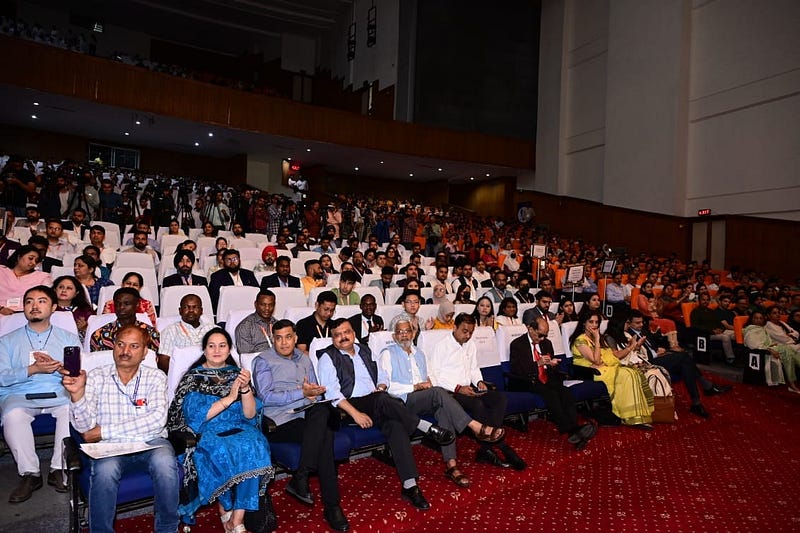
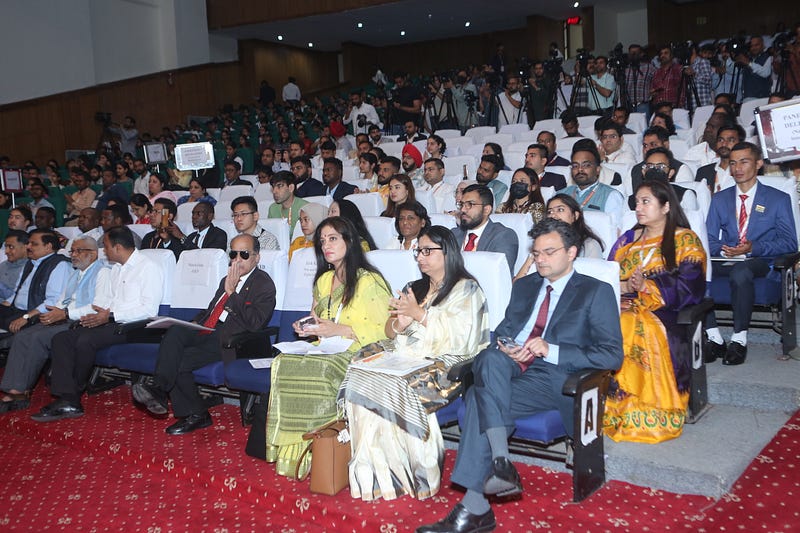
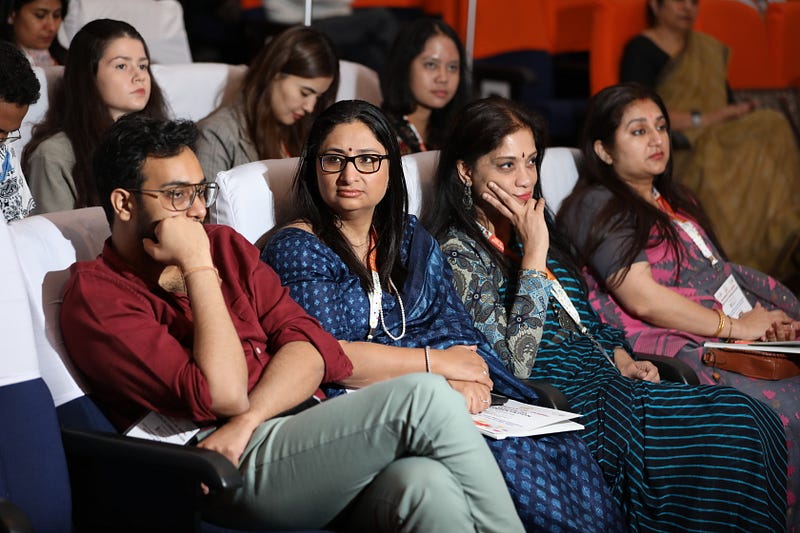
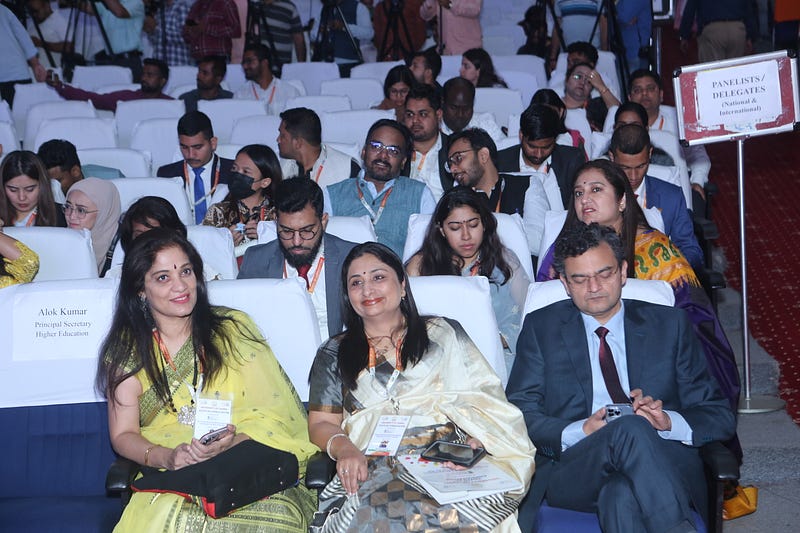
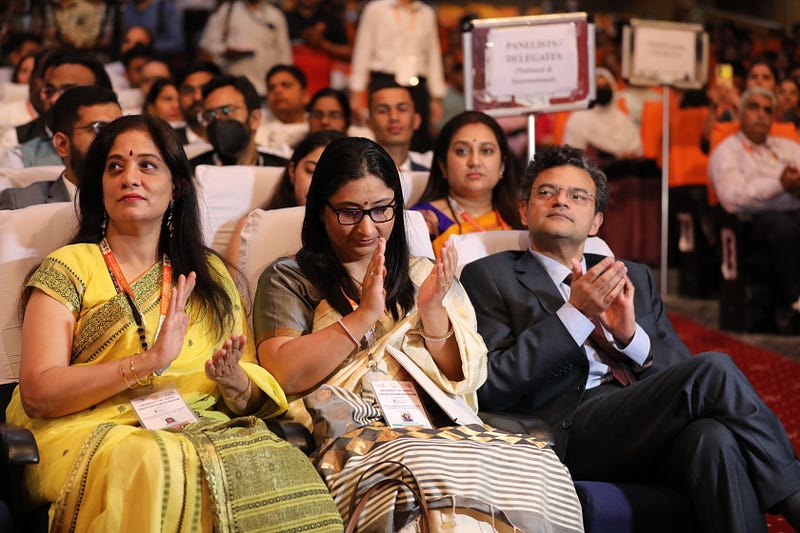
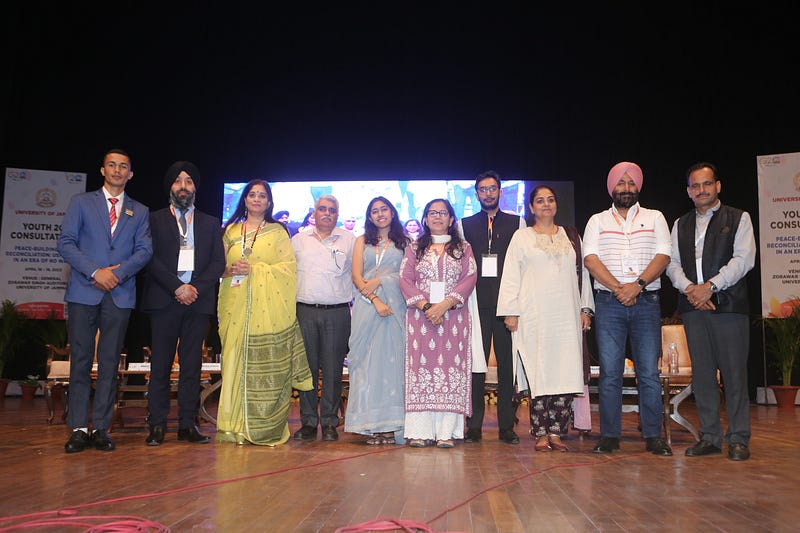
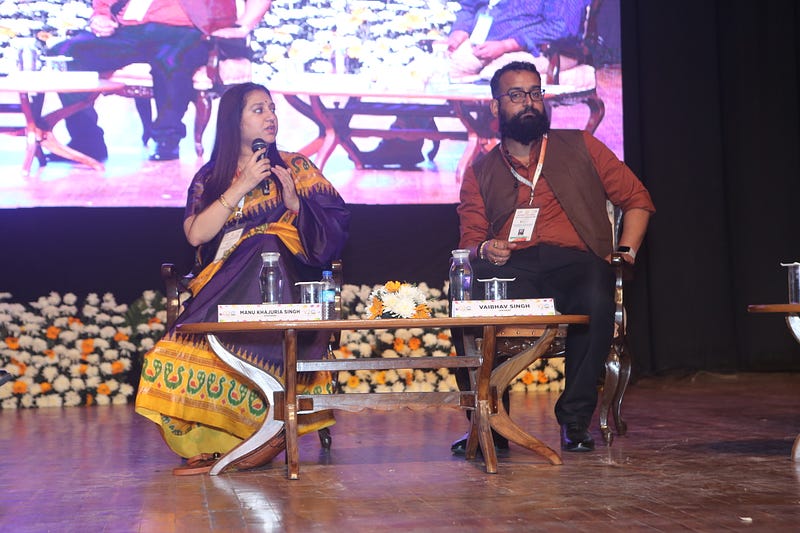
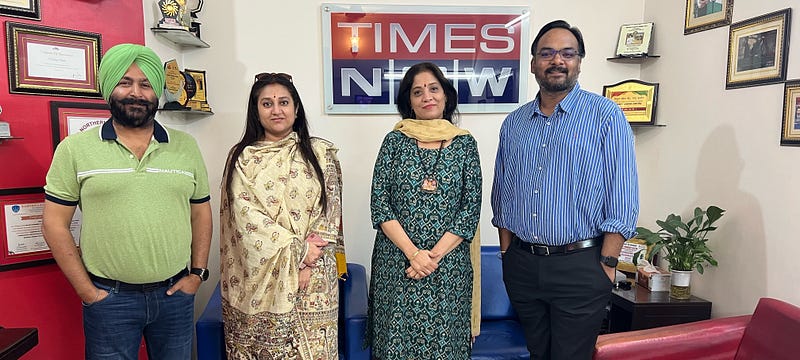
I was delighted to catch up with delegates who were my friends such as Sunanda Vasisht and Anand Ranganathan. Others I met for the first time were Manu Khajuria Singh, author and Dogra activist from the UK, Ajay Kashyap, convenor of India’s Y20 Secretariat, Tushar Gupta, Senior Editor of Swarajya, podcaster Rohit Pathania, Prof Dipankar Sengupta, Zahack Tanvir, a thought leader from Saudi Arabia and Aditya Raj Kaul of TV9 network. It was wonderful to meet Pradeep Dutta of the Times Now TV channel who ably moderated my panel. He invited me and others to his office the next day for lunch. His patriotism and genial demeanour invoked memories of my Sikh neighbours in West Delhi with whom I spent my early childhood.
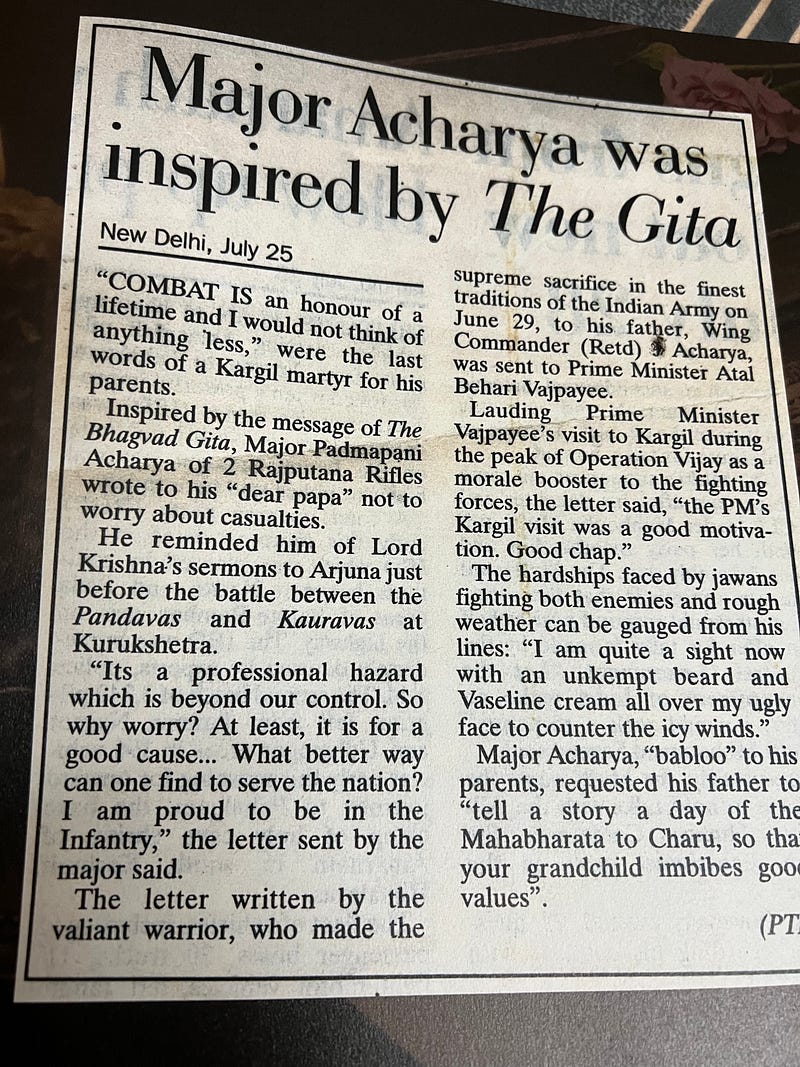
Also on my panel was Aparajita Acharya, daughter of the late Major Padmapani Acharya who made the ultimate sacrifice during the Kargil War for which he was posthumously awarded the Maha Vir Chakra in 1999. Ignorantly, I asked if she had any memories of her father. But I bit my tongue when her answer reminded me of the news headlines about the brave soldier’s passing. Aparajita was in her mother’s womb when Pakistan invaded the Kargil district in Jammu and Kashmir. After a fierce retaliation put up by the Indian Army in which one of the operations was led by Major Acharya, the Pakistanis were flushed out. But Aparajita never got the chance to see her father. She told me she was soon planning to go to Singapore for higher studies and I made a mental note to contact my friends who could look out for her.
I also struck a bond with Manu Khajuria Singh who showed me around Jammu from the perspective of a local. She grew up in Jammu and had deeply studied the history of the region. The first place she took me to was the temple of Baawe Wali Mata, the presiding deity of Jammu City. It felt so traditional and appropriate to offer my respect to the Devi before seeing any other place in the region. The temple was located inside the Bahu Fort and I was surprised to find it very neat and well-kept. There were no crowds at all and we could sit comfortably after darshan and feel the spiritual vibrations of the place. Manu gave me lots of nuggets about the Dogra community which inhabits Jammu, northern Himachal Pradesh and parts of Punjab. It was a revelation to me that the Brahmins of Jammu were so different from the Kashmiri Pandits.
Baawe Waali Mata is none other than Kaali Ma herself. Manu told me about the tradition of Shakti worship amongst Jammu kings and even army men. Army veterans have an interesting story about how the deity is believed to have protected Jammu during the air raids by Pakistan in 1965 and 1971. The invading Pak pilots who wished to bomb Jammu could see nothing beneath but the faint outline of a bridge with a little girl holding a lamp which confused them completely. Thus, Jammu city could not be bombed. What a lovely story of a Kshetrapaala!
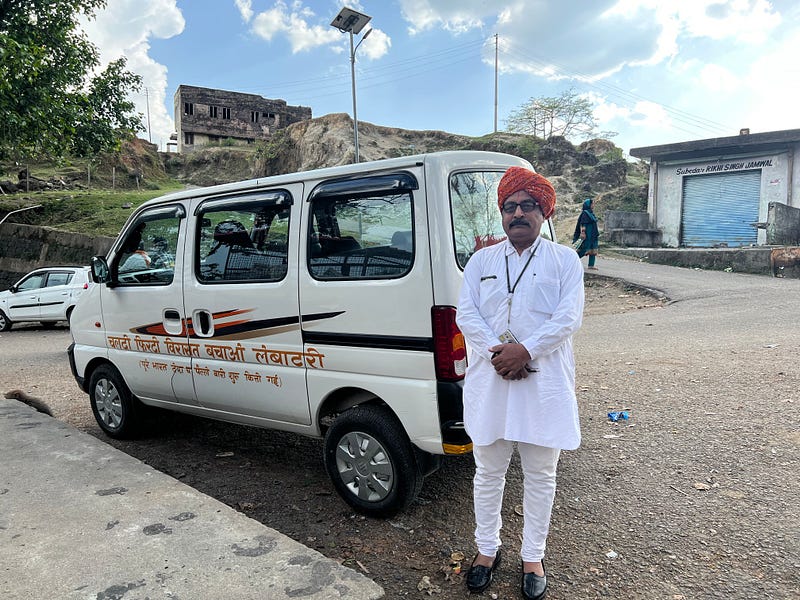
One of my friends, Venus Upadhyay had once sent me intriguing pictures of water bodies called Baolis in Jammu, far away from cities and held sacred in bygone times. When I told Manu about my desire to see the sacred water bodies of Jammu, she said the best person to show us was Shri Kirpal Singh Dev who was strongly committed to preserving Jammu’s heritage. She made the arrangements for Kirpal ji to come to our hotel. To my surprise, Kirpal ji revealed himself to be my Facebook friend! He said he had been following me for a while and saw my posts about being in Jammu but was not sure if I would have time to meet him. What a coincidence! Full of enthusiasm, Kirpal Ji drove us in his van. As he drove full throttle towards the hills, we crossed the Tawi River and left the city behind.
Kirpal Singh ji explained to me the concept of Mohra or memorial stones that were a part of Jammu’s culture. These Mohras could symbolize either a heroic person or a deity or a dead ancestor. Martyrs who laid down their lives for a cause, women who followed their husbands in death by self-immolation (Sati) or ancestors who died unnatural deaths were all commemorated by communities via Mohras. It seemed to me that this was the same culture that binds us to Harappan times and beyond and can be found in many other places in India. On googling, I found an interesting paper on Jammu’s memorial stones.
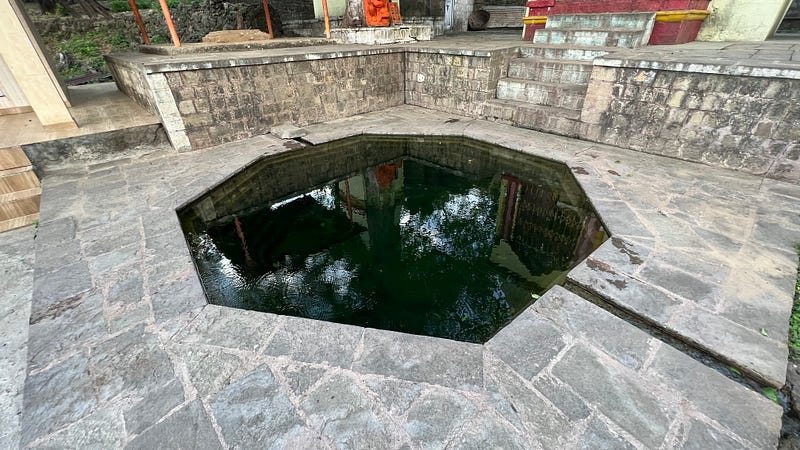
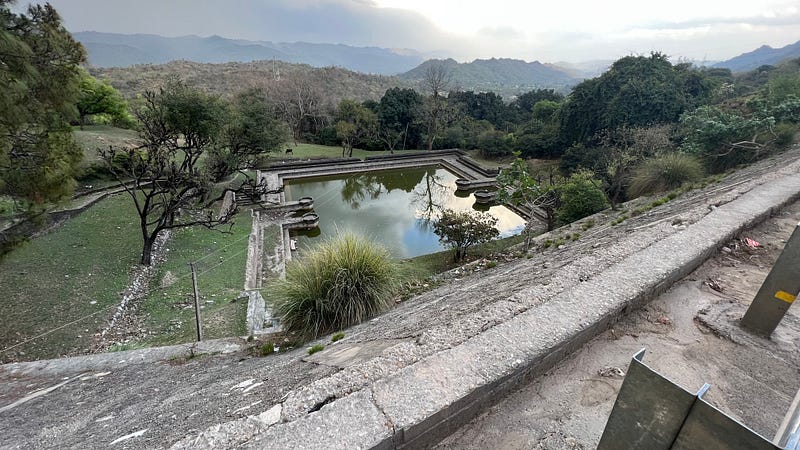
Moving further, we arrived at Chiryayi in Udhampur District of Jammu. The multi-level water bodies I saw there simply took my breath away. I thought I would see baolis at different locations, but Kirpal ji took me to one location which had five baolis of ascending sizes as we moved from a higher to a lower elevation. What’s more, each of these baolis was decorated with beautiful carvings. I had never seen anything like this!
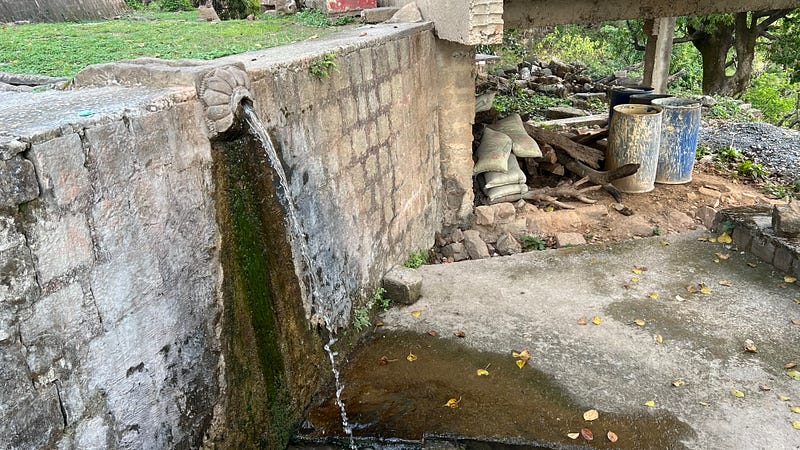
At the topmost level, there was an octagonal-shaped baoli (a rare shape for a baoli) and close to it were many mohras. At lower levels, the baolis got bigger and the carvings around the water got more detailed. Each of the baolis had at least one carving of Naga Devata in the form of a coiled snake. Nagas are closely associated with water in Hindu iconography. According to Kirpal ji, these baolis were about 300 years old and were used to harvest rainwater, which would otherwise flow down the slopes. He mentioned that there were other water bodies in which water from underground welled up to the surface. These, he said, were the real baolis that usually offered clean, delicious water.
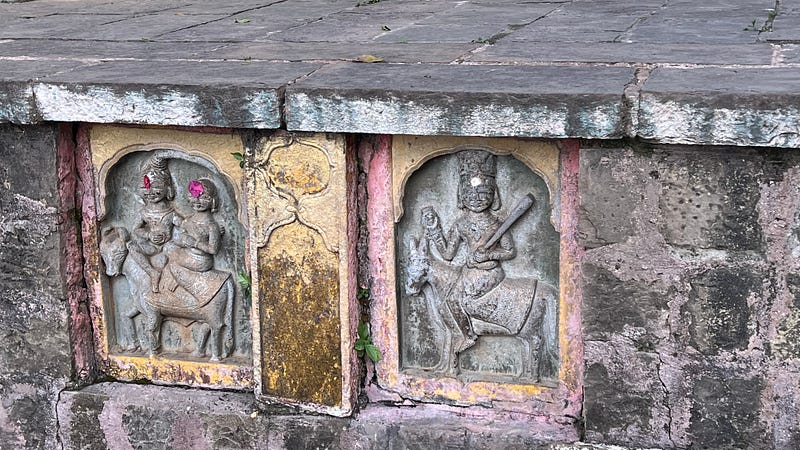
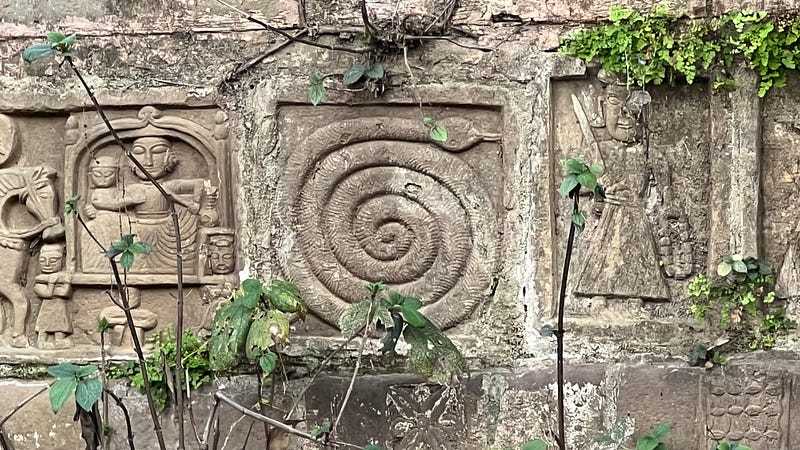
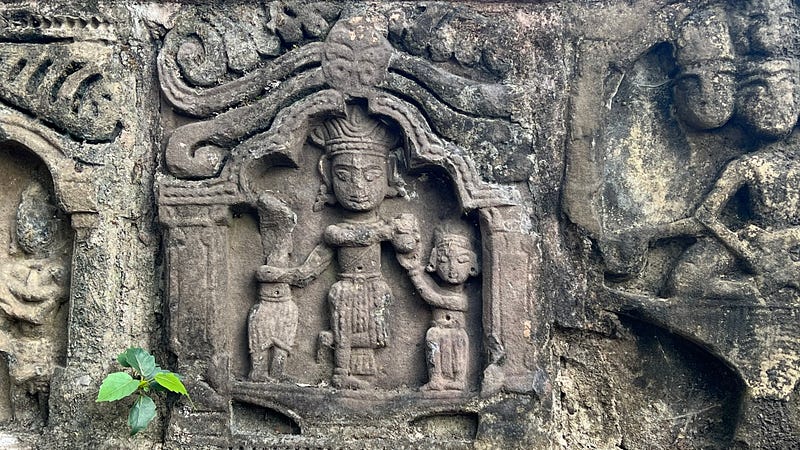
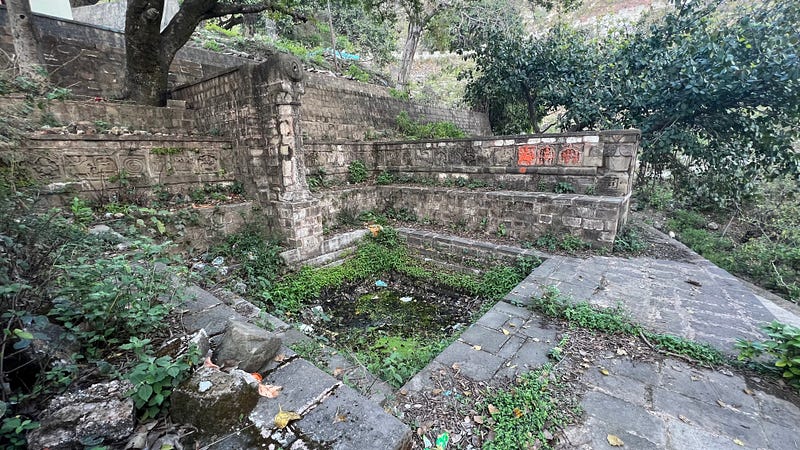
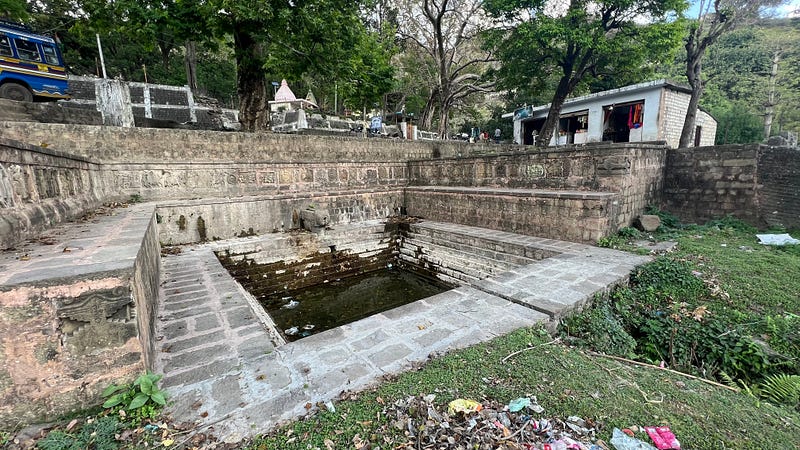
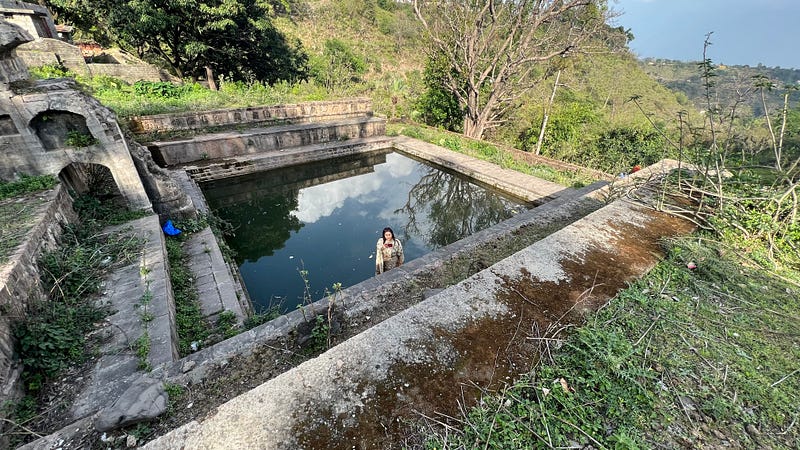
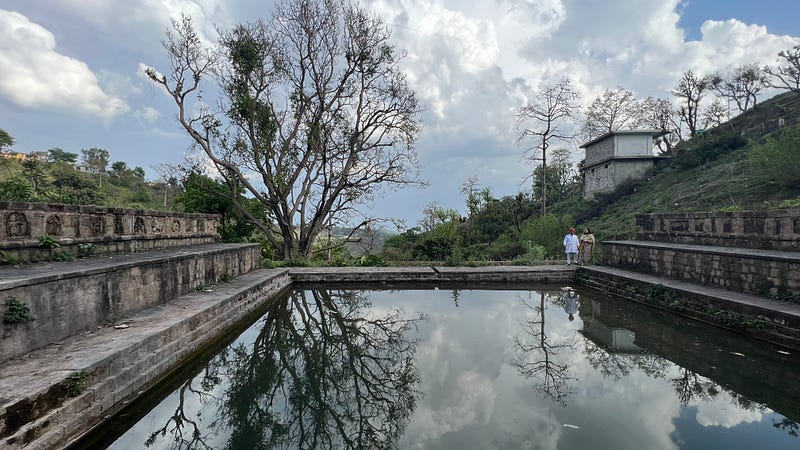
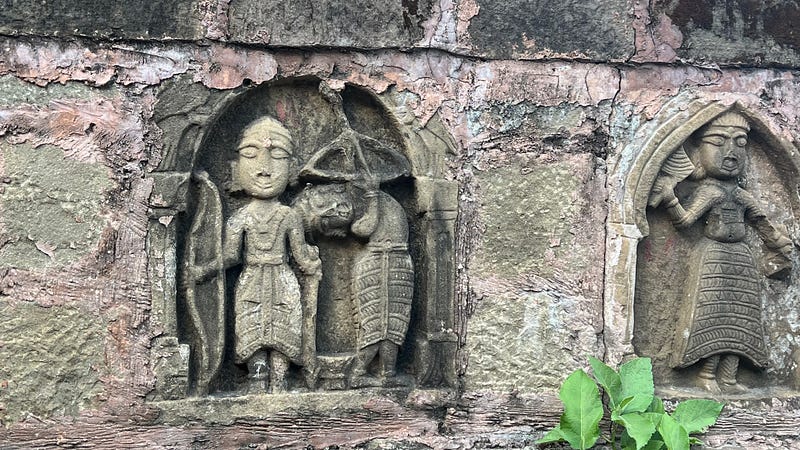
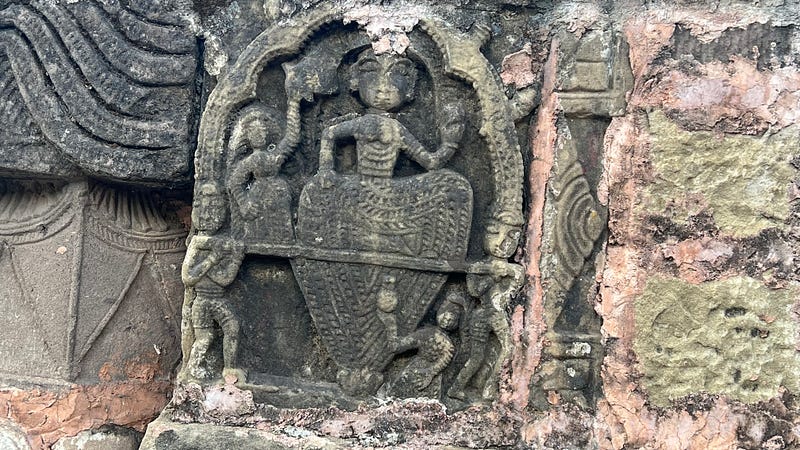
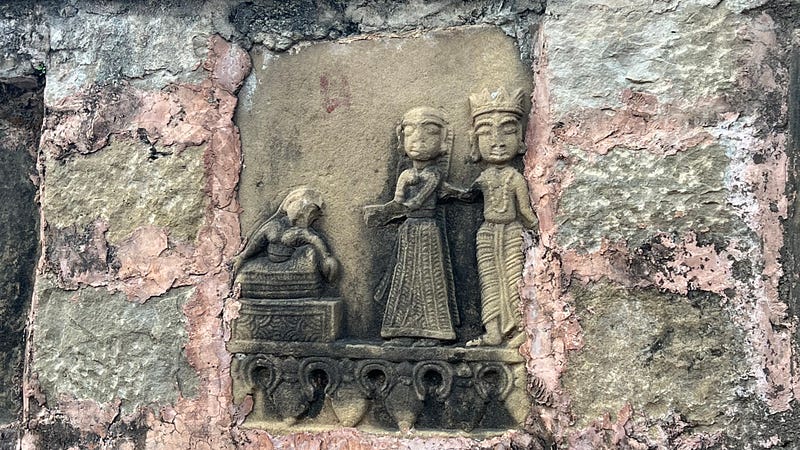
The largest baoli in the cascading series was located at the lowermost level and it was simply breathtaking with its extraordinary carvings. Mostly, it depicted deities such as Durga, Rama, Hanuman, Ganesha and warriors seated on horses. Manu and Kirpal ji identified one of the figures as that of Mian Dido Jamwal who is considered a local hero for rebelling against the Sikh overlords when Ranjit Singh captured Jammu and forced the citizens to pay taxes.
As always, I could not help noticing the difference between water reservoirs of modern times and the ones from bygone eras. Today, the reservoirs are functional but with no beautiful carvings or artistic representations of the civilization. It is as if engineers have taken over and left artisans behind. How did the ancients combine engineering with cultural intelligence?
However, I am not happy with the poor maintenance of the ancient water bodies of Jammu. I know there are hundreds, perhaps thousands more scattered all over Jammu and Kashmir. A way needs to be found to involve the local people in their maintenance just like in ancient times. Not only do these bodies serve as storage for clean drinking water but they can also prevent flooding in a world where extremes of climate are becoming so common. These baolis are also historical structures and need to be preserved just as aqueducts and other water structures are preserved in Europe.
Soon, it was time to leave. On the way back to Jammu City, I got a glimpse of yet another water structure, but this was from the early 20th century. Even though there were no carvings on the structure, Prakriti (Mother Nature) had decided to make up for it by painting a glorious scene which I could not even capture in a photo.
Kirpal Singh ji suggested that we have tea at a famous Dhaba close to the city. Not only did we have tea, but a delicious local snack made of potato called Dabara and of course the ubiquitous Paneer Pakoda. The freshness of the spices made me realize with a pang that I would miss them back in America.
I thanked Kirpal ji for taking so much trouble to show me exactly what my heart craved. Sometimes, I wonder what good karma I have performed in past lives that I keep meeting such kind people.
Late in the night came the bad news that Pakistan had attacked an Indian army convoy in the Poonch district of Jammu and five soldiers had been killed. It felt surreal to be in Jammu and to see the TV coverage of the cowardly attack by Pradeep Dutta, the very journalist friend with whom we had lunch earlier in the day. The army was actually carrying food for an Iftar feast to celebrate the end of Ramzan (Ramadan) with the Muslim residents of Sangiote and surrounding villages. A beautiful day ended with bad news. Even as soulless ghouls try to sabotage peace, India keeps marching on.
Read Part 2 of this account here.