avatarZeshan Shiekh

Free AI web copilot to create summaries, insights and extended knowledge, download it at here

2252

Abstract

other such devices. Podcasts and other audio content will thus be easily shared through this development.</p><h1 id="8be7">Content Creation and Privacy</h1><figure id="a571"><img src="https://cdn-images-1.readmedium.com/v2/resize:fit:800/1*PuW-svH66UNT0JxHa4WdHg.png"><figcaption>Source: <a href="https://www.searchenginejournal.com/why-social-media-is-important/285809/">Search Engine Journal</a></figcaption></figure><p id="c16d"><a href="https://www.statista.com/statistics/278414/number-of-worldwide-social-network-users/#:~:text=In%202019%2C%20an%20estimated%202.95,almost%203.43%20billion%20in%202023.&amp;text=Social%20network%20penetration%20is%20constantly,2020%20stood%20at%2049%20percent.">In 2019</a>, there were an estimated 2.95 <b>billion</b> people spending on average 2 and a half hours on social media applications worldwide. As this number grows day-by-day this huge bubble has reduced our attention span tremendously and paved the way for more short-video content as compared to static images and longer videos. But by far the most exciting future comprises of using AI to push personalised content to every consumer’s device. By mapping data on time spent per video, clicks and reads, Tik-Tok’s revolutionary AI framework has overtaken its other traditional contemporaries by producing a unique addictive effect on the customer.</p><p id="dbd6">On the flip side, this raises the issue of harnessing private data. <a href="https://www.cpomagazine.com/data-privacy/new-research-study-shows-that-social-media-privacy-might-not-be-possible/">In a research study published in the journal</a> — Nature Human Behaviour — it was discovered that some machine learning algorithms could create a profile for an individual including their “political affiliation” or “leisure interests” with a 95% accuracy rate by analysing their tweets with just 8–9 of their friends. Therefore, even if you delete your Twitter account, the platform can analyse your friend’s behaviours to create a database of non-users as well. With legislation, such as GDPR by the EU, failing to control breaches, monetization of our data might be the price we need to pay for using social media applications for free.</p><h1 id="cb85">Marketing Analytics and Strategies<

Options

/h1><figure id="0afe"><img src="https://cdn-images-1.readmedium.com/v2/resize:fit:800/1*K_7M3WrR8t3KJg9Vwy7Iiw.png"><figcaption>Source: <a href="https://blog.hootsuite.com/social-media-for-business/">Hootsuite Blog</a></figcaption></figure><p id="8945">The art of storytelling was mainly used by bloggers, influencers and other content creators however through social media businesses will be able to sell authentic and personal stories to increase awareness about their brand, bring social change and even connect their brand to an emotion. This form might rely on influencers/micro-influencers or connecting with individual consumers to spread their stories and experiences. This is the future of marketing and is further proven by a survey in which <a href="https://influencermarketinghub.com/influencer-marketing-statistics/">63% of marketers</a> said that they will increase their budget allocation towards influencers in the following year.</p><p id="ee82">But it’s not only the big firms that will benefit. Owners of smaller firms can use hashtags on Twitter and Facebook to promote their products and use customer analytics to identify their target demographics to develop future strategies for literally zero costs. It can also be used as a distribution channel as shown in Instagram’s new feature of shoppable-tags directly from the posts themselves. However, building relationships will be the biggest benefit as brand loyalty will play a bigger role than ever before in consumer purchasing behaviours.</p><p id="5403">The social media revolution is already in full swing and with exciting innovations in the works in this field, the future for this industry is extremely promising.</p><p id="824a">📝 Save this story in <a href="https://usejournal.com/?utm_source=medium.com&amp;utm_medium=noteworthy_blog&amp;utm_campaign=tech&amp;utm_content=guest_post_read_later_text">Journal</a>.</p><p id="6b1c">👩‍💻 Wake up every Sunday morning to the week’s most noteworthy stories in Tech waiting in your inbox. <a href="https://usejournal.com/newsletter/noteworthy-in-tech/?utm_source=medium.com&amp;utm_medium=noteworthy_blog&amp;utm_campaign=tech&amp;utm_content=guest_post_text">Read the Noteworthy in Tech newsletter</a>.</p></article></body>

Future of Social Media and More…

Wearable Tech, Marketing Innovations, Data Privacy

Source: Search Engine Journal

Be it grandmas tweeting their grocery lists online or hungry college graduates spamming their potential employers’ LinkedIn inboxes, there is a growing majority of us who spend more time socialising in this virtual world than in real life — and it doesn’t look like we’re slowing down.

Wearable Technology and Innovations
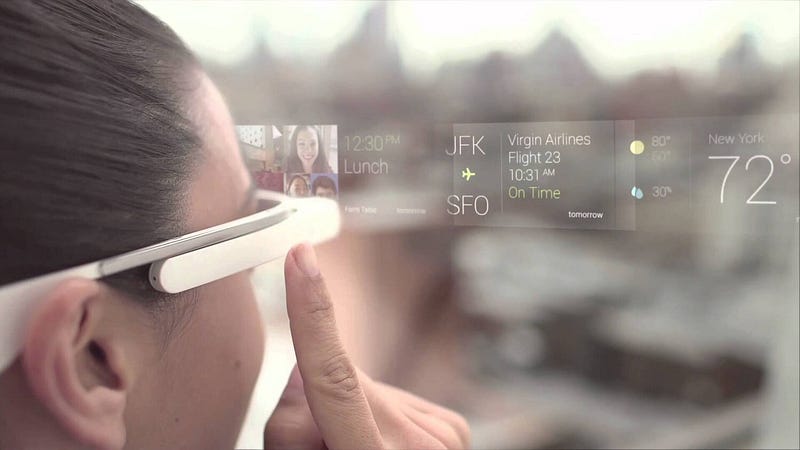
Source: ARDigitalDesign

As of now social media integration with wearable technologies is limited to mostly just receipt of notifications through smartwatches. However, the future of this segment is promising with GoogleGlass and other innovations on the way which will radically change the way we communicate with the outside world. Like Snapchat’s Spectacles which are available for commercial use, it’s a very plausible reality that sharing content will become as easy as the blink of an eye or a flick of a finger and viewing notifications will be through a visual overlay right in front of our eyes. In the not-so-distant future, we might see influencers filming clips for their videos or travel vloggers sharing their day with the world right through their glasses.

Want to read this story later? Save it in Journal.

It’s not all just holograms and AR out of an Iron Man movie that will drive these changes. Once voice search is fully incorporated with today’s social media apps, in the near future we could send out tweets and post on Facebook through our smartwatches, AirPods or other such devices. Podcasts and other audio content will thus be easily shared through this development.

Content Creation and Privacy

Source: Search Engine Journal

In 2019, there were an estimated 2.95 billion people spending on average 2 and a half hours on social media applications worldwide. As this number grows day-by-day this huge bubble has reduced our attention span tremendously and paved the way for more short-video content as compared to static images and longer videos. But by far the most exciting future comprises of using AI to push personalised content to every consumer’s device. By mapping data on time spent per video, clicks and reads, Tik-Tok’s revolutionary AI framework has overtaken its other traditional contemporaries by producing a unique addictive effect on the customer.

On the flip side, this raises the issue of harnessing private data. In a research study published in the journal — Nature Human Behaviour — it was discovered that some machine learning algorithms could create a profile for an individual including their “political affiliation” or “leisure interests” with a 95% accuracy rate by analysing their tweets with just 8–9 of their friends. Therefore, even if you delete your Twitter account, the platform can analyse your friend’s behaviours to create a database of non-users as well. With legislation, such as GDPR by the EU, failing to control breaches, monetization of our data might be the price we need to pay for using social media applications for free.

Marketing Analytics and Strategies

Source: Hootsuite Blog

The art of storytelling was mainly used by bloggers, influencers and other content creators however through social media businesses will be able to sell authentic and personal stories to increase awareness about their brand, bring social change and even connect their brand to an emotion. This form might rely on influencers/micro-influencers or connecting with individual consumers to spread their stories and experiences. This is the future of marketing and is further proven by a survey in which 63% of marketers said that they will increase their budget allocation towards influencers in the following year.

But it’s not only the big firms that will benefit. Owners of smaller firms can use hashtags on Twitter and Facebook to promote their products and use customer analytics to identify their target demographics to develop future strategies for literally zero costs. It can also be used as a distribution channel as shown in Instagram’s new feature of shoppable-tags directly from the posts themselves. However, building relationships will be the biggest benefit as brand loyalty will play a bigger role than ever before in consumer purchasing behaviours.

The social media revolution is already in full swing and with exciting innovations in the works in this field, the future for this industry is extremely promising.

📝 Save this story in Journal.

👩‍💻 Wake up every Sunday morning to the week’s most noteworthy stories in Tech waiting in your inbox. Read the Noteworthy in Tech newsletter.

Social Media
Marketing
Technology
Innovation
Data
Recommended from ReadMedium