
📷 Fujifilm X100V — What happened?!
The popular Street Photography camera
The Fujifilm X100V is so popular these days that it’s so hard to even buy one. Even if you find a used one, the price is outrageous! In fact, Fujifilm announced that they stopped accepting any more orders since they have a huge volume of backorders already. Why is it so? Is it because of the camera’s features? The specs? The looks?
I’ll have to start with a mini review of the Fujifilm X100V but I’ll also explain what made this camera so popular.
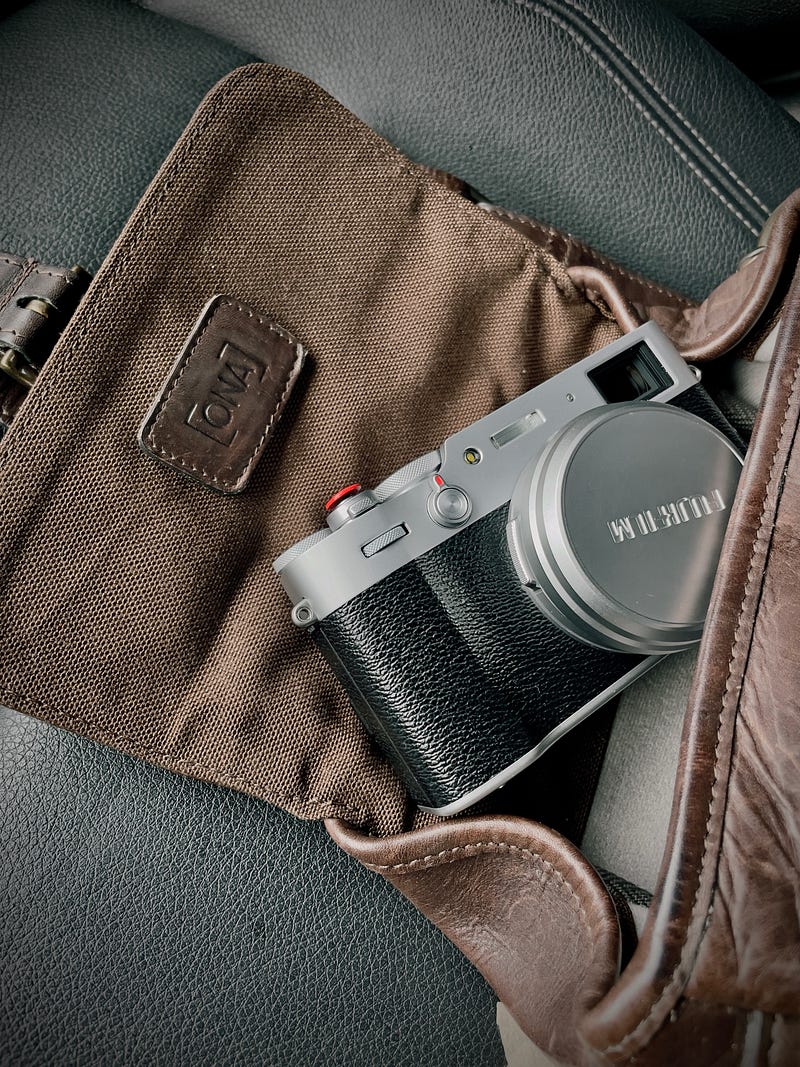
General information on the Fujifilm X100V
The Fujifilm X100V is the most recent of the X100 series and was released in February 2018. So at the time of writing this article it’s a little over 3 years old. It is a compact digital camera with a tilt-screen LCD and an APS-C sensor and a fixed 23mm lens that is not weather-sealed. So no interchangeable lenses, which is both good and bad, why you ask? It’s good since you become an expert much faster since the lens is just one but also you are free from the burden of carrying extra lenses. The bad about this is that the 23mm fixed lens is rather wide, which is perfect for street photography (for example) but bad for zoomed in shots. You understand that you won’t be able to shoot anything like a close-up shot of a bird for example.
Some technical information on the Fujifilm X100V
(don’t expect this to be a full tech guide on the Fuji X100V, this is just what i found online) Like almost every other camera, most of its tech features are improved over the previous iterations so I won’t be going into the detail of what better than its predecessors. Here are the technical information of the Fujifilm X100V:
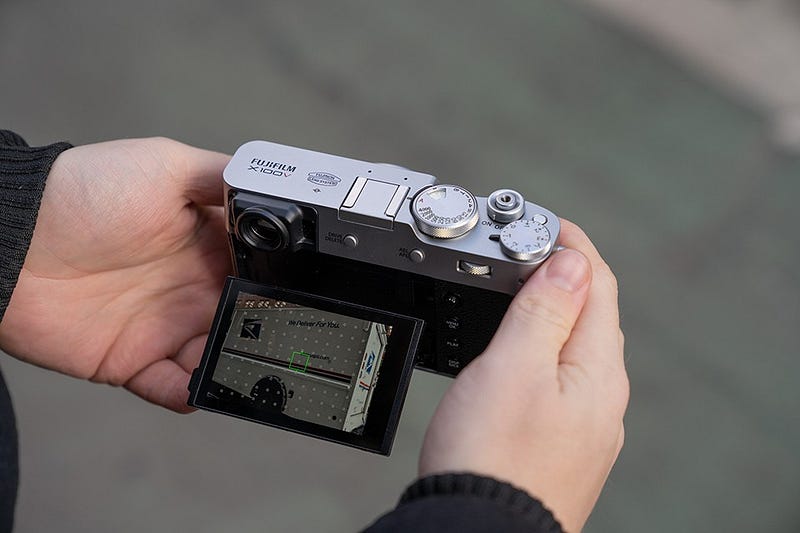
The tilting screen at the back
The Fujifilm X100V is the first one of the series with a tilting screen. This screen is a 1.62 million dot, 3 inch LCD (which is pretty good). It is a touchscreen too. Here’s how it looks:
The camera sensor
This camera has a 26 MP cropped APS-C sensor. It is able of producing an image of 6240 x 4160. Its ISO range is between 160 and 12800 with capable (boosted) of going between 80 and 51200.
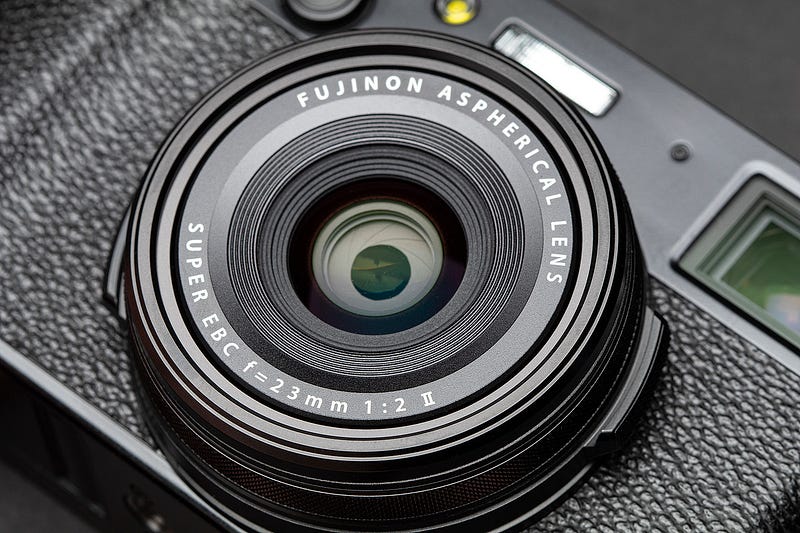
The camera lens
This is a 23mm lens f2 lens. This is a lens equivalent to 35mm on a full frame camera (the Fujifilm X100V is not a full frame camera). It is an autofocus lens with 425 focus points which is more than enough for me!
The photos coming out of this camera/lens are tack sharp. There are many samples online if you want to see for yourself (also on Instagram).
The EVF (Electronic View Finder)
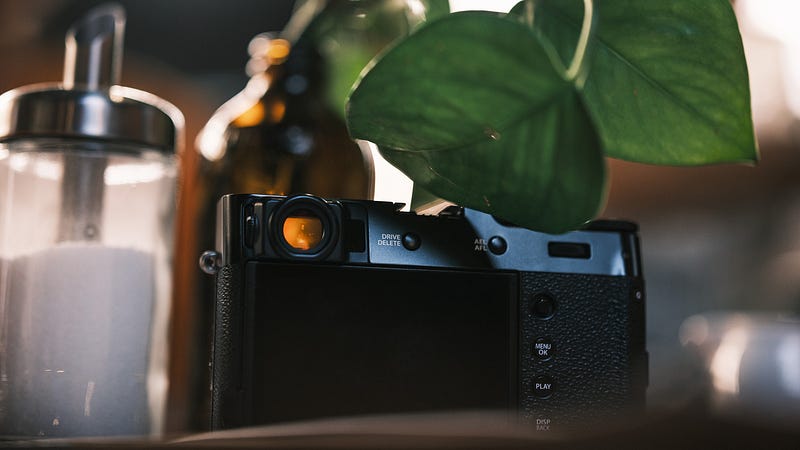
The X100V EVF has a resolution of 3.69 million dots with 100% coverage. The camera lets you switch between back screen and EVF.
Video
It can shoot video of up to 4K resolution at 30 fps and up to 1080 at 120 fps (slow motion) which is OK, you won’t be shooting a Hollywood movie with it but it should be enough for most people.
The Film Simulations
Another feature that contributed to the popularity of this camera are the Film simulations! These is an in-camera feature that the Fujifilm X100V has (this feature is also available to many other Fujifilm cameras) which basically edits the photo to mimic a film camera. So the photo, without using a photo editing software, looked like it was produced by a traditional film camera. There are many different simulations that you can choose (even make your own) which makes the result kind of unique.
What happened and why is this camera is so popular?
Ok, first things first, this camera looks good. It has this vintage feeling to it for the old style lovers. Also, the camera has good specs, it’s compact and is one of the best available cameras for point and shoot.
Street photography lovers appreciate this camera since the X100V is discreet when pointing around and doesn’t attract too much attention.
But there are many camera’s available that can do what the Fujifilm X100V can, why is this specific camera so popular, expensive (at the moment of writing this) and out of stock?
The answer is Social Media buzz. You heard that right. Shortly after Fujifilm launched the X100V, people on social media, mostly TikTok and Instagram, started “advertising” that this camera has it all, and before you know it everyone rushed to buy this camera. Many influencers, street photographers as well as Photographer Kylie Katich with millions of followers (it’s ok if you don’t know her — I didn’t either before researching about the Fujifilm X100V) posted photos boasting that this camera captured amazing photos that didn't’t need post editing.
Before you know it, every Gen-Z had one in their hands, and every influencer was advertising this camera.
We will never know if Fujifilm went aggressive paying “every” influencer to advertise this camera but what happened was that the company couldn’t keep up with the production and prices of new and used Fujifilm X100V skyrocketed.
Can’t lie, I don’t have an X100V, I am a Nikon guy but I would really love one of these Fujifilm X100V (silver ones). I was so excited back then when I bought my full frame camera but I must say, this fixed lens camera situation where you don’t have to OCD every time on which lens(es) you should carry with you before you leave the house is, well, fascinating.
I also do know that every photographer should stop being obsessed with the equipment, the technical details of the camera, the lens types and whatnot, and focus more on the subject/scenery.
Thanks for reading through. Any thoughts?


