
Fueling Your Body, Nourishing Your Soul
Cooking for physical and mental well-being
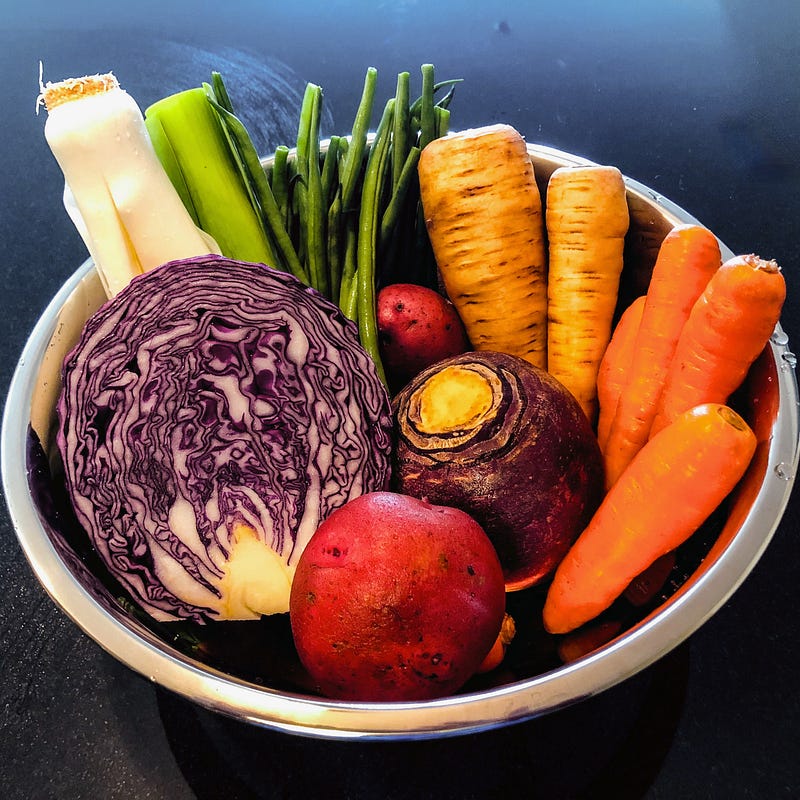
Let Food be Thy Medicine
We credit Hippocrates with saying, “Let Food be Thy Medicine” more than 2500 years ago. The quote suggests that philosophers knew proper nutrition was crucial for health even then.
But there are two things to consider here. First, there wasn’t much in the way of medicine 2500 years ago that wasn’t based on food. Second, Hippocrates’ complete quote was: “Let Food be Thy Medicine, and Medicine be Thy Food.” This complete quote implies that Hippocrates knew that you would have to eat specific foods to rid your body of illness. In other words, it was more than choosing “good foods.” It implied that “prescribed” foods would help heal you — “Medicine be Thy Food.”
Much more recently, many research institutes worldwide and researchers from the Netherlands have modified Hippocrates’ quote to read, “Let Food be Thy Medicine, When Possible ¹.” In other words, it is well-accepted in the medical community, and even in “Big Pharma,” that nutrition plays a primary role in our wellness.
But that doesn’t mean that pharmaceuticals don’t have their place. We can cry foul all we want, but average life expectancy rose from 47 to 78 years almost immediately following the discovery of penicillin². There are many examples like this. Pharma has its place!
But today, I would like to focus on what may be a more hidden meaning behind the famous “Let Food be Thy Medicine” quote. It may be less literal, or we may have lost something in translation. What if the quote was more holistic? Could the quote be “Let Nutrition be Thy Medicine?” If so, this would be more holistic and include the entire process of collecting ingredients and cooking.
Fueling Your Body, Nourishing Your Soul
Nutrition forms the cornerstone of a healthy lifestyle. The foods we consume provide the energy needed for our bodies to function and contain the essential nutrients vital for optimal health. Research confirms the profound impact of dietary choices on various aspects of well-being. But did you know food affects both our physical fitness and mental well-being?
A balanced diet of fruits, vegetables, grains, and lean proteins supports weight management and reduces the risk of chronic diseases. But it also fosters mental clarity and emotional stability.
I remember recognizing this many years ago. A good friend of mine had been hitting the gym pretty hard and had won a significant bodybuilding championship. As the saying goes, he was “cut.”
Curious, I asked him how much his gym training had contributed to his success compared to his strict diet. He admitted that, in his mind, nutrition accounted for far more than 50% of his success. Nutrition aided him in developing the physique he wanted and provided him with the mental readiness or willingness to perform.
He said that given the calories he burned each week, he could have eaten anything. However, eating junk food made him less likely to train. He lost focus and felt less motivated.
The Mindful Art of Nutrition
In addition to the nutritional benefits of wholesome ingredients, preparing meals holds therapeutic value for mental wellness³. Cooking stimulates many senses. You see vibrant colours, feel textures, and experience the aromas wafting through the kitchen. These sensory experiences evoke comfort and pleasure, alleviating stress and promoting relaxation.
Cooking encourages mindfulness, a state of focused awareness of the present moment. Concentrating on chopping vegetables, stirring sauces, and adjusting seasonings redirects your attention. It fosters a sense of calm and inner peace.
Connecting with Your Food and Community
So, cooking has physical and psychological benefits. But you can achieve even more positive effects by sourcing your food. Shopping (or foraging) for your food builds a more robust understanding of nutrition.
Shopping at small neighbourhood stores or Farmers’ markets offers unique opportunities. You can connect with the people who produce your food. You can engage in conversations with farmers and artisans, fostering a sense of community. It will deepen your appreciation for the origins of your meals.
Choosing locally sourced ingredients promotes environmental sustainability, reduces the effects associated with long-range transportation, and supports small-scale producers committed to ethical farming practices. Selecting local produce reinforces your connection to the earth and its bounty.
Yet it would be best to remember that it is about your habits — what you do most often. You must avoid all-or-nothing efforts. Where I live, for example, if I sourced only locally grown fruits, I’d be limited to apples and a few berries. It is not about depriving ourselves but about making an effort. No more than a handful of cheeses are produced here, so I wouldn’t survive.
Okay, I’m being dramatic. Of course, I’d survive, but it is not about depriving ourselves of things we need, but rather about consciously choosing local when we can.
A More Holistic Approach to Health
Nourishing our bodies with wholesome foods is paramount for physical health. Top athletes, for example, spend as much time with nutritionists as they do with their coaches. While food nurtures our bodies, cooking and shopping for food can nourish our minds, leading to greater mental wellness.
Incorporating these practices into our daily lives cultivates a holistic approach to health. It helps us recognize the interconnectedness of body, mind, and environment.
The original quote, “Let food be thy medicine,” began showing us the importance of proper nutrition more than 2500 years ago. The updated quote, “Let Food be Thy Medicine, When Possible,” reinforced this idea. But it reminded us that, in some cases, we need extra help to heal.
Today, I encourage all to think even more holistically and say, “Let Nutrition be Thy Medicine When Possible.” Let this remind us of the importance of creating deeper connections to the food we consume and the communities we inhabit.
References
- Witkamp, Renger F, and Klaske van Norren. “Let thy food be thy medicine….when possible.” European journal of pharmacology vol. 836 (2018): 102–114. doi:10.1016/j.ejphar.2018.06.026
- Adedeji, W A. “THE TREASURE CALLED ANTIBIOTICS.” Annals of Ibadan postgraduate medicine vol. 14,2 (2016): 56–57.
- Farmer, Nicole et al. “Psychosocial Benefits of Cooking Interventions: A Systematic Review.” Health education & behavior : the official publication of the Society for Public Health Education vol. 45,2 (2018): 167–180. doi:10.1177/1090198117736352


