
Fueling the Frontlines: The Intricate Logistics of Keeping Armored Forces Moving
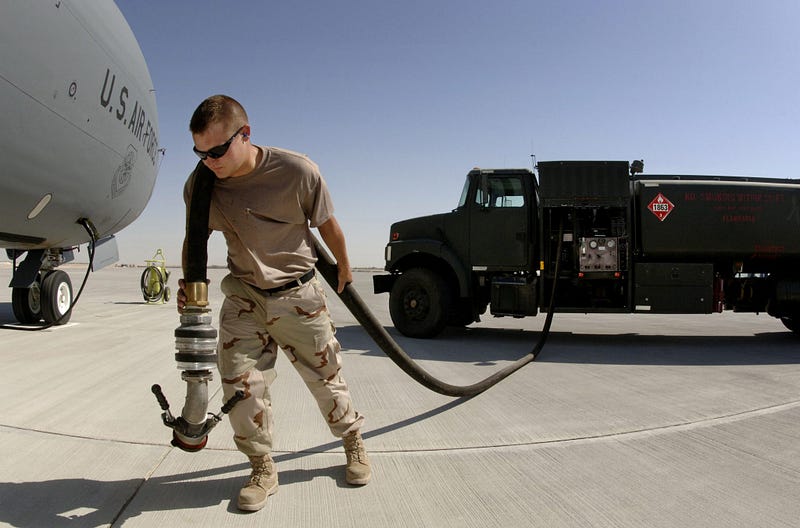
The importance of logistics in warfare cannot be overstated. No matter how advanced your maneuver forces are, without proper support, the outcome can be unpredictable. This piece aims to demystify the complex process of logistics, specifically how fuel gets from a refinery to an armored column, using the U.S. Army as a case study.
Let’s imagine a scenario where the U.S. is engaged in simultaneous combat operations in Poland and Turkey. We’re looking to fuel up a deployed combined arms battalion, a heavy unit with tanks, infantry fighting vehicles, and about 400 to 500 soldiers. The process begins with an obscure Department of Defense branch called the Defense Logistics Agency (DLA). This office procures a variety of critical goods for the military, from MREs to aircraft parts. Through its sub-office, DLA Energy, the agency buys all manner of fuel from suppliers, and the service branches reimburse them for what they order.
In our scenario, DLA Energy supports the European region via its Europe and Africa office based in Germany. Downstream logistics is split up by combatant commands. The U.S. has six geographically based combatant commands responsible for all military forces in their areas of responsibility. In the case of war in Europe, the relevant one would be U.S. European Command (EUCOM). EUCOM has an associated Army service component called U.S. Army Europe and Africa. The Army is legally responsible for managing overland petroleum supply to all U.S. ground forces, regardless of branch, in addition to coalition partners.
The Army’s service component reviews the fuel requests of its logistics commands, then forwards these requests to EUCOM’s Joint Petroleum Office (JPO), which validates them and places the actual orders from DLA. Ideally, DLA Energy will try to procure fuel within theater from a host nation. Failing this, and if there are no pre-positioned stocks of fuel or pre-established fuel terminals in the area of operations, DLA might have to coordinate a mass sea lift of fuel. Sea lift is the most cost-efficient way of moving loads of fuel around the world, but it’s also relatively slow, taking weeks to get fuel in theater.
Once fuel is on the output side of the Beach Terminal Unit (BTU), the Army takes over responsibility for moving the fuel. In the case of Europe, there’s a significant amount of NATO infrastructure already on the continent for delivering fuel from storage depots to the front, a byproduct of the Cold War. However, if infrastructure is lacking, the Army can lay its own pipe. Large permanent pipelines are the most efficient overland means of transporting fuel. Rail is also an option for bulk petroleum, but both options lack flexibility for lower-level distribution, which is made up for by vehicles and temporary pipelines.
The body that plans and controls a theater’s fuel supply is the Army’s Theater Sustainment Command (TSC). This is the ultimate Army logistics command in a given region and controls all of the Army’s logistics from the division level and up. For operations in Europe, this would fall on the 21st Theater Sustainment Command. Because in our hypothetical, the Army is fighting in Poland and Turkey at the same time, very different environments that are far away from each other, the Theater Sustainment Command would likely deploy smaller Expeditionary Sustainment Commands to more closely control logistics in each area.
Under these sustainment commands are sustainment brigades, engineers, and other attached units who have the actual capabilities necessary to store, move, and distribute fuel. In other words, the units that actually get the job done. Sustainment brigades are essentially flexible HQs that can control various logistics units tailored to a specific operation. They’re subordinate to the higher sustainment commands, even if they’re organic to a maneuver unit. This is because the synchronization of logistics efforts goes beyond just the division.
Each Brigade Combat Team (BCT) has a Brigade Support Battalion (BSB), which includes a distribution company including fuel tankers for receiving fuel from sustainment brigades. How many tankers they have depends on the brigade type, as different vehicles have different fuel requirements. The heavier tracked vehicles of the armored brigades are undoubtedly the most gas-guzzling. It’s expected that an armored BCT could consume a maximum of a hundred thousand gallons of fuel a day in combat.
To give a simplified example of how vehicles may be refueled in combat, refueling points are typically located behind or between fighting positions in the company rear area. A single HEMTT tanker can refuel multiple vehicles at once. In this case, three HEMTT tankers are each refueling four Bradley Fighting Vehicles who are waiting on the fueling line. In combat or on the march, time is of the essence, so fuel issue is usually timed to give a predetermined amount of fuel rather than filling them to the brim.
So, to distill the entire process in the context of our hypothetical European conflict: The Theater Sustainment Command and their subordinate Expeditionary Sustainment Commands plan their theater’s fuel distribution and make requests to U.S. Army Europe and Africa. The Army command for the region signs off on the request and forwards it to EUCOM, the overall armed forces command for Europe, whose Joint Petroleum Office validates it and places an order to the civilian DLA Energy. DLA Energy then releases stored bulk fuel that’s purchased from suppliers to the Theater Sustainment Command. Once there, petroleum units subordinate to the sustainment brigades receive it, store it, and distribute it to units.
This is undoubtedly a complex process, but it is crucial for conducting warfare at any scale. The logistics of fuel supply is a testament to the intricate planning and coordination required to keep an army moving and fighting. It’s a reminder that behind every tank on the battlefield, there’s a vast network of people and systems working tirelessly to keep it fueled and ready for action.