
Frozen II and The Myth of Maturity
The following article may contain spoilers for Frozen II (2019)
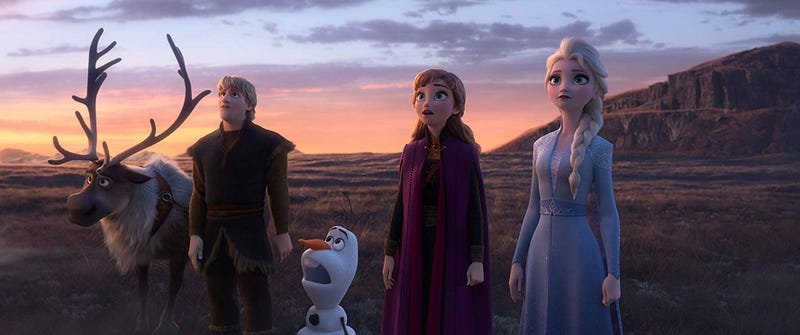
Have you ever wondered what happened to a Disney Princess after their adventure ended? In the past, Disney only ever offered it’s answers in direct to video fashion with limited scopes and ideas, as the first theatrically released Disney Princess sequel, Frozen II had the opportunity to give the definitive response.
When I take my little sisters to the theater it’s always an enjoyable experience, partly because it’s a great excuse to watch the latest Disney Animated Feature without being the weird adult male by himself in the audience.
From beginning to end, the film had me considering the themes it was presenting. Frozen II looks seriously at what it means to mature, to age past the initial adventure and continue on towards the next one life brings.
The theme is smartly introduced by Olaf, a character who’s wit and charm carry much of the film’s better exposition. He tells Anna he looks forward to getting older, but is sorry to see the seasons change. Presenting the audience with the literal changing of time before us with Autumn ending and the approach of Winter’s return. This leads into the first big musical number of the film, Some Things Never Change. It introduces the premise of each character’s development cleverly, as well as providing the audience with an idea of how each character initially responds to the idea of change in their lives.
This serves to set up the stakes, reminding us that change is as regular in our own lives as the changing of the seasons themselves. Anna specifically highlights in the song how she choses to approach this change by hanging onto the things she is sure will never change: the relationships and people she loves and has in her life.
Is it the best choice?
The Myth of Maturity
Frozen II spends time deconstructing the myths we associate with adulthood. During childhood we attach specific ideas and expectations of what it means to “grow up.” Some prove themselves true, many more break apart when put to the test.
Olaf’s first solo of the film is called, “When I am older.” Highlighting precisely how we perceive the wisdom which comes with age.
I’ll have all the answers when I’m older
Like why we’re in this dark enchanted wood
I know in a couple years
These will seems like childish fears
And so I know this isn’t bad, it’s good
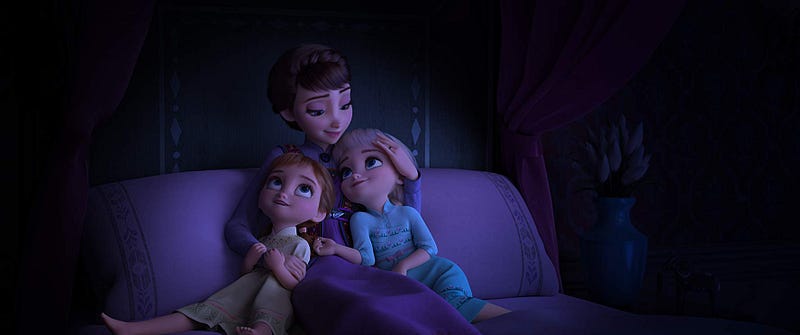
In childhood this is perhaps one of the earliest beliefs you can form about the future. Eventually, when you are grown to full hight and do big person things like drive cars, go on dates, and earn a paycheck, this all magically will result in wisdom and understanding of the confusion life creates.
If only such naivety were true.
There’s a sliver of truth to it, no doubt. Experience grants knowledge and some small wisdom to those who listen, but it doesn’t answer the questions which most frequently engage our worries of concerns of daily life. The unexpected and unknown, the dark enchanted woods of life, still surprise and shock us as adults. Sometimes they even are scarier as adults than they were in childhood. Now, we know the cost and terror to find our way out of the enchanted forest.
Responding To the Unknown
The unknown is not quite quantifiable, we can only ever understand it as an abstraction. In childhood unknowns are abundant, but less threatening if we have guardians to protect us from them. Adulthood faces us with the unknown daily, asking us to act with certainty against a force we can’t quantify.
The unknown is not always threatening, it sometimes offers opportunities we can’t imagine as possibilities from where we are standing.
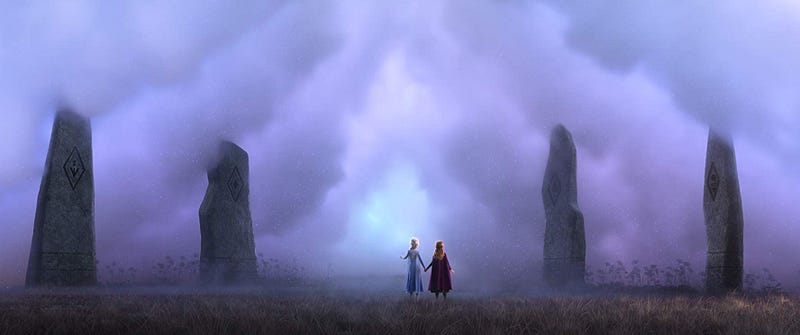
When Elsa first hears the call of the spirits of the forest, she is reluctant to act. Her home and her family are safe and secure, she knows what life in Arendelle is. Why should she risk everything for a vague feeling, a whisper in the wind?
Everyone I’ve ever loved is here within these walls
I’m sorry, secret siren, but I’m blocking out your calls
I’ve had my adventure, I don’t need something new
I’m afraid of what I’m risking if I follow you
Into the Unknown
How we choose to respond to uncertainty is often what defines our level of maturity. There are times where we must advance and take the risk, at other times it is wholly irresponsible to do so. When we have people who rely on us, it’s not fair to shift the risk to them either.
When Elsa eventually does pursue the voice and adventure, it isn’t because she selfishly wants to satisfy her curiosity, or to even find herself. She leaves to protect her people who’ve become under threat from the chaos the spirits are causing in their city.
The Next Right Thing
When they arrive in the forest, it doesn’t take long for each character to become separated from one another. Elsa is determined to discover the truth, but refuses to put Anna and Olaf at risk, literally pushing them away. Poor Kristoff has been left behind in the woods, wondering if he’s making the right decision with his future.
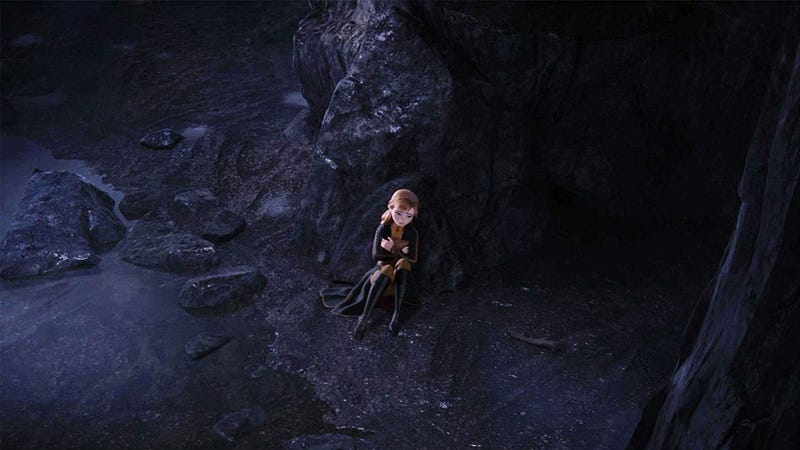
Anna slowly finds herself abandoned by the very people she placed her certainty in. She is trapped in a cave, the only exit possible above a sheer rock wall. Her solution is to follow a truism shared earlier in the film, “When no one can see the future, all one can do is the next right thing.”
Without anyone else, she alone is left to save the forest. Regardless of the struggle, she makes the effort, putting her own life at risk to do what she knows is right, even at a personal cost.
When facing the unknown in our lives, we are frequently granted one step worth of light. The actions we take can either be right or wrong, just or unjust. When there is a clear choice, to do what is right or wrong, we can only approach the right way tentatively. Doing the right thing is not always rewarded, sometimes it take centuries for your actions to be justified. It may even hurt you personally, risking far more than you thought possible.
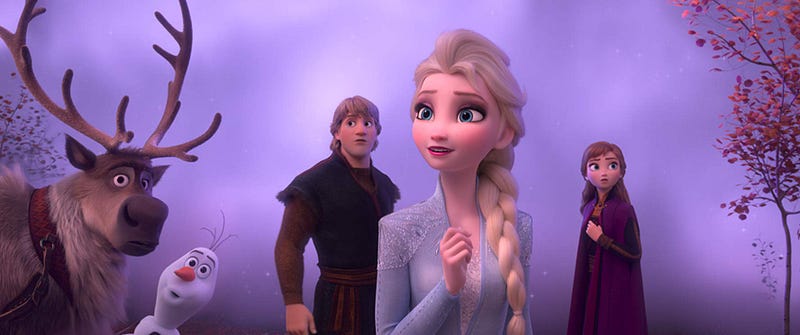
But this is a Disney film, not Shakespeare. Potential tragedies are avoided and everyone lives happily ever after by the films ending. An ending more of us wish occurred in our everyday reality.
Summary
Frozen II tackles the subject of growth and maturity in a way most animated pictures don’t. It attempts to point us towards truths about adulthood, but does fall back upon the tropes of the genre to keep small children from crying.
Being an adult can often seem like a daunting task, there are no shortage of memes and jokes on the internet about the terror that is “#adulting.” When faced sight the reality of rent and utility bills, the fiction we imagined adulthood as melts away faster than a snowman in summer. I’ve learned to marvel at how my parents have been able to manage it so well all these years. Maturity is a quality we can earn through our experiences and adventures, but only as often as we are willing to do the next right thing.